Owner’s manual
 Error Codes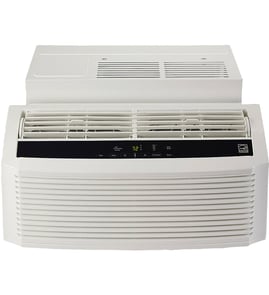




What is the cost of AC in a 12X12 room?
For a 12 x 12 room, the total cost to run a window air conditioner like the GE AHE24DZH1 depends on the unit’s wattage, your electricity rate (cents per kWh), and how many hours per day you run it. Most homeowners can estimate operating cost in minutes using the formula in the AHE24DZH1 owner’s manual.
Quick cost estimate (use this formula)
Use this simple calculation:
- Cost per hour = (Watts ÷ 1000) × (your $/kWh)
- Cost per day = cost per hour × hours used
- Cost per month = cost per day × 30
Typical inputs you will need:
- Your local electric rate (from your bill)
- Estimated running watts (from the rating label or manual)
- Average daily runtime (8, 12, or 24 hours)
Example cost table (common U.S. rates)
Below is a practical example using 1,500 watts (1.5 kW). Your actual wattage may be different.
| Assumed running watts | Electric rate | Cost per hour | 8 hrs/day (30 days) | 12 hrs/day (30 days) |
|---|---|---|---|---|
| 1,500 W | $0.12/kWh | $0.18 | $43.20 | $64.80 |
| 1,500 W | $0.16/kWh | $0.24 | $57.60 | $86.40 |
| 1,500 W | $0.20/kWh | $0.30 | $72.00 | $108.00 |
What changes the cost the most
These factors usually move the bill more than the thermostat setting alone:
- Dirty air filter reduces airflow and efficiency; clean it when the unit indicates service (often around 250 hours) and reset the reminder
- Outdoor heat and direct sun on the window increase runtime
- Air leaks around the side curtains and foam seals increase load
- Using Eco or cycling modes reduces compressor run time
- Low voltage or poor electrical connections can cause inefficient operation
Why it matters
A 12 x 12 room is small enough that oversizing can lead to short cycling and uneven comfort, while undersizing runs constantly and costs more. Matching capacity to the room and keeping airflow clean is the fastest way to control operating cost.
Last updated: February 2026
What are the most common issues with AHE24DZH1?
The most common issues we see with the GE AHE24DZH1 room air conditioner are weak cooling from airflow restrictions, fan problems (noise or no airflow), power or control issues, and temperature-sensing problems that cause short cycling or incorrect temperature control. Use the AHE24DZH1 owner's manual to match symptoms to checks.
Common symptoms and what usually causes them
- Not cooling well: dirty or clogged air filter, blocked front grille, dirty coils, incorrect mode or setpoint
- Runs but little or no airflow: indoor fan issue, fan motor issue, ice buildup on the evaporator
- Won’t turn on: power cord or outlet issue, control board problem, internal electrical fault
- Short cycles or won’t hold temperature: temperature sensor issue, airflow restriction, dirty coils
- Loud buzzing, humming, or rattling: loose panels, fan blade rubbing, failing motor or capacitor
Quick checks we recommend first
- Unplug the unit for 2 minutes, then restore power (resets many control glitches).
- Clean or replace the filter; a clogged filter is the top cause of weak cooling. The correct filter is the room air conditioner air filter WJ85X23947.
- Confirm settings: Cool mode, temperature set lower than room temp, and fan speed not on the lowest setting.
- Inspect for airflow blockage: curtains, furniture, or a dirty front panel.
- Listen for the fan: if the compressor runs but the fan does not, suspect the motor, capacitor, or fan blade.
Parts that commonly relate to these issues (for this model)
| Symptom | Likely area | Example part on this model |
|---|---|---|
| Weak airflow | Filter/air path | Room air conditioner air filter WJ85X23947 |
| Fan not spinning or noisy | Fan/motor | Fan motor WJ94X25904 or indoor fan WJ73X26675 |
| Starts then struggles to run | Start components | Capacitor WJ20X20134 |
| Temperature seems wrong | Sensor | Outlet air temp sensor WJ26X26676 |
| Dead/no power | Power feed | Room air conditioner power cord WJ35X33854 |
Why it matters
Airflow and electrical start components directly affect cooling performance and compressor life. Fixing a simple restriction (like a dirty filter) often restores normal operation and prevents icing and short cycling.
Last updated: March 2026
How do I find the model number on my AHE24DZH1?
Your GE room air conditioner’s model number is printed on the rating label; for model AHE24DZH1, that label is located on the side of the air conditioner cabinet. Use the model number on the label when ordering parts and checking specifications in the owner's manual.
Where to look on the unit
Check these common spots first (the rating label is typically a sticker or metal plate):
- The side of the air conditioner cabinet (most common for AHE24DZH1)
- Near the front panel edge after you remove or open the front grille
- Along the outer case near the power cord entry point
- On the side panel facing the window frame (you may need a flashlight)
What to write down (and why)
Record both numbers exactly as shown; they are used for parts matching and service identification.
- Model number (example: AHE24DZH1)
- Serial number
- Any suffixes or revision codes printed with the model
Quick ID checklist
| Item | What it does | Why it matters |
|---|---|---|
| Model number | Identifies the exact design | Ensures the correct diagrams and compatible parts |
| Serial number | Identifies production run | Helps confirm version-specific details |
Tips if the label is hard to read
A worn label is common on window air conditioners because of sun and moisture exposure.
- Wipe the label gently with a damp cloth and mild soap; dry it fully
- Use your phone camera zoom or a flashlight held at an angle to improve contrast
- Copy characters carefully (0 vs O, 1 vs I)
Why it matters
GE room air conditioner parts can vary by model and production run; using the exact model number from the rating label helps us match items like the air filter, user interface board, or power cord correctly.
Last updated: March 2026