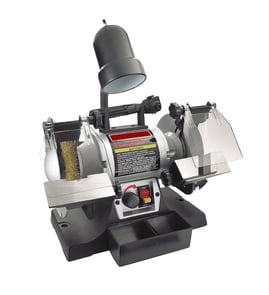

Is a 6 or 8 bench grinder better?
An 8-inch bench grinder is better for most heavy-duty grinding and tool sharpening because the larger wheel runs cooler at the edge and gives a shallower hollow grind; a 6-inch grinder is better when you want a smaller, lighter, lower-cost setup. For a Black & Decker 9407TY2 bench grinder, choose based on your typical jobs and available bench space.
Quick comparison (6-inch vs 8-inch)
| Feature | 6-inch bench grinder | 8-inch bench grinder |
|---|---|---|
| Best for | Light grinding, quick touch-ups, small shops | Frequent sharpening, heavier grinding, larger tools |
| Wheel effect on edges | Deeper hollow grind | Shallower hollow grind (often preferred for chisels and plane irons) |
| Heat control | More likely to heat the edge quickly | Typically runs cooler at the edge for the same pressure |
| Footprint | More compact | Larger and heavier |
| Typical motor feel | Adequate for light work | Usually stronger for sustained work |
How we recommend choosing
- Pick 8-inch if you sharpen woodworking tools often (chisels, plane irons) or grind thicker steel.
- Pick 6-inch if you mainly deburr, shape small parts, or only sharpen occasionally.
- Prioritize a solid tool rest and wheel guards; control matters more than wheel size.
- Choose the right wheel grit: coarse for shaping, finer for sharpening and finishing.
- If overheating is a concern, use lighter pressure and dip the tool in water frequently.
Why it matters
Wheel diameter changes the grind geometry and heat buildup. A larger wheel generally removes metal with less aggressive curvature at the edge, which helps you keep better control when sharpening and reduces the chance of bluing (overheating) the cutting edge.
Helpful DIY tip for troubleshooting grinder power issues
If your grinder struggles to start, trips a breaker, or loses power under load, basic electrical checks (cord, switch, connections) can save time before replacing parts. Use a meter and safe testing practices from how to use a multimeter to test electrical parts video.
Last updated: February 2026
What are the 4 important rules for a bench grinder?
For the Black & Decker 9407TY2 bench grinder, the 4 most important rules are: wear proper eye and face protection, keep guards and tool rests correctly adjusted, use the correct grinding wheel speed rating, and keep hands, clothing, and hair safely away from the wheel and rotating parts.
The 4 rules (with what to do)
- Protect your eyes and face: Wear safety glasses plus a face shield; grinding sparks and wheel debris can cause serious injury.
- Set up guards and tool rests correctly: Keep the tool rest close to the wheel (typically about 1/8 inch) and keep the tongue guard/spark guard properly positioned.
- Match wheel rating to grinder speed: Only use a wheel rated at or above the grinder’s RPM; never install an underrated wheel.
- Keep clear of rotating parts: No loose sleeves, gloves near the wheel, jewelry, or untied long hair; maintain a stable stance and keep fingers away from the wheel.
Quick safety checklist before you grind
- Inspect the wheel for chips or cracks; replace damaged wheels.
- Confirm the wheel is seated and tightened correctly, then stand to the side at startup.
- Let the grinder reach full speed before contacting the wheel.
- Grind on the face of the wheel (not the side) unless the wheel is specifically designed for side grinding.
- Use light pressure; forcing the work can overheat the wheel and increase break risk.
Setup targets (typical bench grinder guidance)
| Item to check | Typical target | Why it matters |
|---|---|---|
| Tool rest gap | ~1/8 in. | Reduces the chance the workpiece gets pulled into the wheel |
| Wheel RPM rating | Rated RPM ≥ grinder RPM | Helps prevent wheel failure |
| Startup position | Stand off to the side | Protects you if a wheel fails at startup |
Why it matters
Bench grinders remove metal fast and can throw sparks, hot fragments, and wheel debris. Correct guard adjustment, wheel selection, and PPE reduce the most common causes of injury: eye impacts, pulled-in workpieces, and wheel breakage.
Related DIY help
For electrical troubleshooting basics (useful if your grinder won’t start or trips a breaker), see how to use a multimeter to test electrical parts video.
Last updated: February 2026
What not to use on a bench grinder?
For the Black & Decker 9407TY2 bench grinder, do not grind soft or gummy materials (wood, plastic, many non-ferrous metals) and do not use cracked or incorrect wheels. Avoid unsafe setup and clothing choices because wheel loading, grabbing, and wheel failure happen fast.
Materials and items to avoid grinding
Avoid using a standard bench grinder wheel on:
- Wood or plastic (melts, burns, loads the wheel)
- Aluminum, copper, brass (smears and clogs many wheels)
- Magnesium (dust can ignite; high fire risk)
- Oily, painted, or solvent-soaked parts (smoke, fouling, fire risk)
- Unknown metals (identify the material first)
Unsafe wheel, setup, and technique
Do not run the grinder when any of these apply:
- Wheel is dropped, cracked, chipped, or out-of-round
- Wheel type is not rated for the material or task (including side grinding)
- Tool rest gap is too large (work can get pulled down)
- Guards, eye shields, or spark deflectors are missing or loose
- You adjust rests or guards while the wheel is spinning
Quick reference
| Don’t use it for | What can happen | Better approach |
|---|---|---|
| Wood, plastic | Loading, grabbing, burning | Sander, file, saw |
| Aluminum, brass, copper | Wheel loading, heat, chatter | Belt sander, file, non-ferrous-rated abrasive |
| Cracked/dropped wheel | Wheel failure | Replace wheel before use |
Why it matters
A loaded or damaged wheel runs hotter and vibrates more, which increases grabbing and loss of control. Keeping the wheel correct and the setup tight improves cut quality and reduces injury risk.
For basic electrical checks (cord, switch, continuity), use how to use a multimeter to test electrical parts video.
Last updated: February 2026