Installation guide
 Owner’s manual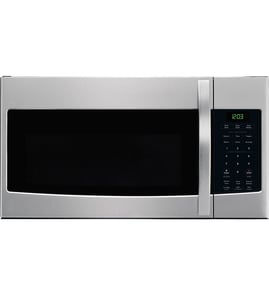


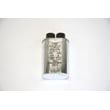
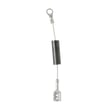
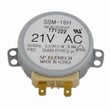
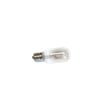
Do all GE microwaves use the same mounting bracket?
No. GE over-the-range microwaves do not all use the same mounting bracket (wall plate); hole patterns, cabinet templates, and venting configurations vary by model. For GE model JNM1731DM1BB, we recommend installing and aligning the mounting plate exactly as shown in the JNM1731DM1BB installation guide to ensure the microwave is level and properly supported.
Use the mounting plate that matches this model and follow the wall-plate locating and hole-drilling steps in the installation instructions.
- Center the plate in the 30-inch wide space and draw a vertical centerline on the wall.
- Use the mounting plate as a template; mark holes A, B, C, and D.
- Use at least one wood screw into a stud to support the microwave’s weight.
- Drill the correct hole type: small pilot for studs, larger holes for toggle bolts where no stud is present.
- Keep the unit level; if the cabinet has a front overhang, drop the plate the same distance as the overhang depth.
Even if an older GE bracket looks similar, reuse only makes sense when the bracket and templates match the exact model and installation type.
| Situation | Reuse the old bracket? | Why |
|---|---|---|
| Same model number (JNM1731DM1BB) replacement | Yes | Hole pattern and plate tabs match. |
| Different GE model or different generation | No | Plate location, tabs, and fastener points often differ. |
| Changing venting (top exhaust, back exhaust, recirculating) | Usually no | Blower and duct alignment requirements change. |
The mounting plate carries the load and sets the microwave’s level position. A mismatched bracket can leave the unit out of level, misalign the exhaust adaptor and damper, or reduce support at the wall studs.
Before mounting, confirm the damper moves freely and remove any shipping tape so the venting works correctly after installation.
Last updated: February 2026
Does a GE over the range microwave need to be vented?
No. Your GE over-the-range microwave/hood combo model JNM1731DM1BB does not have to be vented to the outside; it can be installed to exhaust outdoors (top or rear) or set up to recirculate air back into the kitchen using filters. See the JNM1731DM1BB installation guide for the venting configuration steps.
Most over-the-range microwaves, including JNM1731DM1BB, support these setups:
- Outside venting, vertical: ducting goes up through the cabinet and out the roof.
- Outside venting, horizontal: ducting goes straight back through the wall.
- Recirculating (non-vented): air is filtered and returned to the room (no exterior duct).
The microwave itself is the same; the difference is how the blower and filters are configured.
| Setup | Duct required | Where air goes | Best for |
|---|---|---|---|
| Outside venting (vertical or rear) | Yes | Outdoors | Frequent cooking, best odor removal |
| Recirculating | No | Back into kitchen | Apartments, no duct access |
These points help you plan the install space and airflow correctly:
- Plan for a 30-inch-wide cabinet opening that is free of obstructions.
- Keep the bottom of the cabinet 30 inches or more above the cooking surface.
- The microwave is designed for installation over ranges up to 36 inches wide.
- If you choose outside venting, follow the hood exhaust and duct preparation steps in the JNM1731DM1BB installation guide.
- Do not block the vent airflow (especially on models with top venting grilles).
Outside venting removes heat, smoke, and moisture more effectively. Recirculating installs still move air, but they rely on filters to reduce grease and odors, so filter condition and correct setup make a bigger difference.
Last updated: February 2026
Is it worth repairing a GE microwave?
Yes, repairing a GE microwave is worth it when the issue is a common, lower-cost failure and the unit is otherwise in good shape; for an over-the-range model like GE JNM1731DM1BB, repair often makes sense because replacement also involves removal and reinstallation work. Use the JNM1731DM1BB owner’s manual to confirm symptoms and safe operating checks.
Use these practical checkpoints before you buy parts:
- Age and condition: If the microwave is under about 8 to 10 years old and the door, keypad, and vent fan are in good condition, repair is usually the better value.
- Type of failure: Door-interlock and turntable problems are typically straightforward; high-voltage heating failures are more complex.
- Installation complexity: Over-the-range units add labor because they mount to a wall and cabinet; review the JNM1731DM1BB installation guide if you are considering replacement.
- Safety: If you suspect a high-voltage component issue, use a qualified technician.
- Total cost: Compare parts plus labor to the price of a comparable new microwave/hood combo.
These are frequent, cost-effective fixes on microwave/hood combos:
| Symptom | Likely area | Typical next step |
|---|---|---|
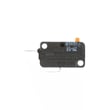
| Won’t start, acts like door is open | Door interlock system | Inspect latch alignment; test/replace a switch such as the micro-switch WB24X830 |
| Turntable not rotating | Turntable drive | Check coupler and motor; consider the microwave turntable motor WB26X10038 |
| Light out under the unit | Cooktop light circuit | Replace bulb first; use the microwave light bulb WB36X10003 |
| Runs but does not heat | High-voltage system | Technician diagnosis (magnetron, diode, capacitor, transformer) |
Replacement is usually the better call when:
- The microwave runs but won’t heat and multiple high-voltage parts may be involved.
- The control area has intermittent failures (random resets, dead keypad) and repair cost is high.
- The cavity is heavily worn or the door no longer closes and latches smoothly.
A microwave/hood combo must have a securely latched door to operate safely and consistently; the manual notes the door must be securely latched for operation. Fixing a simple interlock or turntable issue can restore reliable cooking without the added hassle of an over-the-range replacement.
Last updated: February 2026
How to change GE microwave surface light?
To change the surface (cooktop) light on your GE JNM1731DM1BB microwave/hood combo, shut off power, remove the screw at the front of the light cover, lower the cover, then gently twist out the cooled bulb and install the same type bulb before reinstalling the cover.
Microwaves combine high voltage components and household wiring; for a simple light change, we focus only on the light cover and bulb.
- Turn off power at the breaker (or unplug the microwave if accessible).
- Let the bulb cool completely before touching it.
- Support the light cover as you remove the screw so it does not drop.
- Avoid touching the new bulb glass with bare fingers (oil can shorten bulb life).
- Restore power only after the cover is secured.
- Disconnect power.
- Locate the surface light cover on the bottom of the microwave.
- Remove the screw at the front of the light cover.
- Lower the cover.
- Gently twist the bulb to remove it (after breaking any light adhesive seal).
- Install a replacement bulb of the same size and type.
- Raise the cover and reinstall the screw.
- Restore power and test the light.
For the bulb type and the exact cover location for this model, use the JNM1731DM1BB owner’s manual.
If the bulb is good but the surface light still will not work, the socket can be the issue.
| Symptom | Most likely cause | What to check next |
|---|---|---|
| Bulb does not light | Burned-out bulb | Try a known-good bulb first |
| Bulb flickers or cuts out | Loose bulb or failing socket | Inspect socket contacts |
| Bulb looks fine, still no light | Socket or wiring issue | Check the light socket and wiring |
Model-matched option: microwave light socket WB08X10016.
A properly working surface light improves cooktop visibility and helps you avoid overheating the light area from a loose cover or incorrect bulb type.
Last updated: February 2026