Installation guide
 Owner’s manual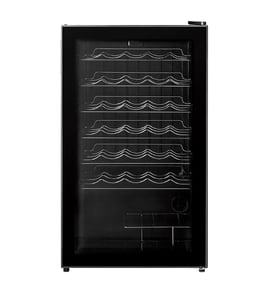


Can a beverage cooler be used as a wine cooler?
Yes, you can use a beverage cooler as a wine cooler if it can hold a steady wine-safe temperature; for the GE ZDBR240PABS, we recommend using the temperature controls to stay in typical wine ranges (about 45°F to 65°F) and avoiding extra-cold settings meant for soda and beer. Check the ZDBR240PABS owner's manual for control and storage guidance.
Most wines store best when the temperature is stable and not too cold.
- Red wine: 55°F to 65°F
- White wine: 45°F to 55°F
- Sparkling wine: 40°F to 50°F (avoid freezing-cold settings)
- Keep temperature swings small; frequent door openings raise temperature
- Do not store perishable foods in this unit (it is designed for beverages)
| What you store | Typical goal | What to watch for |
|---|---|---|
| Soda and beer | Colder (often low 40s°F or below) | Can be too cold for some wines |
| Wine | Stable 45°F to 65°F | Temperature stability matters more than “extra cold” |
On the ZDBR240PABS, the temperature controls can be locked. If the temperature will not adjust, press and hold the + and - pads together for 5 seconds to unlock, then set your target temperature.
- Confirm the control is unlocked
- Wait several hours after changing the setting to judge results
- Minimize door openings while the cabinet stabilizes
- Make sure the unit is level and has proper airflow per the ZDBR240PABS installation guide
Wine ages and tastes best when it is stored at a consistent temperature. Running a beverage cooler too cold can dull flavors and, in extreme cases, risk cork shrinkage or partial freezing, while warm swings can speed up oxidation.
Last updated: February 2026
Does a beverage cooler get as cold as a refrigerator?
A beverage cooler like the GE ZDBR240PABS is built to store and chill beverages, not perishable foods, so it typically does not run as cold as a full-size refrigerator. For best results, use it for drinks only and follow the temperature guidance in the ZDBR240PABS owner's manual.
Most beverage coolers are designed for “serve-ready” drink temperatures rather than food-safe refrigeration.
- Beverage coolers commonly run in the low 40s °F and up (often roughly 41 °F to 65 °F)
- Many refrigerators are designed to hold about 37 °F in the fresh-food section
- A beverage cooler may struggle to maintain very low temps if the room is hot or the door is opened often
- After changing settings, allow time for the cabinet temperature to stabilize (overnight is best)
| Appliance type | Typical target use | Typical temperature range |
|---|---|---|
| Beverage cooler (like ZDBR240PABS) | Cans, bottles, wine | About 41 °F to 65 °F |
| Refrigerator (fresh-food section) | Perishable foods | About 34 °F to 40 °F |
We recommend these checks before replacing parts:
- Confirm the door closes fully and seals all the way around
- Avoid overloading; warm drinks can raise temps for hours
- Give the unit 24 hours after first plug-in or a major setting change
- Make sure the interior fan runs; it is designed to run continuously and only stops when the door is open
- Clean dust from the condenser area so heat can dissipate properly
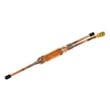
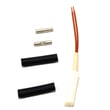
If the unit runs but does not cool, common repair paths include checking the temperature control and the compressor start components. For model-specific replacement options, see parts such as the temperature control WR02X11816 and the wine cooler compressor start relay WR07X10072.
Beverage coolers are tuned for beverage storage, so using one like a refrigerator can lead to unsafe food temperatures and inconsistent cooling performance. Keeping it dedicated to drinks helps the control system, fans, and compressor maintain stable, even temperatures.
Last updated: February 2026
Why is my GE Monogram beverage fridge not cooling?
If your GE Monogram beverage center model ZDBR240PABS is running but not cooling, the most common causes are poor airflow (dirty condenser area), a failed fan motor, a temperature control problem, or a compressor start issue. We use the troubleshooting steps below to pinpoint the failure safely.
- Confirm the control is set to a colder setting; then allow 24 hours for temperature to stabilize.
- Make sure the door closes tightly and the gasket seals all the way around.
- Verify the unit has ventilation space and the front grille area is not blocked.
- Clean dust from the condenser area and kick plate area (unplug first).
- Listen for fans: you should typically hear airflow inside and warm air movement near the condenser area.
- Check for heavy frost or an iced-over evaporator cover area (a sign of airflow or defrost trouble).
When the basic checks look good, these parts are the most common cooling-related suspects for this model:
| Symptom you notice | Most likely part | What it affects |
|---|---|---|
| Compressor hums, clicks, then stops | Wine cooler compressor start relay WR07X10072 | Helps the compressor start and run |
| No air movement inside cabinet | Refrigeration appliance evaporator fan motor and blade WR60X10165 | Circulates cold air across shelves |
| Unit runs but temperature will not regulate | Temperature control WR02X11816 | Senses and cycles cooling |
| Warm cabinet, hot condenser area, no fan by condenser | Refrigerator condenser fan motor assembly WR60X10163 | Removes heat from the sealed system |
A beverage center is designed for storing and cooling beverages (not perishable foods). When airflow is restricted or a fan/control/start component fails, the sealed system cannot move heat out efficiently, so temperatures rise even if the unit seems to be “running.”
- Follow the model-specific checks and access steps in the ZDBR240PABS owner's manual.
- Use the installation guide to confirm ventilation and built-in clearance requirements were met.
- If the compressor will not start or cooling is still weak after airflow and fan checks, schedule service; sealed-system diagnosis requires specialized tools.
Last updated: February 2026