Error Codes



Where to find model number on upright freezer?
On a Tappan upright freezer like model TFU14M5AW3, the model number is printed on a rating label that’s usually inside the cabinet. Common spots include the inside side wall, the ceiling area, behind the kick plate (toe grille), or on the back of the unit.
- Inside the freezer on a side wall near the front opening
- Inside at the top (ceiling area) above the shelves
- Behind the lower kick plate (toe grille) at the front
- On the exterior back panel near the power cord
- Along the door frame edge (hinge side is common)
- Open the door and scan the upper interior walls and ceiling with a flashlight.
- Check the lower front area; remove the kick plate if your freezer has one.
- If you still do not see it, pull the freezer forward and look on the back panel.
| Label item | What it’s used for | Example |
|---|---|---|
| Model number | Matching parts and diagrams | TFU14M5AW3 |
| Serial number | Age and production run | Varies |
| Electrical ratings | Outlet and circuit checks | Volts/amps |
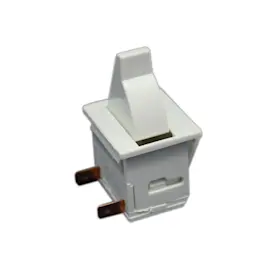
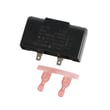
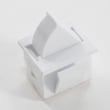
Using the exact model number prevents ordering the wrong shelves, door hardware, or electrical parts for your upright freezer. If you’re replacing a component, match the part to the TFU14M5AW3 parts list, such as the refrigerator light switch 5309918806 when troubleshooting an interior light issue.
Last updated: February 2026
What is the most common freezer problem?
The most common problem we see on the Tappan TFU14M5AW3 upright freezer is poor cooling caused by restricted airflow, usually from dust-clogged condenser areas, frost buildup on the evaporator, or a door that is not sealing tightly. These issues lead to temperature swings and longer run times.
- Freezer warm but compressor runs a lot: dirty condenser area, poor ventilation, or sealed-system issue
- Heavy frost on back wall or shelves: defrost problem or door left ajar
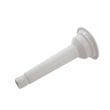
- Ice buildup near the bottom: drain restriction; check the hose 5304512272
- Food has freezer burn: temperature fluctuation or frequent door openings
- Interior light stays on: door switch problem; check the refrigerator light switch 5309918806
- Door seal and closing: make sure the door closes squarely and nothing blocks it.
- Airflow and ventilation: keep the unit a few inches from the wall; do not pack items tightly against interior vents.
- Condenser area cleanliness: vacuum dust from the condenser area and fan intake (unplug first).
- Frost pattern: a solid sheet of frost points to a defrost or airflow issue.
- Drain path: if you see water or ice where it should not be, inspect the drain tube.
| Problem you notice | Most likely cause | Best first action |
|---|---|---|
| Warm temps, long run time | Restricted heat removal | Clean condenser area; improve clearance |
| Frost everywhere | Door leak or defrost issue | Check door seal; reduce door openings |
| Ice at bottom | Drain restriction | Clear drain; inspect hose 5304512272 |
| Light stays on | Door switch stuck/failing | Test/replace refrigerator light switch 5309918806 |
Airflow and sealing problems force the compressor to run longer, which raises energy use and makes it harder to hold 0°F consistently. Fixing the simple causes first prevents food spoilage and reduces strain on cooling components.
Last updated: February 2026
Why is my upright freezer leaking water on the floor?
Water on the floor around your Tappan TFU14M5AW3 upright freezer almost always comes from a defrost drain that’s clogged or frozen, or from warm air leaking past the door gasket and creating excess frost that later melts. Clearing the drain path and improving the door seal stops most leaks.
- Unplug the freezer before working near wiring or the evaporator area.
- Look for a sheet of ice on the freezer floor or heavy frost on the back wall (points to a drain issue).
- Check that the door closes fully and doesn’t “bounce” back open.
- Verify the freezer is level front-to-back and side-to-side; a tilted cabinet can affect drainage.
- Confirm nothing inside is preventing the door from sealing (bins, packages, shelves).
A blocked drain lets defrost water overflow into the cabinet and out onto the floor.
- Remove food and shelves near the bottom.
- Melt visible ice with warm (not boiling) water and towels.
- Flush the drain opening with warm water using a turkey baster or squeeze bottle.
- If the drain line is still blocked, clear it from the rear drain outlet area.
If the drain tube is cracked, loose, or missing, replace the drain tube: hose 5304512272.
If warm, humid air leaks in, it creates frost that later melts during defrost and can overwhelm the drain.
What to look for
- Gaps, tears, or hardened sections of the gasket
- Frost concentrated near the door opening
- Moisture beads around the door frame
| What you see | Most likely cause | What to do |
|---|---|---|
| Ice sheet on bottom, then puddle | Frozen/clogged defrost drain | Thaw and flush drain; clear drain tube |
| Puddle after door left ajar | Warm air intrusion | Improve loading, confirm full closure |
| Water only after moving freezer | Cabinet not level or drain tube shifted | Re-level; inspect drain outlet |
Leaks are usually a drainage or sealing problem; fixing it prevents recurring ice buildup, protects flooring, and helps the freezer hold temperature efficiently.
Last updated: February 2026
How big is a 14.1 cubic foot freezer?
A 14.1 cubic foot upright freezer (like the Tappan TFU14M5AW3 size class) is typically a full-height, slim cabinet that stands about 60 to 65 inches tall, about 27 to 30 inches wide, and about 28 to 32 inches deep. Exact exterior dimensions vary by model and door style.
Most 14 to 15 cu. ft. upright freezers fit in a standard kitchen or utility-room footprint, but they need extra space for airflow and door swing.
- Height: ~60 to 65 in.
- Width: ~27 to 30 in.
- Depth: ~28 to 32 in. (often deeper with the handle)
- Weight (typical range): ~140 to 190 lb.
- Electrical: usually a standard 120V household outlet
Use this as a practical planning guide when measuring your opening.
| What you’re measuring | Typical range for 14.1 cu. ft. uprights | What to do |
|---|---|---|
| Cabinet width | 27 to 30 in. | Leave side clearance for airflow |
| Cabinet depth | 28 to 32 in. | Add extra for handle and door swing |
| Cabinet height | 60 to 65 in. | Confirm overhead clearance and leveling |
| Rear clearance | 1 to 3 in. | Helps condenser airflow and efficiency |
A freezer’s cubic feet describes interior storage volume, not the outside size. Two 14.1 cu. ft. models can have different exterior dimensions depending on insulation thickness, door liner design, and whether the condenser is in the back or underneath.
- Measure the opening width, depth, and height at multiple points (floors and walls are rarely perfectly square).
- Plan for the door to open fully so baskets and shelves can slide out.
- Make sure the unit can be moved through doorways and hallways (depth with door/handle is the usual snag).
- If your freezer is running warm after being pushed tight to a wall, clean airflow areas and consider checking the sealed-system components.
If you’re servicing cooling performance on TFU14M5AW3, the sealed system includes parts like the filter 5303305677 (filter drier), which is typically replaced only during sealed-system repairs.
Last updated: February 2026
What are the parts of a standing freezer?
A standing (upright) freezer like the Tappan TFU14M5AW3 is built around a sealed refrigeration system (compressor, condenser, metering device, evaporator) plus airflow, controls, and door sealing parts that keep cold air in and heat out.
- Sealed system: moves refrigerant to remove heat from inside the cabinet
- Heat rejection: condenser area releases that heat to the room
- Air circulation: helps keep temperatures even from top to bottom
- Defrost system (on many uprights): prevents heavy frost buildup on the evaporator
- Controls and safety: thermostat/control, wiring harness, switches, and lighting
- Cabinet and door: insulation, shelves/bins, hinges, handle, and gasket
These are examples of real replacement parts we list for the TFU14M5AW3:
- Freezer condenser coil 5300123788 (releases heat; damaged coils can reduce cooling)
- Hose 5304512272 (drain tube; helps route defrost water where applicable)
- Refrigerator light switch 5309918806 (door-activated switch for the interior light)
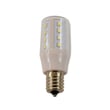
- Lamp bulb 5304517886 (interior lighting)
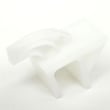
- Freezer door handle mounting clip 5303296404 (secures the handle to the door)
| Freezer section | Typical parts found there | What you notice when it fails |
|---|---|---|
| Back/bottom (outside) | Compressor, condenser coil | Warm cabinet, long run times, poor freezing |
| Inside rear wall | Evaporator (behind panel), fan (if equipped) | Frost buildup, uneven temps, weak airflow |
| Door area | Gasket, handle parts, switch | Frost around door, sweating, light issues |
| Base/drain area | Drain tube/hose | Water pooling, ice near bottom |
Knowing the major components helps you troubleshoot faster. For example, airflow and door sealing problems can mimic a sealed-system issue, but they are usually simpler and less expensive to fix.
Last updated: February 2026
Is it worth repairing an upright freezer?
Yes, repairing a Tappan upright freezer model TFU14M5AW3 is worth it when the problem is a common service item (door sealing, defrost drainage, light switch, or a minor electrical issue) and the cabinet is in good shape. It is usually not worth it when the sealed system (compressor or refrigerant circuit) is the failure.
- The freezer still runs but has warm spots, frost buildup, or leaks: repair is typically worthwhile.
- The door does not seal well, the handle is loose, or the light stays on: repair is typically worthwhile.
- The unit is completely dead (no lights, no fan, no sound): diagnose power and wiring first.
- The freezer runs constantly and never gets cold: sealed system diagnosis is the deciding factor.
- The cabinet is rusted through or the liner is cracked: replacement is typically the better choice.
These are frequent, lower-risk fixes that can restore performance without major teardown:
| Symptom | Likely area | Typical fix type |
|---|---|---|
| Water on floor or ice at bottom | Drain system | Clear/replace drain tube, clean drain path |
| Interior light issues | Door switch or bulb | Replace switch or bulb |
| Poor cooling with heavy frost | Airflow/defrost related | Defrost, check airflow, inspect door seal |
| Hot sides or poor heat release | Condenser area | Clean condenser, verify airflow |
Model-relevant parts we commonly see used in these repairs include the hose 5304512272 (drain tube), refrigerator light switch 5309918806, and lamp bulb 5304517886.
Sealed system work is the tipping point because it requires specialized tools and labor.
- Compressor not starting and confirmed failed
- Refrigerant leak or restriction
- Evaporator or condenser tubing failure
A working upright freezer protects food quality and reduces waste. Fixing a simple drainage, airflow, or door-related issue often restores normal temperatures and lowers run time, while sealed system failures typically drive the highest repair cost.
Last updated: February 2026
Do upright freezers have a drip pan?
Yes, many upright freezers do have a drip pan (also called a drain pan), but it depends on whether the freezer is self-defrosting. For the Tappan TFU14M5AW3, defrost water typically routes through a drain tube to a pan near the bottom where it evaporates during normal operation.
In a self-defrost upright freezer, meltwater from the evaporator area drains down a tube and collects in a pan near the compressor or condenser area. Heat from the sealed system helps evaporate that water.
Common components involved include:
- Defrost drain opening inside the cabinet
- Drain tube that carries water downward
- Drain pan underneath (often not meant to be removed regularly)
- Condenser area airflow that helps evaporation
On most Tappan upright freezers like model TFU14M5AW3, the drain pan sits underneath the cabinet near the rear, close to the condenser and compressor area. If you see water on the floor, the issue is usually a clogged drain tube or the unit not level, not a “missing” pan.
| Symptom | Most likely cause | What to check first |
|---|---|---|
| Water inside bottom of freezer | Drain iced or clogged | Clear ice at drain opening |
| Water on floor near front | Unit not level, door leak | Level feet, inspect door gasket |
| Water on floor near back | Drain tube misrouted or cracked | Inspect/clear drain tube |
- Unplug the freezer before accessing the rear or lower panels.
- Verify the freezer is level (slight tilt back helps doors seal).
- Check for ice buildup at the interior drain area.
- Inspect the drain tube for blockage; warm water can help clear it.
- If the drain tube is damaged or leaking, replace it with the correct part.
A common drain component for this model is the hose 5304512272 (freezer drain tube), which helps route defrost water down to the drain pan area.
A working drain and drip pan system prevents water leaks, reduces ice buildup, and helps the freezer maintain stable temperatures with fewer defrost-related problems.
Last updated: February 2026
Why is my upright freezer only freezing at the bottom shelf?
If your Tappan TFU14M5AW3 upright freezer is only freezing at the bottom shelf, cold air is not circulating upward. The most common causes are blocked air passages from overpacking, frost or ice restricting airflow, or a weak evaporator fan or defrost system that lets ice build up.
- Set the temperature colder and wait 24 hours to see if the top shelves improve.
- Make sure packages are not pressed against the back wall or side vents.
- Look for heavy frost on the rear interior panel (a sign of airflow restriction).
- Listen for the evaporator fan running when the compressor is on (door switch may need to be held closed).
- Confirm the door closes tightly and the gasket seals all the way around.
| What you notice | Likely cause | What to do next |
|---|---|---|
| Bottom is solid, top is soft | Air vents blocked by food | Repack; leave space around vents and back wall |
| Frost blanket on back panel | Defrost problem causing ice buildup | Defrost fully; then troubleshoot defrost components |
| No fan sound, compressor runs | Evaporator fan issue or wiring issue | Check fan operation and connections |
| Water or ice near bottom | Drain restriction leading to ice | Clear drain path and check drain tube |
- Do a full manual defrost: Unplug the freezer and leave the door open until all frost is melted (often 12 to 24 hours). Towel up water.
- Re-load correctly: Keep at least 1 to 2 inches of space from the back wall so air can move upward.
- Clean the condenser area: Dust buildup reduces cooling capacity and can worsen uneven temperatures.
- Check the drain path: If meltwater cannot drain, it can refreeze and contribute to ice buildup; inspect the hose 5304512272.
Upright freezers rely on forced airflow to distribute cold air. When airflow is restricted, the coldest air settles low, the top warms, and the compressor can run longer, increasing frost buildup and risking food quality.
Last updated: February 2026