Owner’s manual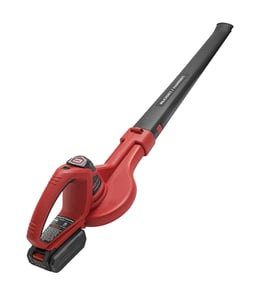

Who makes the best electric leaf blowers?
The “best” electric leaf blower depends on the job size and whether you want corded or cordless. For a corded, household-use blower like Craftsman model 358799370 (rated 210 MPH/410 CFM), prioritize airflow (CFM), airspeed (MPH), comfort, and safe operation as outlined in the 358799370 operator’s manual.
What to look for when comparing brands
When we help customers choose an electric blower, these factors matter most:
- CFM (air volume): Higher CFM moves more leaves at once.
- MPH (air speed): Higher MPH helps dislodge wet or stuck debris.
- Corded vs. cordless: Corded gives steady runtime; cordless gives mobility.
- Weight and balance: Lighter tools reduce fatigue during longer cleanups.
- Noise and vibration: Important for comfort and neighborhood use.
- Controls: Variable speed and a comfortable on/off switch improve handling.
Quick comparison: corded vs. cordless
| Feature | Corded electric blower | Cordless electric blower |
|---|---|---|
| Runtime | Continuous (with extension cord) | Limited by battery capacity |
| Power consistency | Very consistent | Can vary by battery and load |
| Best for | Driveways, patios, near outlets | Larger yards, no-cord convenience |
| Maintenance | Minimal | Battery care and charging |
How we’d match “best” to your yard
Use this simple guide:
- Small patios, garage, light leaves: Mid-range CFM/MPH, light weight.
- Driveways and sidewalks with heavier piles: Higher CFM plus good nozzle control.
- Mulch beds and tight corners: Variable speed and good directional nozzle.
- Vacuuming leaves (if equipped): Confirm tubes and bag are installed correctly; a replacement Craftsman, poulan leaf blower vacuum bag 530402533 is the common wear item.
Why it matters
A blower that is “best” on paper can still be a poor fit if it is too heavy, too loud, or mismatched to your debris type. Also, safe operation is part of performance: using the correct tubes/attachments and directing airflow away from people, animals, glass, and solid objects helps prevent damage and injury (see the 358799370 operator’s manual).
Last updated: January 2026
How long do electric leaf blowers last?
A Craftsman electric leaf blower like model 358799370 typically lasts about 10 years or more with normal homeowner use and basic maintenance. Keeping air vents clear, avoiding overheating, and storing it properly does more to extend life than any single replacement part.
Typical lifespan (what to expect)
Most corded electric blowers last longer than comparable gas blowers because they have fewer wear items (no fuel system). Real-world lifespan depends on run time, debris load, and storage conditions.
| Use pattern | Typical lifespan | What usually ends it |
|---|---|---|
| Light seasonal cleanup | 10 to 15 years | Switch, cord strain, worn bearings |
| Regular weekly use | 7 to 12 years | Motor wear, impeller damage |
| Heavy debris, frequent clogs | 5 to 10 years | Overheating, cracked impeller |
Maintenance habits that add years
Follow the safety and maintenance guidance in the 358799370 operator's manual.
- Keep air vents and the air inlet free of dust, lint, and debris to maintain airflow.
- Stop the motor before removing attachments; avoid running with blocked openings.
- Inspect the impeller for cracks; replace damaged parts before using.
- Use the correct tubes and attachments; do not run the unit without proper equipment attached.
- Store it clean, dry, and ventilated; avoid covering with plastic that traps moisture.
Why it matters
A leaf blower motor runs hottest when airflow is restricted. Clean vents, clear tubes, and proper storage reduce heat stress and prevent damage to rotating parts, which are the most common reasons electric blowers fail early.
Parts that support long-term use
If you use the vacuum function, a torn or leaking bag reduces performance and can increase clogging. For this model, the correct replacement is the Craftsman, poulan leaf blower vacuum bag 530402533.
Last updated: January 2026
Is a higher mph or CFM better for a leaf blower?
Neither MPH nor CFM is “better” by itself for the Craftsman electric blower model 358799370: CFM (air volume) clears lots of dry leaves faster, while MPH (air speed) helps dislodge and push heavier or stuck debris. Use the 358799370 operator’s manual to confirm your blower’s exact ratings.
How to choose: MPH vs. CFM
Match the spec to the job you do most often:
- Higher CFM: moves more material at once (big piles, open lawns)
- Higher MPH: breaks loose and pushes heavier debris (wet leaves, small twigs)
- CFM matters most when you want fast pile-building and broad coverage
- MPH matters most for corners, joints, mulch beds, and tight spots
- Nozzle and tube setup affects both; always run the correct blower tube for safe airflow
Quick comparison
| Spec | What it measures | When it helps most |
|---|---|---|
| CFM | Air volume moved | Clearing wide areas and building piles quickly |
| MPH | Air stream speed | Loosening stuck debris and pushing it farther |
Tips to get better real-world performance
These steps improve results even if you do not change blowers:
- Use the full nozzle extension so the air stream works close to the ground.
- Start in corners and blow outward to prevent debris from blowing back.
- Keep intake openings and tubes clear; restricted airflow reduces both CFM and MPH.
- Use the lowest power setting that still does the job to reduce noise and fatigue.
- If you use vacuum mode, keep the collection bag fully zipped and properly attached; replace a torn bag with the leaf blower vacuum bag 530402533.
Why it matters
CFM and MPH describe different kinds of cleaning power. Choosing the right balance for your yard helps you finish faster, avoid scattering debris, and keep airflow moving the way the blower was designed to run.
Last updated: January 2026