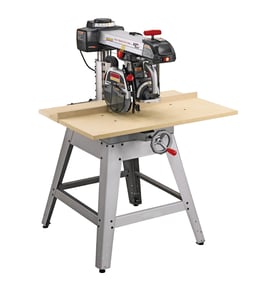

Are RYOBI parts diagrams available online?
Yes. For the Ryobi RA-200 radial arm saw, parts diagrams are available online as illustrated parts breakdowns that help you identify assemblies and match the correct replacement part to your exact model number before you order.
Where to find parts diagrams
- Use the model number RA-200 when searching; it narrows results to the correct radial arm saw version.
- Check the parts list and exploded-view diagrams associated with the model.
- If your saw has a model tag with extra numbers or a revision code, match that exactly.
- Keep the diagram open while you disassemble so you can track washers, spacers, and fasteners.
How to use a diagram to pick the right part
- Locate the section that matches your symptom (blade guard, carriage, yoke, motor, switch, cord).
- Find the callout number on the illustration.
- Cross-reference the callout to the parts list description.
- Confirm fit by comparing your existing part’s shape, mounting points, and electrical connectors.
Quick checklist (what to verify)
| Verify | What to look for | Why it matters |
|---|---|---|
| Model match | RA-200 on the ID tag | Prevents ordering the wrong revision |
| Assembly location | Guard vs. carriage vs. motor | Similar parts can look alike |
| Electrical details | Switch style, terminals, cord gauge | Avoids unsafe or incompatible wiring |
Why it matters
A radial arm saw has multiple moving and alignment-critical assemblies. Using the correct diagram reduces downtime and helps you avoid ordering a part that fits a different Ryobi configuration.
Helpful DIY reference
If you’re troubleshooting wiring or a switch issue while using the diagram, follow safe testing practices from how to use a multimeter to test electrical parts video. For ordering, start with the model parts list, or search by model number on Sears PartsDirect.
Last updated: February 2026
Are radial arm saws worth anything?
Yes. A Ryobi RA-200 radial arm saw can be worth keeping or buying if you need accurate, repeatable crosscuts on wide stock and you are willing to tune and maintain it; resale value is usually modest, but utility can be high for the right shop.
What “worth it” means for a radial arm saw
Radial arm saws still shine in a few specific woodworking tasks, especially when set up carefully.
- Wide crosscuts that exceed many miter saw capacities
- Repeatable cut lengths using a stop block system
- Dadoes and rabbets (with the correct blade and guards)
- Breaking down long boards when a table saw setup is inconvenient
- Shop workflows where the saw stays dedicated to crosscutting
Typical used value range (and what changes it)
Most used radial arm saws sell for relatively low prices compared to table saws, but condition and completeness matter.
| Condition / setup | Typical market outcome | What to check first |
|---|---|---|
| Clean, complete, cuts square | Higher end of local used pricing | Arm lock, carriage travel, fence condition |
| Runs but needs alignment | Mid to low pricing | Column play, yoke indexing, table flatness |
| Missing guards or unsafe mods | Low pricing or avoid | Guarding, switch condition, wiring |
Safety and setup factors that affect real value
A radial arm saw is only “worth it” when it is adjusted correctly and used for the right operations.
- Prioritize crosscuts; treat ripping as an advanced operation with higher kickback risk
- Confirm the blade is sharp and correct for the cut (crosscut blade for crosscuts)
- Verify the arm and yoke lock firmly; any slop reduces accuracy and increases risk
- Check the power cord, switch, and internal wiring for damage before regular use
- Use proper guarding and keep the table and fence in good shape
Why it matters
Radial arm saws can deliver excellent results for wide crosscuts and repeatable work, but they demand alignment and disciplined use. If you want a dedicated crosscut station, the RA-200 can be a practical, cost-effective tool.
For parts lookup and model-based searching, start with the RA-200 parts list and then use Sears PartsDirect to search by model number and category.
Last updated: February 2026
Where can I buy replacement parts for RYOBI?
For your Ryobi RA-200 radial arm saw, the best place to buy replacement parts is the model-specific parts listing for RA-200 first; if you do not see what you need there, search by the full model number on Sears PartsDirect to find compatible Ryobi power tool parts and diagrams.
How we recommend shopping for RA-200 parts
- Confirm the model number on the saw’s ID plate is RA-200 (not a similar Ryobi model).
- Use the model parts diagrams to identify the exact part name and location.
- Match any numbers stamped on the old part (when present) to avoid ordering the wrong item.
- For wear items, inspect related hardware (washers, bushings, fasteners) at the same time.
- If the saw has electrical symptoms, verify power cord and switch condition before ordering parts.
Common radial arm saw parts people replace
Even without a preloaded parts list for this model, these are the most commonly replaced items on a radial arm saw like the Ryobi RA-200:
| Part type | What it affects | Typical symptom |
|---|---|---|
| Power switch | Start/stop control | Won’t start, intermittent power |
| Power cord | Incoming power | Cuts out when cord moves |
| Motor brushes (if equipped) | Motor power delivery | Weak power, sparking |
| Arbor hardware | Blade mounting | Blade wobble, vibration |
| Bearings/bushings | Smooth travel | Rough carriage movement |
Before you order: quick checks that prevent wrong-part returns
Mechanical checks
- Unplug the saw and confirm the blade spins freely by hand.
- Check for play in the arm, yoke, and carriage; looseness often points to worn bushings or bearings.
- Verify the blade is correct for the arbor size and installed tight.
Electrical checks
- Try a different known-good outlet.
- Inspect the cord for cuts, crushed spots, or a loose plug.
- If you test electrical parts, use safe meter practices; our how to use a multimeter to test electrical parts video is a good baseline.
Why it matters
Ryobi power tool parts can look similar across models, but small differences in mounting holes, arbor hardware, or switch style can prevent a correct fit. Starting with the RA-200 model lookup keeps the repair accurate and safe.
Last updated: February 2026
Why are radial arm saws no longer made?
Radial arm saws like the Ryobi RA-200 are uncommon today because most buyers moved to tools that deliver the same cuts with simpler setup and more consistent guarding. A radial arm saw has more adjustments and a moving carriage, so it is easier to misalign and easier to use unsafely.
What changed in most shops
Radial arm saws were built to do many jobs (crosscuts, miters, bevels, dados, and sometimes ripping). Over time, many users preferred dedicated tools that are faster to set up and easier to keep accurate.
Common reasons demand dropped:
- More adjustment points (arm, yoke, bevel) means more chances to be out of square
- Pull-cutting can feel aggressive if the blade is wrong or the feed rate is too fast
- Ripping is easier to do incorrectly than on a table saw
- Sliding and compound miter saws repeat common trim and framing cuts quickly
- Many shops prefer a miter saw plus a table saw instead of one multi-purpose saw
Safety and setup factors that matter most
A radial arm saw can be used safely when it is aligned, guarded, and used for appropriate operations. The key difference is that it demands more discipline in calibration and technique than many newer saw designs.
Quick checklist for safer, cleaner cuts
- Keep the fence straight and firmly secured; replace it if warped or chewed up
- Use a sharp crosscut or fine-finish blade for crosscuts (avoid aggressive rip blades for pull cuts)
- Set blade depth just enough to clear the work and table surface
- Pull the carriage smoothly; keep a controlled feed so it does not surge forward
- Lock unused adjustments before cutting (arm rotation, bevel, yoke)
Radial arm saw vs. modern alternatives
| Task | Radial arm saw | Common alternative |
|---|---|---|
| Crosscutting long boards | Good support with a long table | Sliding/compound miter saw |
| Dados and joinery | Capable with careful setup | Table saw or router |
| Ripping | Possible on some setups | Table saw |
Why it matters
When a tool needs frequent alignment checks and has more ways to be misused, most owners choose equipment that stays accurate with less effort. That shift reduced demand, so fewer manufacturers kept radial arm saws in regular production.
Finding parts by model
If you are maintaining a RA-200, search by the full model number to match diagrams and compatible replacement items; start with the model page, or search our catalog on Sears PartsDirect.
Last updated: February 2026
What is the best brand of radial arm saw?
The best radial arm saw brand depends on how you’ll use it (occasional DIY, furniture work, or daily shop production) and what you can keep accurately aligned and safely guarded. For a Ryobi RA-200 owner, “best” also means choosing a saw you can maintain with the right parts and setup support from Sears PartsDirect.
Best brands by use case
- Modern, production-focused machines: look for brands that still sell new radial arm saws and publish current service information
- Vintage, heavy-duty classics: DeWalt and Delta/Rockwell are widely known for older cast-iron designs
- Industrial shop equipment: Northfield is often cited for premium build quality in older industrial machines
- Value used-market options: older Craftsman saws can be a practical choice when condition is excellent and critical parts are available
What matters more than the badge
A radial arm saw’s accuracy and safety come from rigidity, alignment, and guarding. Prioritize these checks before you buy or keep using any saw.
- Arm and carriage travel smoothly with minimal side-to-side play
- Column locks and bevel/miter detents hold firmly without slipping
- Fence and table are flat, square, and replaceable
- Blade guard, anti-kickback features, and return action work correctly
- Motor starts cleanly and runs without excessive sparking or overheating
Quick comparison (how to choose)
| Priority | What to look for | Why it matters |
|---|---|---|
| Long-term serviceability | Current parts availability and clear adjustments | Keeps the saw accurate over time |
| Cut quality | Tight carriage, solid locks, stable table | Reduces drift and chatter |
| Safety | Functional guarding and controlled return | Helps prevent climb and kickback |
Why it matters
Radial arm saws are great for repeatable crosscuts and dados, but they demand correct setup and safe operation. Choosing a brand and model you can keep aligned, guarded, and supplied with wear parts is what makes it the “best” in real use.
Last updated: February 2026