Owner’s manual

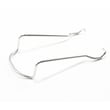
Why do landscapers take the guard off string trimmers?
Some landscapers remove the guard to improve sightlines for edging and to run a longer cutting line for faster coverage, but on the Black & DECKER LST136 the guard is a required safety part. Our guidance is to keep the guard installed and follow the owner's manual.
What the guard does (and why it matters)
The guard is designed to reduce the chance of injury and property damage by helping control debris thrown by the spinning line, especially in edging mode.
Why it matters: the manual warns that objects can be thrown at high speed during edging, and the guard is part of the tool’s safety system.
Common reasons pros remove guards
- Better visibility of the cut line for crisp edging
- Ability to use a longer line length for wider cutting swath
- Easier access in tight spots (along fences, posts, and landscaping)
- Slight weight reduction
- Faster trimming in open areas
Why we recommend keeping the guard on for the LST136
The LST136 instructions are clear: never operate the tool without the guard firmly in place. Running without it increases the chance of injury from flying debris and makes it easier to accidentally contact the rotating line.
Safety and performance checklist
- Remove the battery before adjustments or accessory changes
- Wear eye protection that meets ANSI Z87.1
- Keep people and pets at least 100 feet away when edging
- Use the correct line size: 0.065 in (1.65 mm) round nylon line
- Do not bump the head on the ground to feed line (AutoFeed is designed to feed automatically)
Quick comparison: guard on vs. guard off
| Setup | What you gain | What you risk |
|---|---|---|
| Guard on | Safer operation, better debris control, intended design | Slightly less visibility in some angles |
| Guard off | More visibility, potential speed gains | Higher debris hazard, higher injury risk, more property damage risk |
If edging looks uneven with the guard installed
- Switch to edging mode and make sure the edge guide is fully down and clicks into place
- Use the tip of the string to cut; do not force the head into thick grass
- Tilt slightly for a closer cut, and work right-to-left to reduce debris thrown toward you
Last updated: February 2026
Why does my Black and Decker strimmer line keep breaking?
On the Black & Decker LST136, line breaks most often when the wrong line type is used, the line is fed incorrectly, or you are trimming against abrasive surfaces. This model is designed for .065 in (1.65 mm) round nylon line and a self-feeding spool, so bump-feeding and heavy line can cause rapid wear and snapping.
Check the line type and spool first
Using the correct cutting line prevents motor overload and reduces breakage.
- Use .065 in (1.65 mm) round nylon monofilament line only.
- Do not use serrated, “twist,” or heavier-gauge line; it increases drag and can overheat the motor.
- If you are rewinding from bulk line, expect more tangles than a factory-wound spool.
- For this model, the manual specifies the AF-100 replacement spool.
- Confirm the line is routed through the eyelet and the cap is snapped on securely.
Adjust how you trim to reduce snapping
Line wears much faster when it is constantly scraping hard edges.
- Trim with the tip of the line, not the side of the line.
- Avoid riding the head along sidewalks, curbs, rocks, and fences.
- Slow down in thick weeds; forcing the head into heavy growth frays the line quickly.
- Keep the guard and trimming blade area clear so the line can be cut cleanly.
Self-feeding behavior (what is normal)
The LST136 uses an automatic feed system that advances and trims line as it wears.
| What you notice | Usually means | What to do |
|---|---|---|
| Line keeps getting shorter fast | Abrasive edging or heavy weeds | Reduce contact with hard surfaces; slow your pace |
| Line snaps right after feeding | Wrong line size/type or tangles | Switch to .065 in round line; respool neatly |
| Line won’t feed smoothly | Spool packed unevenly or debris in head | Clean head; rewind in neat layers |
Why it matters
Frequent line breakage is more than an annoyance; it increases load on the trimmer head and can contribute to overheating when the line is too heavy or binds in the spool.
For line specs, spool replacement steps, and correct feeding guidance, follow the owner's manual.
Last updated: February 2026
Which is better, a 20 volt or 40 volt trimmer?
A 40V trimmer is better for thicker weeds, longer run time, and faster cutting in medium to large yards; a 20V trimmer is better for lighter trimming because it’s typically lighter and easier to maneuver. For the Black+DECKER LST136, the tool is a 40V MAX system (36V nominal), so it’s built for the higher-power use case described in the LST136 owner’s manual.
Quick comparison: 20V vs 40V
| Feature | 20V class trimmer | 40V class trimmer (like LST136) |
|---|---|---|
| Best for | Small yards, touch-ups | Medium to large yards, heavier growth |
| Cutting power | Moderate | Higher for dense weeds and tall grass |
| Weight/handling | Usually lighter | Usually heavier but more capable |
| Battery ecosystem | Often shared with other 20V tools | Separate 36V/40V MAX battery family |
How we recommend choosing
- Choose 20V if you mainly trim lawn edges weekly and want the lightest feel.
- Choose 40V if you regularly hit thick grass, weeds, or overgrown edges.
- If you already own batteries, staying in the same battery platform usually saves money.
- For the LST136 specifically, use only LB series 36V or 40V MAX batteries.
- Match the trimmer to your cutting habits; forcing a smaller trimmer into heavy growth slows the job and drains batteries faster.
Getting the best results from a 40V trimmer (LST136 tips)
The LST136 can feel “better” than a 20V tool only if it’s set up and used correctly.
- Install the guard before trimming or edging; running without it can overheat the motor.
- Use only 0.065-inch round line (Black+DECKER AF-100 is the recommended type).
- Cut with the tip of the string; don’t force the head into uncut grass.
- In long growth, cut top-down and do not exceed about 12 inches of height at a time.
- Do not bump the feed head on the ground; it disrupts the feed mechanism.
Why it matters
Voltage class affects real-world performance: higher-voltage platforms generally deliver more cutting capability for tough vegetation, while lower-voltage platforms prioritize lighter weight and quick maintenance trimming. Picking the right class helps you avoid slow cutting, excessive line wear, and battery frustration.
Last updated: February 2026
How to change string on black and decker electric trimmer?
To change the cutting line on your Black & DECKER LST136, remove the battery, pop off the spool cap, swap in a new spool, then feed the line through the eyelet and snap the cap back on. The spool should seat fully and feed smoothly.
Steps to replace the spool (recommended)
- Remove the battery from the trimmer.
- Depress the tabs on the spool cap and lift the cap off the spool housing.
- Pull the old spool straight out.
- Clean grass and debris from the spool and housing.
- Guide the cutting line through the eyelet.
- Push the new spool onto the boss in the housing; rotate slightly until it seats.
- Snap the spool cap back on securely.
For the exact diagrams and part names used for your trimmer head, follow the instructions in the owner's manual.
Correct line type and what to expect
Your LST136 uses 0.065 in (1.65 mm) round nylon line. The self-feeding spool automatically advances line during use; do not bump the head on the ground to feed line.
Quick specs table
| Item | What to use | Why it matters |
|---|---|---|
| Line diameter | 0.065 in (1.65 mm) | Prevents motor overload and overheating |
| Line shape | Round nylon monofilament | Helps the feed system work correctly |
| Replacement spool | AF-100 spool model | Matches the trimmer head design |
Common issues after changing the string
- Line will not feed: confirm the line is routed through the eyelet and the spool is fully seated.
- Cap will not snap on: check tab alignment and remove packed debris from the housing.
- Line is too long: trim it so it only reaches the cutting blade area.
Why it matters
Using the correct 0.065-inch round line and a properly seated spool keeps the LST136 cutting efficiently, reduces jams, and helps protect the motor from overheating.
Last updated: February 2026