Owner’s manual




What is the capacity of the LG WT7300CW?
The LG WT7300CW washer has a 5.0 cu. ft. capacity. That capacity is the tub volume rating used to estimate how much laundry the washer can handle per load; for cycle-by-cycle loading guidance, use the fill and loading recommendations in the WT7300CW owner's manual.
A 5.0 cu. ft. LG top-load washer is designed for larger loads, but performance still depends on cycle selection, fabric type, and how freely items can move.
- Load items loosely; do not pack them down
- Mix large and small items to improve balance during spin
- Use bulky cycles for comforters and jackets
- Choose the right water level options for the load
- If the washer struggles to balance, reduce the load size
| Load type | Typical fit in a 5.0 cu. ft. top-load washer | Best practice |
|---|---|---|
| Everyday mixed laundry | Large load | Keep items below the top of the tub and allow movement |
| Towels | Large towel load | Add a few smaller items to help balance |
| Bulky items (bedding) | Often 1 bulky item plus a few small items | Use the bulky/bedding cycle and avoid overfilling |
Using the correct load size for the WT7300CW helps prevent out-of-balance spinning, reduces wear on suspension components, and improves cleaning and rinsing.
Last updated: February 2026
What is the average lifespan of an LG washing machine?
Most LG washing machines, including the LG WT7300CW, typically last 10 to 15 years with normal household use. Consistent maintenance (especially tub cleaning and mineral-scale prevention) and avoiding chronic overloading are the biggest factors that keep the motor, tub, and suspension working longer; see the WT7300CW owner's manual.
A washer’s service life is mainly driven by load size, cycle frequency, water quality, and how quickly small issues are fixed.
- Usage level: multiple loads per day shortens lifespan faster than a few loads per week
- Overloading: strains the drive system, washplate, and suspension
- Hard water: mineral scale builds up on internal components over time
- Maintenance habits: regular cleaning reduces odor, residue, and wear
- Installation basics: correct leveling reduces vibration and out-of-balance stress
The WT7300CW manual calls out steps that directly support long life, especially in hard-water areas.
- Run the Tub Clean routine as recommended for your usage
- Periodically remove mineral buildup; a water softener helps in hard-water areas
- Leave the lid open overnight after the washer sits to help the tub dry
- Check inlet hoses for wear and replace them on schedule
- Keep detergent amounts within the manufacturer’s guidance to prevent buildup
| Habit | What it helps prevent | Why it matters |
|---|---|---|
| Don’t overload | Excess vibration, premature suspension wear | Reduces stress on rods and tub support |
| Control hard-water scale | Deposits on internal parts | Scale can shorten component life |
| Keep the tub clean and dry | Odor, residue, corrosion risk | Cleaner surfaces, fewer recurring issues |
A washer that is kept clean, level, and free of mineral scale runs with less vibration and less drag on moving parts. That reduces wear on high-cost components such as the drive system and suspension.
Last updated: February 2026
What are the common errors on an LG washing machine?
On the LG WT7300CW washer, the most common error situations involve the lid not locking, an out-of-balance load during spin, control faults that clear with a power reset, and water-level or valve problems that require shutting off the faucets and servicing the washer. For code meanings and model-specific steps, use the WT7300CW manual.
- Lid lock error: the lid is not fully closed or something is caught under it.
- Out-of-balance (UE/UB-type): the washer cannot balance the load well enough to spin.
- Control error: a temporary electronics fault that often clears after a reset.
- Water valve or water-level sensing fault: the washer detects an unsafe water level condition.
- Motor error (LE-type): the drive system is overloaded or has a motor-related fault.
- Power reset: unplug the washer for 60 seconds, then restore power and retry.
- Lid check: close the lid firmly; remove any clothing or packing material caught under the lid.
- Rebalance the load: pause, redistribute items, and avoid washing one heavy item by itself.
- Run Tub Clean when prompted: if the washer indicates it is time, run the Tub Clean cycle.
- Drain and spin to clear the tub: use a Spin-only option to drain and spin, then remove items.
Some errors point to a specific system. These are common part areas to inspect or replace after diagnosis:
| Symptom or error type | Most likely system | Example part for this model |
|---|---|---|
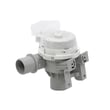
| Won’t drain, humming/gurgling, water left in tub | Drain system | Washer drain pump assembly AHA75673404 |
| Overfill, incorrect water level behavior | Water-level sensing | LG washer water-level pressure switch 6501EA1001R |
| Fill problems or valve-related water issues | Water inlet system | LG washer water inlet valve assembly AJU75152602 |
Error codes protect the washer from damage (motor strain, flooding, or unsafe spinning). Addressing the cause early helps prevent repeat shutdowns and reduces wear on the drive, suspension, and control components.
Last updated: February 2026
What is the most common problem with LG washers?
For LG top-load washers like model WT7300CW, the most common issues we see are drain and spin complaints (slow or no draining, or shaking from an unbalanced load). Many “problems” are normal sounds or automatic adjustments described in the WT7300CW owner's manual.
- Drain problems: water left in the tub, humming/gurgling during drain, cycle stops before finishing.
- Unbalanced load / vibration: banging, walking, or a spin that keeps restarting.
- Fill problems: slow fill, no fill, or low water level that seems “too low” for the load.
- Detergent dispensing issues: detergent not flushing, residue, or over-sudsing from using too much.
- Normal-operation noises: clicking (lid lock), spraying/hissing (water circulation), sloshing (balance ring).
- Run a Rinse+Spin and confirm the washer drains.
- Verify both faucets are fully open and inlet hoses are not kinked.
- Clean the inlet valve screens if filling is slow.
- Reduce load size and redistribute items before spinning again.
- Use the correct amount of HE detergent and keep the dispenser areas from clogging.
| Symptom | Most likely cause | What to do next |
|---|---|---|
| Won’t drain or drains slowly | Drain restriction or failing pump | Check for blockage; if needed replace washer drain pump assembly AHA75673404 |
| Won’t fill or fills slowly | Clogged inlet screens or supply issue | Clean screens; if valve is faulty replace LG washer water inlet valve assembly AJU75152602 |
| Overfills or water level acts “wrong” | Pressure sensing issue | Inspect hose; consider LG washer water-level pressure switch 6501EA1001R and washer water-level pressure switch hose 5210FA3427J |
| Loud shaking in spin | Unbalanced load or suspension wear | Rebalance load; inspect suspension rods and shocks |
Drain, fill, and balance issues can make cycles run longer than expected, leave clothes wetter, and increase wear on parts like the drain pump, suspension, and drive components.
Last updated: February 2026
Why is my LG top loader washer leaking from the bottom?
A bottom leak on an LG WT7300CW washer almost always comes from a loose or damaged water hose connection, a drain hose problem, or an internal leak at the drain pump area. We start by checking hose fittings for seepage, then confirm the drain hose is installed at the correct height and secured.
- Turn off both faucets; dry the floor and run a short fill to pinpoint the first drip.
- Check hot and cold hose connections at the wall and at the washer; tighten snugly (do not overtighten).
- Look for cracked, bulging, or worn fill hoses; replace old hoses (LG recommends replacing about every 5 years).
- Confirm the drain hose is not kinked or pinched behind the washer.
- Verify the drain hose is secured so it cannot pop out during draining.
A drain hose that is too low, too high, kinked, or not vented can cause siphoning, overflow, or water backing up and spilling near the base.
| Drain hose detail | What to do | Why it matters |
|---|---|---|
| Standpipe/laundry tub height | Keep the end about 29.5 to 96 inches above the bottom of the washer | Prevents siphoning and overflow |
| Air gap | Do not tape the hose airtight to the drain | Prevents siphoning and poor rinse performance |
| Securing | Use a strap or tie to hold the hose in place | Prevents flooding if the hose jumps out |
For the exact installation limits and diagrams, follow the WT7300CW owner's manual.
If the hoses and drain setup are correct, the leak is typically internal and shows up during drain or spin.
- Drain pump housing or seals leaking; check around the pump for drips
- Loose hose clamp on the tub-to-pump or pump-to-drain hose
- Oversudsing pushing water out; use only HE detergent and reduce the amount (often 1/4 to 1/2 of the detergent cap)
- Inlet valve area leaking during fill; debris can affect inlet screens and valve sealing
If you see water dripping near the pump during drain, the washer drain pump assembly AHA75673404 is the most direct part match for this model.
A “bottom leak” can quickly damage flooring and can also lead to fill or drain performance problems if the drain hose is siphoning or backing up.
Last updated: February 2026
How much does it cost to replace a rubber seal on an LG washing machine?
For an LG washer like model WT7300CW, replacing a rubber seal (door boot gasket on front-load models) typically runs $150 to $350 total with professional service; the part is usually $50 to $150 and labor commonly adds $100 to $200. Top-load models often do not use a door boot gasket, so the “rubber seal” may be a different leak source.
- Part cost (rubber seal or related sealing component)
- Labor time (disassembly, seal install, leak test)
- Service call/diagnostic fee (sometimes rolled into labor)
- Optional hose replacement if hoses are old or leaking
| Scenario | Typical total cost | Notes |
|---|---|---|
| DIY replacement | $50 to $150 | You pay for the part only; time and tools are on you. |
| Pro replacement (most common) | $150 to $350 | Includes labor; varies by region and access. |
| Leak is actually hoses/valves | $25 to $250 | Hoses are cheaper; inlet valve replacement costs more. |
WT7300CW is a top-load LG washer, so leaks are more often tied to fill and drain components than a front-load door gasket. We use the troubleshooting and parts diagrams in the WT7300CW owner's manual to pinpoint the leak location before ordering parts.
Check these common leak points:
- Water inlet hose connections (hot/cold)
- Inlet valve area (drips during fill)
- Drain hose and pump area (leaks during drain/spin)
- Tub-to-pump hoses (seepage under the cabinet)
- Overfilling symptoms (water-level sensing issue)
If the leak happens during drain/spin, the drain system is a frequent culprit; a common replacement is the washer drain pump assembly AHA75673404. If the leak happens during fill, the LG washer water inlet valve assembly AJU75152602 is a common suspect.
Ordering the wrong “seal” wastes time and money. Identifying whether the leak occurs during fill, agitation, or drain/spin quickly narrows the repair to the right LG washer part and keeps water damage risk low.
Last updated: February 2026