Owner’s manual
 View engine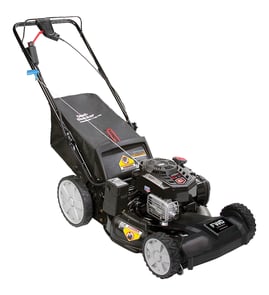



Should I use 87 or 93 for lawn mower?
For the Craftsman 917389391 gas walk-behind lawn mower, we use regular 87-octane unleaded gas for normal operation; 93-octane does not improve power or reliability in typical small engines. For best results, use fresh fuel and follow the fuel guidance in the owner's manual.
What to use (and what to avoid)
- Use 87 octane unleaded gasoline for everyday mowing.
- 93 octane is safe to run, but it is usually a waste of money because octane is not a “power booster.”
- Use fresh fuel (older gas is a common cause of hard starting and rough running).
- Avoid E15, E20, E85 or any fuel with more than 10% ethanol.
- If you have access to ethanol-free fuel, it can help reduce storage and carburetor issues.
Quick comparison
| Fuel choice | Works in most mowers | Best for | Notes |
|---|---|---|---|
| 87 octane (regular) | Yes | Normal mowing | Standard recommendation for small engines |
| 93 octane (premium) | Yes | No real advantage | Higher octane does not equal more power |
| Ethanol-free (often 90 octane) | Yes | Storage, fewer fuel issues | Helpful if the mower sits between uses |
| E15 or higher ethanol blends | No | None | Can cause running and fuel-system problems |
Why octane does not “add performance”
Octane mainly measures resistance to knock in high-compression engines. Most walk-behind mower engines are designed to run correctly on regular fuel, so premium fuel typically does not change cutting performance, engine speed, or starting.
Tips that matter more than octane
- Buy gas in small quantities so it stays fresh.
- If the mower will sit for 30+ days, treat the fuel and prep it for storage using the steps in the owner's manual.
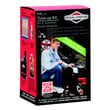
- If you are fighting stale-fuel symptoms (won’t start, surging, dies at idle), start with fuel refresh and a tune-up; the briggs & statton tune-up kit 5140B is a common maintenance item.
Last updated: February 2026
How to find Craftsman model number?
On a Craftsman walk-behind mower like model 917389391, the model number is typically printed on a decal or tag on the mower deck (often near the rear wheel area) or on the rear housing. Use the model number to match the correct parts list and diagrams in the owner's manual.
Where to look on model 917389391
Check these common spots first:
- Top of the mower deck near the engine mounting area
- Rear of the deck near the height-adjuster or discharge opening
- Side of the deck near a rear wheel bracket
- Rear housing panel behind the grass bag area (if equipped)
- Under the handle mounting area where the handle bolts to the deck
What you should write down
We recommend recording both identifiers if they are present.
| Item | What it’s used for | Example format |
|---|---|---|
| Model number | Ensures correct parts diagrams and part fit | 917389391 |
| Serial number | Helps identify production run variations | Letters and numbers |
Why it matters
Craftsman mower parts can look similar across different 21-inch walk-behind models, but small differences affect fit. Using the exact model number helps you select the right blade adapter, drive belt, control cable, and hardware the first time.
If the tag is missing or unreadable
Use these practical workarounds:
- Compare your mower’s handle and deck style to the exploded views in the owner's manual
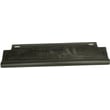
- Identify a few key parts already on the mower (for example the lawn mower control bar 532131696 or rope guide 586122501) and match them to the parts diagrams
- If you recently replaced a part, match its part ID or part number to the parts list for confirmation
Last updated: February 2026
What year is Craftsman Model 917389391?
Craftsman model 917389391 is a walk-behind mower model number, not a date code; the year of manufacture is not encoded in 917389391. To date your mower, we use the engine model/type/code (on the Briggs & Stratton engine) or the mower’s product ID/serial label; the owner's manual shows the mower model and engine family used on this unit.
How to find the year (fastest method)
Use the engine identification numbers because they typically include a date code.
- Locate the engine shroud/blower housing (top or side of the engine)
- Find the stamped/printed model, type, and code numbers
- Record all numbers exactly as shown
- Use the code to determine the build date (the code format varies by engine family)
- Match the engine family to what’s listed for this mower (the manual shows a Briggs & Stratton engine model 12H802-2675-E1)
Where to look on the mower
Common places to find mower identification labels:
- Rear of the deck near the discharge opening
- Under the rear door or near the bagger mount
- On the handle bracket area
- On the engine shroud (engine numbers)
What we can confirm from the documentation
The manual identifies the mower and engine family used with this model.
| Item | What it tells you | Where it’s used |
|---|---|---|
| Mower model: 917389391 | Identifies the mower parts breakdown | Parts lookup and repair parts list |
| Engine model: 12H802-2675-E1 | Identifies the engine family | Engine parts and engine date coding |
Why it matters
Getting the correct year (or at least the correct engine family) helps us match the right maintenance and repair parts, like the briggs & statton tune-up kit 5140B, blade adapter, belts, and control cables, so fit and performance stay correct.
Last updated: February 2026
What are the common problems with Craftsman lawn mowers?
On the Craftsman 917389391 gas walk-behind mower, the most common problems are no-start, loss of power, and poor or uneven cutting. We troubleshoot these by checking fuel quality, air flow (air filter), ignition (spark plug and wire), operator presence control (control bar), and the blade mounting hardware.
Most common symptoms and what usually causes them
- Won’t start: dirty air filter, out of fuel, stale or water-contaminated fuel, spark plug wire off, bad spark plug, control bar released/defective
- Loss of power: cutting too much grass, heavy grass drag, dirty air filter, grass buildup under the deck, too much oil, walking too fast
- Poor or uneven cut: worn/bent/loose blade, uneven wheel height settings, debris packed under the mower housing
For the model-specific troubleshooting chart and maintenance schedule, use the owner's manual.
Quick checks we recommend first (fastest wins)
- Fuel: Drain and refill if fuel is stale; water in fuel also causes hard starting.
- Air filter: Clean or replace if dirty.
- Spark plug and wire: Make sure the wire is firmly connected; replace the plug if fouled.
- Control bar: Hold the control bar fully against the handle; the mower won’t run if it’s released.
- Deck underside: Clean grass and debris buildup; it can cause power loss and uneven cutting.
Parts that commonly fix these issues
If inspection shows worn or damaged hardware, these model-matched parts are common replacements:
| Problem you see | Part that often helps | Example part on this model |
|---|---|---|
| Blade feels loose, vibration, uneven cut | Blade adapter or fasteners | Lawn mower blade adapter 581547901, lock nut 532409149 |
| Self-propel issues (won’t move or slips) | Drive belt | Belt, 21-in 532406712 |
| Safety/control issues at the handle | Control cable or control bar | Husqvarna lawn mower zone control cable 532162778, lawn mower control bar 532131696 |
Why it matters
Most “mower problems” trace back to airflow, fuel quality, or safety controls. Fixing those basics first prevents repeat no-starts, reduces engine strain, and improves cut quality.
Last updated: February 2026
Is it cheaper to repair or replace a lawn mower?
For a Craftsman 917389391 gas walk-behind mower, it’s cheaper to repair when the problem is routine wear (blade, belt, cable, grass bag) or basic maintenance. Replacement makes more sense when the engine or drive system has major damage and the repair total approaches about half the cost of a comparable new mower.
Quick decision checklist
- Repair when the mower starts reliably and cuts well after a tune-up.
- Repair when the issue is a wearable part (blade adapter, belt, control cable, discharge guard).
- Repair when you can do the work yourself and only need parts.
- Replace when the engine has low compression, heavy smoke, or severe internal noise.
- Replace when the drive system repair is extensive and multiple parts are worn at once.
- Replace when the deck is badly rusted or cracked and won’t hold adjustments.
Typical repair costs vs. replacement value
Use this as a practical way to decide; add up parts plus your time (or labor if you are paying a shop).
| Situation | Usually best choice | Why |
|---|---|---|
| Dull/bent blade, vibration, uneven cut | Repair | Common wear item; fast fix |
| Self-propel won’t pull or slips | Repair first | Often belt or drive adjustment |
| Pull cord issues or hard starting | Repair first | Often maintenance-related |
| Engine damage (internal) or major drive failure | Replace | High cost relative to mower value |
Model-specific parts that commonly make repair economical
These are the kinds of fixes that usually cost far less than replacing the mower:
- Briggs & statton tune-up kit 5140B for routine maintenance items
- Belt, 21-in 532406712 if the drive system slips or won’t propel
- Husqvarna lawn mower zone control cable 532162778 if the control bail/cable won’t engage properly
- Lawn mower blade adapter 581547901 if the blade won’t seat correctly or the adapter key is damaged
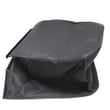
- Grass bag 532410666 if the catcher is torn or won’t collect well
Why it matters
Repairing a mower like the 917389391 is often the best value because many problems are normal wear items. The owner’s manual also calls out several “expendable” parts (blades, blade adapters, belts, air cleaners, spark plug) as expected wear, which is exactly the type of repair that stays cost-effective. Check maintenance and service steps in the owner's manual.
Last updated: February 2026