Owner’s manual
 Error Codes




What is the life expectancy of an LG fridge?
Most LG refrigerators, including the LG LMXC22626D, typically last 10 to 15 years with normal household use and basic maintenance. Your actual lifespan depends most on compressor health, airflow (clean condenser area), and keeping door seals tight; our LMXC22626D owner's manual also outlines warranty coverage timeframes that help set expectations.
Typical lifespan and what affects it
- Usage patterns: frequent door openings and warm kitchens increase run time.
- Maintenance: keeping the condenser area clean helps the sealed system run cooler.
- Door sealing: worn gaskets cause longer run times and temperature swings.
- Water and ice system care: clogged filters and low water flow can stress components.
- Power quality: repeated outages or surges can shorten control and compressor life.
Lifespan vs. warranty coverage (not the same thing)
The manual’s limited warranty periods are coverage windows, not a guaranteed lifespan. Here is the general structure shown for U.S. coverage in the manual:
| Component group | Typical warranty coverage shown in manual | What it means for lifespan |
|---|---|---|
| Refrigerator/freezer (overall) | 1 year | Early defects are usually covered; wear and tear happens later |
| Sealed system (condenser, dryer, connecting tube, evaporator) | 5 years | Major cooling-system parts have longer coverage |
| Linear/inverter compressor | 5 years parts and labor; years 6-10 parts only | Compressor is a key long-life component, but labor may apply later |
Maintenance that most improves longevity
- Vacuum dust from the condenser area regularly (frequency depends on pets and dust).
- Keep food from blocking air vents inside the fresh food and freezer sections.
- Confirm doors close fully and sit level; adjust alignment if needed.
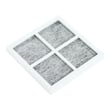
- Replace filters on schedule and purge air after filter changes.
- Set stable temperatures (avoid frequent setting changes).
Why it matters
A refrigerator that runs longer than necessary uses more energy and puts extra wear on the compressor, evaporator fan, and defrost system. Simple airflow and sealing checks often add years of reliable cooling.
Last updated: January 2026
What is the most common problem with LG fridges?
For LG refrigerators like model LMXC22626D, the most common customer-reported issue is cooling trouble (warm fridge or freezer). In many cases, the root cause is a failed compressor or a problem in the cooling airflow or defrost system; our first step is to follow the checks in the LMXC22626D owner's manual.
Most common symptoms we see
- Refrigerator section is warm but freezer seems OK (or vice versa)
- Temperatures swing up and down
- Food spoils faster than normal
- Unusual running sounds, long run times, or frequent cycling
- Ice maker slows down or stops because the freezer is not cold enough
Quick checks before replacing parts
These steps rule out simple causes that look like “no cooling”:
- Confirm the unit has power; check the home breaker or GFCI outlet (the manual calls this out in troubleshooting).
- Make sure the controls are not set to OFF and the refrigerator is not in Demo/Display Mode.
- Verify doors close and seal fully; air leaks can mimic cooling failure.
- Allow 24 hours after temperature changes or after a long power outage for temps to stabilize.
- If ice or water dispenses unexpectedly, shut off the water supply and follow the dispenser guidance in the manual.
Common causes and what they affect
| Likely issue | What you notice | What to check next |
|---|---|---|
| Compressor or sealed system problem | Little to no cooling anywhere | Confirm fans run and condenser area is clear; then move to professional diagnosis |
| Evaporator airflow problem | Warm spots, weak airflow | Listen for fan noise; inspect for frost buildup |
| Defrost system problem | Frost on back wall, warming over time | Check for heavy frost and restricted airflow |
| Door seal leak | Moisture, frost, temp swings | Inspect gasket contact and alignment |
Parts that are often involved (when symptoms match)
We only recommend parts when the symptom points to them:
- If you suspect weak internal airflow, the refrigerator evaporator fan motor EAU63923603 is a common component in the cooling circuit.
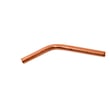
- If you have puddles or recurring water under the unit, a blocked drain system can be involved; the refrigerator drain tube 5251JA3003D is one related part.
Why it matters
Cooling problems are time-sensitive because temperature swings can spoil food and also reduce ice production. Starting with the model-specific troubleshooting steps helps you avoid replacing parts that are not causing the issue.
Last updated: January 2026
Are all refrigerators 70 inches tall?
No. Refrigerator height varies a lot by style and capacity, so not all refrigerators are 70 inches tall. For the LG LMXC22626D, the height is about 68 1/2 inches to the top of the case and about 69 3/4 inches to the top of the hinge, so it is close to 70 inches but not exactly. See the LMXC22626D owner's manual for the full dimensions and clearance requirements.
Typical refrigerator height ranges
Most refrigerators fall into a few common height bands, depending on the design:
- Compact and apartment-size models: often under 67 inches
- Top-freezer models: often around the mid 60-inch range
- French door and side-by-side models: often about 68 to 72 inches
- Built-in or specialty models: can be over 70 inches
LMXC22626D dimensions that matter for fit
When you are checking a cutout, we recommend measuring for both height and depth, plus door swing space.
| Measurement (LG LMXC22626D) | What it means for your space |
|---|---|
| Height to top of case: 68 1/2 in. | Cabinet height clearance above the box |
| Height to top of hinge: 69 3/4 in. | True “tallest point” clearance |
| Depth without handle: 28 3/4 in. | How far the cabinet sticks out (not counting handles) |
| Back clearance: 2 in. | Airflow and connection space behind the unit |
Quick measuring checklist before you buy
- Measure the opening height in at least 3 spots (left, center, right)
- Measure opening width at top and bottom
- Measure depth to any wall, cabinet, or island that could block doors/drawers
- Plan for at least 24 inches of space in front for doors and drawers to open
- Confirm you can get the refrigerator through doorways; door removal is sometimes needed (covered in the manual)
Why it matters
A “70-inch tall” label is often shorthand for a common kitchen opening, not a guarantee of the refrigerator’s exact height. Using the hinge height and required clearances helps prevent installation problems, poor airflow, and doors that cannot open fully.
Last updated: January 2026