Owner’s manual
 View engine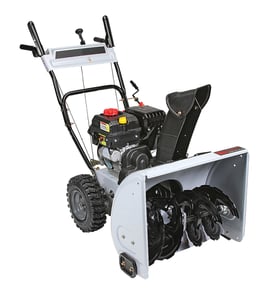

Where can I find my snowblower model number?
On Craftsman snow thrower model 536886811, the model and serial numbers are printed on a decal attached to the rear of the snow thrower housing. Use that decal information when looking up parts, service, or the correct manual for your unit (see the owner's manual).
Where to look on the machine
Check these common spots on the Craftsman 536886811:
- Rear of the snow thrower housing (main model and serial decal)
- Engine mount frame (snow thrower model number location noted in the manual)
- Blower housing area for the engine model number (separate from the snow thrower model)
- Frame near the auger housing (labels are sometimes placed along the side rails)
Model number vs. engine model number (what to record)
Your snowblower has two identifiers; having both helps you get the right parts fast.
| What it identifies | Where it’s found | Example for this unit |
|---|---|---|
| Snow thrower model number | Rear housing decal / engine mount frame | 536886811 |
| Engine model number | Blower housing | 143.836012 |
Why it matters
The model number narrows parts to the correct build of your snowblower (auger drive belt, pulleys, chute parts, hardware). The engine model number is used for engine-specific items like carburetor parts and ignition components.
Quick tips if the decal is hard to read
- Wipe the decal with a damp rag and mild soap; avoid harsh solvents
- Use a flashlight at an angle to make faint printing easier to see
- Write down the serial number and date of purchase and keep them with your records
Last updated: February 2026
What is the typical lifespan of a gas snowblower?
A gas snowblower typically lasts 10 to 20 years with normal residential use and consistent maintenance. For your Craftsman snow thrower model 536886811, following the maintenance and storage steps in the owner's manual helps you reach the high end of that range.
Typical lifespan range (what to expect)
Most gas snowblowers fall into these real-world ranges:
- 10 to 20 years for a well-maintained machine
- 8 to 12 years if it sees heavy use, poor storage, or infrequent maintenance
- 20+ years is common when fuel, oil, and wear items are handled on schedule
Quick comparison
| Usage and care level | Typical lifespan | What usually ends it |
|---|---|---|
| Light use, stored indoors, maintained | 15 to 20 years | Wear items, corrosion, fuel system varnish |
| Average use, basic upkeep | 10 to 15 years | Belts, friction drive wear, carb issues |
| Heavy use, stored outdoors, minimal upkeep | 8 to 12 years | Rust, seized controls, repeated drive failures |
What matters most for Craftsman 536886811 longevity
The manual emphasizes maintenance and storage habits that directly affect lifespan, especially fuel handling and end-of-season prep.
- Do not store with fuel indoors near ignition sources; let the engine cool before storage
- Prevent auger/impeller freeze-up by running the machine a few minutes after blowing snow
- Stabilize or drain fuel for storage; run the engine after adding stabilizer so treated fuel reaches the carburetor
- Change oil and protect the cylinder for off-season storage (oil in spark plug hole, pull starter rope a few times)
- Inspect and tighten fasteners (including shear bolts and other bolts) to keep it safe and reliable
Common “wear items” that shorten lifespan if ignored
These parts are designed to wear; replacing them on time keeps the machine worth maintaining:
- Auger drive belt (example: snowblower auger drive belt 3887MA)
- Idler pulley (example: idler pulley 1502120MA)
- Friction drive components (drive slipping, poor traction)
Why it matters
A snowblower usually does not “wear out” all at once; it loses reliability from fuel system deposits, rust, and drive wear. Good storage practices and timely replacement of belts and pulleys keep performance strong and prevent expensive secondary damage.
Last updated: February 2026
Should I spray my snowblower with WD-40?
Yes; for Craftsman snow thrower model 536886811, a light spray lubricant can be used on bare metal inside the auger housing and impeller area to help reduce rust and snow sticking, especially before storage. We avoid soaking belts, pulleys, and friction surfaces because overspray can cause slipping.
Where it helps (and where it does not)
Use a spray lubricant as a light coating on these areas:
- Inside the blower housing (bare metal surfaces)
- Auger housing and impeller surfaces (bare metal)
- Discharge chute flange area (then follow the lubrication schedule)
Avoid spraying these areas:
- Drive and auger belts
- Pulleys and idlers (overspray can reduce grip)
- Friction drive components (can cause loss of traction)
Best practice for this model
Your 536886811 manual calls out routine cleaning after each use and regular lubrication intervals. Use this quick routine:
- After each use, remove snow and slush to prevent freezing of the auger or controls.
- Check for loose or damaged parts; tighten fasteners.
- Lubricate on schedule (chute flange about every 5 hours of use; auger shaft fittings about every 10 hours).
- Before storage, clean thoroughly and coat bare metal with a rust preventative spray lubricant.
For the full lubrication points and intervals, follow the owner's manual.
Quick decision table
| Goal | Better choice | Notes |
|---|---|---|
| Stop snow from sticking during use | Light spray on bare metal | Reapply as needed; snow abrasion removes it quickly |
| Prevent rust during storage | Rust preventative spray on bare metal | Apply after cleaning and drying |
| Fix frequent clogging | Cleaning + correct auger operation | Also check auger condition and shear bolts per manual |
Why it matters
Overspraying lubricants onto belts, pulleys, or friction drive parts can create slipping, poor throwing performance, or loss of drive. Keeping lubrication targeted to the correct metal surfaces helps performance without creating new problems.
Last updated: February 2026
Is it cheaper to repair or replace a snowblower?
For a Craftsman snow thrower model 536886811, repairing is usually cheaper when the fix is a normal wear item (belt, pulley, cable, hardware) and the machine is otherwise solid. Replacing is usually smarter when major drivetrain or auger damage pushes repair cost to about half the price of a comparable new snowblower.
Quick decision checklist
- Repair when the problem is isolated (no major vibration, no bent parts, no repeated failures).
- Repair when you can replace common wear parts and do basic maintenance.
- Replace when the auger/impeller area has major damage after hitting an object.
- Replace when the machine has persistent abnormal vibration even after inspection.
- Replace when multiple big-ticket assemblies are needed at the same time.
Typical repair costs vs. replacement (rule of thumb)
| Scenario | Usually cheaper choice | Why |
|---|---|---|
| Worn belt, slipping auger | Repair | Low parts cost, fast fix |
| No drive or weak traction from friction/drive wear | Repair (often) | Common service item on older units |
| Auger assembly damage or multiple major parts needed | Replace (often) | Parts plus labor add up quickly |
| Repeated issues plus heavy rust and wear | Replace | Reliability drops and downtime increases |
Model 536886811 parts that often make repair worthwhile
These are common, repairable items that typically cost far less than a new machine:
- Snowblower auger drive belt 3887MA (auger will not engage, squealing, burning rubber smell)
- Idler pulley 1502120MA (belt won’t tension correctly, belt jumps or slips)
- Lock nut 334538MA and nut 703117 (loose hardware after vibration or service)
Why it matters
A snowblower that vibrates abnormally or was damaged by a foreign object should be shut down and inspected before you decide. The owner's manual calls out vibration as a warning sign and recommends stopping the engine and disconnecting the spark plug wire before inspecting or repairing.
Last updated: February 2026