




Is the Honda GXV530-EXA2 discontinued?
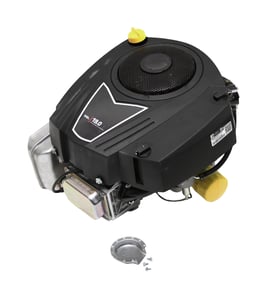
Yes. The Honda GXV530-EXA2 is an older lawn and garden engine model and it is typically treated as discontinued as a complete engine assembly; however, replacement parts are still commonly available, which is what matters for keeping your equipment running.
How to tell in practical terms
If you can still buy the parts you need and the engine can be serviced, you can keep using it even when the full engine model is no longer sold new.
- Look up parts by the exact model number GXV530-EXA2 to avoid mismatches.
- Replace common wear items first (air filter element, carburetor parts, ignition parts, gaskets).
- If you are chasing a no-start, verify spark and fuel delivery before buying major parts.
- For oil leaks, start with seals and O-rings before replacing housings.
- For hard starting, check ignition coil condition and flywheel key timing.
Parts availability: what we typically see
Most discontinued engines remain serviceable for years because key components stay in distribution.
| Need | What to check first | Example part on this model page |
|---|---|---|
| No start (no spark) | Spark, kill wire, coil air gap | Lawn & garden equipment engine ignition coil 30550-ZJ1-023 |
| No start (fuel issue) | Fuel quality, float sticking, carb passages | Carburetor assembly 6662423 |
| Oil seep/leak | Crankcase area, covers, O-rings | Lawn & garden equipment engine o-ring 91301-ZM0-V31 |
| Poor running under load | Air filter, fuel delivery, governor linkages | A/c element 6605257 |
Why it matters
“Discontinued” mainly affects buying a brand-new engine, not maintaining the one you already own. As long as service parts like ignition coils, carburetor components, and seals are available, GXV530-EXA2 repairs stay straightforward and cost-effective.
Last updated: February 2026
What does GXV530-EXA2 mean?
On a Honda lawn and garden engine, GXV530-EXA2 is the model identifier: GXV is the engine family/series, 530 indicates the approximate engine size class within that series, and EXA2 is a specific version code that identifies the exact configuration (such as carburetion, governor, starter/charging setup, and emissions or application details) for parts matching.
Why the full model code matters for parts
Honda uses the suffix (like EXA2) to separate engines that look similar but use different components. Using the complete GXV530-EXA2 code helps us match the correct carburetor, ignition, and internal engine parts.
Common differences tied to the suffix include:
- Carburetor and jetting calibration
- Ignition system and coil style
- Starter motor and charging components
- Governor linkage and springs
- Air cleaner and intake parts
- Gaskets and seals used on covers and housings
Where you’ll use GXV530-EXA2 when troubleshooting
When you’re diagnosing a no-start, rough running, or fuel leak, the model code helps narrow the right replacement part group.
Here are examples of parts on this model’s list that depend on correct model matching:
- Carburetor assembly 6662423
- Lawn & garden equipment engine ignition coil 30550-ZJ1-023
- Float set 16013-Z0A-004
- Lawn & garden equipment engine o-ring 91301-ZM0-V31
Quick reference: what each section usually indicates
| Code section | What it typically identifies | Example for this engine |
|---|---|---|
| GXV | Engine family/series | GXV (vertical-shaft series) |
| 530 | Size class within the series | 530 |
| EXA2 | Exact version/configuration | EXA2 |
Why it matters
Ordering by only “GXV530” can pull parts that fit a different GXV530 variant. Using GXV530-EXA2 keeps the parts match tight, which prevents hard-starting, poor performance, and repeat repairs.
Last updated: February 2026
Are Honda GXV530-EXA2 engines good?
Yes. The Honda GXV530-EXA2 is a GX-series lawn and garden engine built for dependable starting, steady power, and long service life when it is maintained on schedule. Most “not running right” complaints trace back to fuel, air, or ignition maintenance items rather than the engine design.
What “good” looks like on a GXV530-EXA2
- Starts consistently hot and cold with a fully charged battery and clean fuel
- Idles smoothly without hunting or surging
- Accelerates without hesitation (no bogging under load)
- Runs at stable governed speed with normal vibration
- Stays clean around seals and covers (no fresh oil or fuel wetness)
Maintenance items that most affect reliability
Keeping these basics current is what makes GX-series engines feel “legendary” in real-world use:
- Air filtration: replace or service the air filter element on schedule; a clogged filter causes rich running and power loss (see a/c element 6605257).
- Fuel system cleanliness: stale fuel and varnish are the top causes of hard starting and surging; if needed, service the carburetor (see carburetor assembly 6662423) and float components (see float set 16013-Z0A-004).
- Ignition health: weak spark can mimic fuel problems; inspect wiring and test the coil if misfire shows up (see lawn & garden equipment engine ignition coil 30550-ZJ1-023).
- Sealing surfaces: replace worn seals and O-rings during service to prevent air leaks and seepage (see lawn & garden equipment engine o-ring 91301-ZM0-V31).
Quick symptom-to-likely-cause guide
| Symptom | Most common cause | Parts often involved |
|---|---|---|
| Surging at idle | Lean condition from dirty carb or air leak | Carburetor, O-ring/gaskets |
| Hard starting after storage | Stale fuel, plugged jets | Carburetor, float set |
| Misfire under load | Weak ignition or poor connection | Ignition coil |
| Low power | Restricted air intake | Air filter element |
Why it matters
A “good” engine is mostly the result of consistent airflow, clean fuel delivery, and strong spark. When those three are right, the GXV530-EXA2 delivers the smooth, durable performance people expect from Honda GX-series engines.
Last updated: February 2026
What horsepower is a Honda GXV530-EXA2?
The Honda GXV530-EXA2 is a GXV530-series vertical-shaft V-twin engine that’s commonly listed at 15.2 net HP (11.3 kW) at 3,600 RPM. You may also see a higher “gross” power figure in some listings; net HP is the best number for real-world comparison.
How to confirm the exact rating on your engine
Use the engine’s identification label and the equipment spec plate; those match the engine’s spec code to the correct published power rating.
- Find the engine ID label on the engine shroud, valve cover area, or near the starter
- Record the full model number: GXV530-EXA2
- Note any spec or type code shown on the label (often used to match exact configuration)
- Check the mower or tractor spec plate; some equipment makers publish their own HP format
- When ordering parts, match by model and the exact part number to avoid fit issues
Why horsepower numbers vary across listings
Different standards and marketing practices can make the same engine look like it has different horsepower.
| Listing term | What it means | What to use it for |
|---|---|---|
| Net HP | Power with typical engine accessories and load | Best for comparing engines and performance |
| Gross HP | Peak output under a defined test setup | Often reads higher than net |
| “HP class” | Rounded or marketing category | Not precise for specs or parts matching |
Why it matters for repairs and parts
Horsepower ties directly to the engine’s tune and load capability; using the correct carburetion and ignition parts helps prevent hard starting, surging, and power loss.
If you’re chasing performance issues, common items to inspect include fuel delivery and ignition; the carburetor assembly 6662423 is one of the listed replacement parts for this GXV530-EXA2.
Last updated: February 2026
What is Honda's strongest engine?
Honda’s “strongest” engine depends on the job. For your Honda GXV530-EXA2 lawn and garden engine, “strong” usually means dependable torque under load and long service life. If you mean maximum factory horsepower, Honda’s larger GX V-twins (such as GX630 and GX690) are typically the top of the lineup.
Define “strongest” the right way
For engines, people usually mean one of these:
- Most horsepower (peak output)
- Most torque (pulling power under load)
- Most durable (long service life with maintenance)
- Best work performance (holds RPM with blades, pumps, or hydro drives)
For a mower or utility machine using a GXV530-EXA2, torque, cooling, and fuel delivery consistency matter more than peak horsepower.
Where the GXV530-EXA2 fits
The GXV530-EXA2 is a commercial-duty V-twin used on equipment that needs steady power. It is not Honda’s largest or highest-output V-twin; it is a strong choice when the application is matched to its displacement and the engine is kept in tune.
Quick comparison (what “strongest” means)
| If you mean… | Best metric to compare | What to look at on GXV530-EXA2 |
|---|---|---|
| Work strength | Torque and RPM stability | Clean air intake, correct fuel delivery, good ignition |
| Peak output | Factory HP rating | Compare to larger GX V-twins (GX630, GX690) |
| Durability | Maintenance history | Oil changes, filtration, cooling airflow |
If your GXV530-EXA2 feels weak, check these first
Most “lost power” complaints come from tune and fuel issues, not the core engine:
- Restricted air intake (dirty filter or blocked screen)
- Carburetor varnish, incorrect metering, or sticking float
- Weak spark under load (coil or plug issue)
- Fuel cap venting problems or stale fuel
Model-matched parts that often come up in these repairs include the carburetor assembly 6662423, float set 16013-Z0A-004, and lawn & garden equipment engine ignition coil 30550-ZJ1-023.
Why it matters
Picking the “strongest” Honda engine is really about matching the engine to the workload. An engine that is too small bogs down and runs hot; an engine that is properly sized and maintained holds RPM, cuts cleaner, and lasts longer.
Last updated: February 2026