Installation guide
 Owner’s manual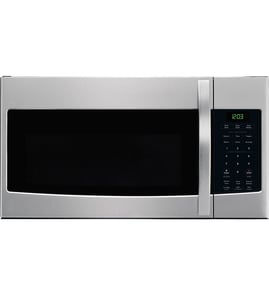



What is the average lifespan of a GE microwave?
A GE microwave typically lasts 9 years. For an over-the-range microwave/hood combo like GE PVM9005SJ1SS, heavy daily cooking, heat and grease from the cooktop, and poor airflow can shorten life; good cleaning and ventilation help it reach the full average.
Typical lifespan range (what most owners see)
Most household microwaves fall into a fairly consistent window.
| Usage pattern | Typical lifespan | What usually wears first |
|---|---|---|
| Light (reheat/defrost) | 10 to 12 years | Door switches, keypad |
| Normal (daily use) | 8 to 10 years | Fan, turntable drive, controls |
| Heavy (multiple cycles daily) | 6 to 8 years | Magnetron-related heating parts |
What shortens the life of a microwave/hood combo
These are the most common lifespan killers for over-the-range units:
- Running the microwave empty or overheating food (extra stress on the magnetron)
- Grease buildup around the vent and filters (restricts airflow and raises internal temps)
- Boilovers and heavy smoke from the cooktop below (adds heat and residue)
- Slamming the door or a door that does not close cleanly (stresses interlock parts)
- Power surges or repeated breaker trips (can damage control components)
Maintenance that helps it last longer
We recommend these habits for the PVM9005SJ1SS:
- Clean the grease filters regularly and keep the vent path clear
- Use cookware sized to reduce boilovers and smoke when cooking on the range
- Close the door gently; if it feels loose, inspect the latch and switch area
- Keep the cavity clean so food residue does not carbonize and cause arcing
- Follow the care and safety guidance in the PVM9005SJ1SS owner's manual
Why it matters
Microwaves often fail from heat and airflow problems. On a microwave/hood combo, the unit is exposed to cooktop heat and grease, so keeping ventilation and filters clean is one of the best ways to protect expensive heating and control parts.
Last updated: February 2026
Is there a big difference between 900W and 1000W in a microwave?
Yes. A 1000W microwave typically heats about 10% faster than a 900W unit, so cook times are shorter and you may get better results on larger portions. With your GE PVM9005SJ1SS, you can also fine-tune results by using power levels instead of always cooking on High. See the owner's manual for how power levels work on this model.
What that 100 watts changes in real cooking
A 1000W microwave delivers more energy per minute, so it reaches target temperatures sooner.
- Faster cook times: many foods finish sooner (often roughly 5% to 15%).
- More margin for big portions: casseroles, dense leftovers, and multi-plate reheats recover faster.
- Less time on the clock: shorter runs can mean less drying on foods that overcook easily.
- Same food safety goal: both wattages can heat safely when you stir, rotate, and allow standing time.
Use power levels to “act like” a lower-watt microwave
Your PVM9005SJ1SS supports variable power levels; the manual explains that power level 10 is full power and lower levels cycle energy on and off (for example, level 7 runs about 70% of the time). That cycling often improves evenness and reduces boilovers.
Common power-level choices:
| Task | Typical power level | Why it helps |
|---|---|---|
| Reheating a plate | 7 to 9 | Warms more evenly with fewer hot spots |
| Defrosting meat | 2 to 3 | Prevents edges from cooking while center thaws |
| Sauces, dairy, delicate foods | 3 to 5 | Reduces scorching and separation |
| Boiling liquids | 10 | Fastest heat-up (watch closely) |
Quick rule for converting cook times (900W vs 1000W)
When a recipe is written for 1000W and you have 900W, increase time slightly.
- Start with about 10% more time.
- Stir or rotate halfway through.
- Add time in 15 to 30 second steps to avoid overshooting.
Why it matters
Wattage mainly affects speed. Evenness is often more about technique (stirring, rotating, standing time) and using the right power level, which your GE PVM9005SJ1SS is designed to do.
Last updated: February 2026
Do all over the range microwaves have the same dimensions?
No. Over-the-range microwaves are not all the same dimensions; most are built to fit a standard 30-inch-wide cabinet opening, but height and depth vary by design (standard vs low-profile) and by venting and cabinet depth requirements. For exact fit details for GE model PVM9005SJ1SS, use the measurements and templates in the installation guide.
Typical size ranges you will see
Most OTR microwave/hood combos fall into these common ranges (always measure your opening and clearances):
- Width: typically about 30 inches (some compact models are closer to 24 inches)
- Height: commonly 16 to 18 inches (low-profile models are shorter)
- Depth: commonly 15 to 18 inches
- Cabinet depth fit: many installs assume standard upper cabinets; deeper cabinets can change how far the unit needs to sit out
What to measure before you buy or swap
Measure first so the new microwave lines up with your cabinet opening, wall studs, and vent path.
- Cabinet opening width (inside-to-inside)
- Space from cooktop to cabinet bottom (mounting height)
- Upper cabinet depth and any trim or light rail
- Back wall clearance and whether you have outside venting or recirculating
- Location of the electrical outlet and cord path
Why dimensions are not “one size fits all”
Even when two units are both 30 inches wide, they can mount differently because of the bracket layout, vent outlet position, and how far the microwave must sit from the wall for airflow.
| What changes between models | Why it affects fit |
|---|---|
| Mounting plate and top-cabinet bolt pattern | Holes may not line up with your existing setup |
| Venting design (top, rear, recirculating) | Duct alignment and cutouts differ |
| Cabinet depth and trim | Can require the unit to sit farther forward |
| Door swing and handle depth | Impacts clearance in tight kitchens |
Why it matters
A microwave/hood combo that is “close” in size can still be a poor match if the mounting template or venting doesn’t align; that leads to extra cabinet cutting, poor ventilation, or a door that feels cramped.
Last updated: February 2026
What are common problems with GE PVM9005SJ1SS microwaves?
Common issues we see with the GE PVM9005SJ1SS microwave/hood combo include “runs but won’t heat,” “dead/no power,” door-latch problems, unusual operating noises, and vent fan or light concerns. Several symptoms are normal for this model and are listed in the PVM9005SJ1SS owner’s manual.
Normal behaviors that look like problems
These are expected during everyday use and usually do not require parts:
- Moisture on the door or walls while cooking; wipe it off after use
- Moisture between door panels with certain foods; it dissipates after cooking
- Steam or vapor escaping around the door
- Dimming oven light and a change in blower sound at power levels other than High
- Vent fan turns on automatically to protect the microwave from cooktop heat
- TV or radio interference; try a different circuit or increase distance
Common “needs repair” problems and likely causes
If performance is clearly abnormal, these are the most common categories we troubleshoot on PVM9005SJ1SS.
| Symptom | What it usually points to | Example parts for this model |
|---|---|---|
| Completely dead, no display | Blown fuse, door interlock not closing, control issue | Microwave fuse WB27X11138, microwave door interlock switch WB24X10146 |
| Starts then stops, or reacts when door moves | Door interlock switch or latch/lever issue | Microwave door interlock switch WB24X10204, microwave door interlock switch lever WB03X10348 |
| Runs but does not heat | High-voltage component failure | High-voltage diode WB27X25616, magnetron WB27X11191 |
| Grinding or rattling | Turntable drive or fan issue | Microwave turntable motor WB26X32190, fan assembly WB26X25606 |
Quick checks we recommend first
Do these before ordering parts:
- Verify the outlet has power (test with a lamp)
- Reset the breaker (a brief interruption can affect controls)
- Close the door firmly; confirm the latch feels solid
- Clean the cavity and door sealing surfaces; remove grease and food debris
- If the issue is “no heat,” test with a cup of water for 60 seconds to confirm
Why it matters
Microwave/hood combos use door interlocks, fuses, and thermostats as safety devices. “No power” and “won’t start” problems often trace to the safety circuit, while “no heat” points to the high-voltage heating system.
Last updated: February 2026