Owner’s manual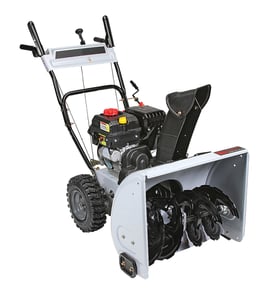

What is the typical lifespan of a gas snowblower?
A gas snowblower typically lasts 10 to 20 years. For your Husqvarna ST230-97046910100, lifespan lands at the higher end when we keep up with routine maintenance (fresh fuel, regular oil changes, and correct off-season storage) and avoid running it with worn or misadjusted drive and auger components.
Typical lifespan ranges (what to expect)
Most gas snowblowers fall into these real-world ranges:
- 10 to 15 years: average homeowner use with basic maintenance
- 15 to 20 years: consistent maintenance and proper storage
- 8 to 10 years: heavy use, poor storage, or frequent operation with old fuel
| Usage pattern | Maintenance level | Typical lifespan |
|---|---|---|
| Light (few storms/season) | Good | 15 to 20 years |
| Moderate (regular storms) | Mixed | 10 to 15 years |
| Heavy (long runs, wet snow) | Poor | 8 to 10 years |
What extends life the most
These actions have the biggest impact on engine and drive system longevity:
- Change engine oil on schedule and keep the oil at the correct level
- Use fresh, clean gasoline and avoid storing fuel long-term in the tank
- Keep the chute, auger area, and controls clear of packed snow and ice after use
- Run the engine at full throttle or near full throttle while throwing snow (helps performance and reduces strain)
- Keep wear items adjusted so the machine is not slipping or overloading (belts, cables, skid shoes, scraper bar)
For model-specific maintenance intervals and procedures, follow the owner's manual.
Signs your snowblower is nearing end-of-life
A snowblower can still be worth maintaining for many years, but these are common “time to overhaul” indicators:
- Persistent hard starting or rough running even with fresh fuel and a good spark plug
- Excessive vibration or handle movement that returns after tightening fasteners
- Chronic loss of drive or auger performance (often tied to belt stretch or cable issues)
- Repeated clogging or poor throwing distance even when operated correctly
Why it matters
A well-maintained gas snowblower is safer and more reliable in heavy snow. Following the correct operating and after-use steps (like clearing ice and preventing freeze-up) reduces wear on the auger, chute, drive system, and engine, which directly increases service life.
Last updated: February 2026
Is the Husqvarna ST230-97046910100 easy to start?
Yes. The Husqvarna ST230-97046910100 is designed to be easy to start because it supports both a manual recoil start and a 120 V electric start, with simple controls for the fuel valve, throttle, choke, and primer. Follow the exact start sequence in the owner's manual for the most reliable results.
What “easy to start” looks like on this model
You have two starting methods, so you can choose what works best for your conditions.
- Manual start: ON/OFF key in, fuel switch ON, throttle FAST, choke FULL (cold), prime 3 times, pull starter rope
- Electric start: ON/OFF key in, fuel switch ON, throttle FAST, choke FULL (cold), prime 3 times, plug into a grounded 120 V outlet, press start button
- Cold-start help: choke + primer are the main aids for first start of the day
- Warm restart: typically needs less choke and little to no priming
Quick start checklist (most common no-start causes)
Before you assume there is a problem, we recommend checking these basics:
- Fuel switch is in the ON position
- Throttle is set to FAST
- Choke is set correctly for a cold engine (then moved toward OFF after it starts)
- Primer is used correctly (3 pushes; avoid over-priming)
- ON/OFF key is fully inserted and ON/OFF switch (if equipped) is ON
- Spark plug is clean and gapped correctly (typical gap is 0.030 in)
Manual vs. electric start: what to use and when
| Situation | Best choice | Why |
|---|---|---|
| No outlet nearby | Manual start | No cord needed |
| Very cold conditions | Electric start | Reduces effort and helps overcome stiff recoil |
| Recoil rope feels stuck | Electric start | Manual starter can freeze; electric start can get you running |
Why it matters
A snowblower that starts easily is safer and more dependable because you spend less time pulling the rope, flooding the engine, or troubleshooting in the cold. Using the correct choke and priming steps also prevents hard starting and rough running.
Related DIY help
For a fast tune-up check, use our how to check a snowblower spark plug video.
Last updated: February 2026
Can I use 2 year old gas in a snowblower?
Using 2-year-old gas in your Husqvarna ST230-97046910100 snow thrower is a bad idea; old fuel commonly causes hard starting, rough running, and carburetor/fuel-line problems. Drain the old fuel, refill with fresh gasoline (87 AKI minimum, E10 max), and follow the fueling steps in the owner's manual.
What to do instead (recommended)
- Turn the engine OFF and let it cool completely.
- Drain the fuel tank into an approved fuel container.
- Refill with fresh, good-quality gasoline (87 AKI or higher; max 10% ethanol).
- Wipe up any spills and tighten the fuel cap fully.
- Move the snowblower at least 10 ft (3 m) away from the fueling spot before starting.
Why old gas causes trouble
Old gasoline can oxidize and leave varnish-like deposits that restrict fuel flow. On a snowblower, that often shows up as:
- Hard starting (especially cold starts)
- Surging or rough idle
- Loss of power under load
- Fuel line restriction or carburetor clogging
Quick fuel guidance for this model
The ST230-97046910100 is designed to run on standard pump gasoline in North America.
| Fuel item | What to use | What to avoid |
|---|---|---|
| Octane | 87 AKI or higher | Below 87 AKI |
| Ethanol content | Up to E10 | Higher than E10 |
| Fuel freshness | Fresh, recently purchased | Stored fuel (especially 1+ year) |
If it already ran on old gas
If the engine now idles rough or won’t start after you add fresh fuel, the manual’s troubleshooting points to “fuel too old” or “water in the fuel” as common causes. A practical next step is to drain the tank and address the fuel system, then verify ignition with the steps in how to check a snowblower spark plug video.
Why it matters
Fresh fuel protects the carburetor and helps the engine start reliably in cold weather, which is when your snowblower has to work the hardest.
Last updated: February 2026
What are common gas snow blower problems?
Common problems on the Husqvarna ST230-97046910100 gas snowblower are no-start or rough running (fuel switch, choke, stale fuel, blocked fuel line, spark plug connection), loss of snow discharge (clogged chute, debris in augers, broken shear pin), and loss of traction drive (belt slip or wear). For model-specific checks and adjustments, use the owner's manual.
Most common symptoms and what usually causes them
- Engine will not start: fuel switch OFF (if equipped), throttle in STOP, incorrect starting steps, frozen starter rope
- Engine idles or runs roughly: choke left ON, blocked fuel line, water in fuel or old fuel
- Decreased power: spark plug cable loose, carburetor air intake blocked, muffler dirty or clogged
- Loss of snow discharge: chute/deflector clogged, foreign objects in augers, broken shear pin
- Loss of traction drive or slowing: belt slipping, belt worn, belt off pulley, wet friction disc
- Excessive vibration/handle movement: loose fasteners, damaged augers, handles not locked
Quick troubleshooting checklist (safe, fast checks)
- Shut the engine off and let it cool; remove the ignition key (if equipped).
- Confirm fuel switch is ON (if equipped) and throttle is set to FAST.
- Set choke correctly for starting, then move it toward OFF as the engine warms.
- Check the spark plug cable is firmly connected.
- Clear packed snow from the chute and discharge deflector.
- Inspect augers for debris and check shear pins.
- If drive or auger performance is weak, inspect belt condition and alignment.
Symptom-to-fix guide
| Symptom | Most likely cause | What we do first |
|---|---|---|
| Won’t start | Fuel switch OFF, throttle STOP, frozen recoil | Correct settings; thaw recoil; follow starting steps |
| Runs rough | Choke ON, old fuel, blocked fuel line | Set choke OFF; drain/refill fuel; clean fuel line |
| Not throwing snow | Chute clogged, debris in augers, shear pin broken | Clear chute; remove debris; replace shear pin |
| Slips or slows driving | Belt slip/wear, belt off pulley, wet friction disc | Adjust cable/belt; reinstall/replace belt; dry disc |
Helpful DIY videos for the most common fixes
- How to check a snowblower spark plug video
- How to change snowblower oil video
- How to replace a snowblower belt video
- How to lubricate a snowblower drive hex shaft video
Why it matters
Catching fuel, belt, and clog issues early prevents hard starting, poor snow discharge, and premature wear on the auger, impeller, and drive system.
Last updated: February 2026