Owner’s manual
 Error Codes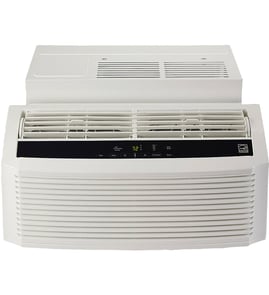




What is the 3 minute rule for air conditioners?
The “3-minute rule” for the GE AEL08LVW1 room air conditioner is the built-in protective time delay that can make cooling wait about 3 minutes after you turn the unit back on or switch from Fan to Cool. This protects the compressor from restarting under load.
What you’ll notice on AEL08LVW1
If the air conditioner seems “on” but not cooling right away, that is normal behavior during the delay.
- The fan may run while the compressor stays off
- Cooling may not begin for approximately 3 minutes
- This can happen after a power interruption or a quick off-on cycle
- Switching from Fan Only to Cool can also trigger the delay
- The delay helps prevent compressor overload and nuisance tripping
For the exact operating notes for your model, use the AEL08LVW1 owner’s manual.
Best practices to avoid short cycling
Following these habits helps the compressor and improves comfort.
- Wait at least 3 minutes before restarting after turning the unit off
- Avoid rapidly changing modes (Cool to Fan Only to Cool)
- Set a steady temperature and let the electronic thermostat cycle normally
- Keep airflow clear at the front grille (curtains, blinds, furniture)
- Clean the filter regularly so the unit can cool efficiently
If your filter is damaged or won’t come clean, replace it with the correct part: room air conditioner air filter WJ71X10657.
Quick reference: delay vs. a real problem
| What happens | Usually normal? | What to check |
|---|---|---|
| Fan runs, no cooling for up to ~3 minutes | Yes | Wait; keep in Cool mode |
| No lights, no fan, no response | No | Outlet, breaker/fuse, power cord reset |
| Cooling starts but is weak | Sometimes | Dirty filter, blocked airflow, hot room load |
Why it matters
Compressors do not like immediate restarts because refrigerant pressures need time to equalize. The 3-minute delay reduces stress on the compressor, helps prevent overload trips, and supports longer air conditioner life.
Last updated: January 2026
What is the cost of AC in a 12X12 room?
For a 12x12 room (about 144 sq ft), we typically recommend a window room air conditioner in the 5,000 to 8,000 BTU range; total cost is usually the unit price plus a small increase in your electric bill based on run time. For model AEL08LVW1, use the AEL08LVW1 owner’s manual to confirm operating modes and electrical requirements.
Typical cost breakdown (what you actually pay)
- Upfront purchase price: Most window air conditioners in this size range commonly run about $200 to $450 (premium inverter or smart models can be higher).
- Electricity to run it: A typical 115/120V window unit often uses roughly 0.5 to 1.0 kWh per hour while the compressor is running.
- Maintenance parts: A clogged filter can raise operating cost; replacing or cleaning the filter regularly helps.
- Optional accessories: Weather sealing foam, side panels, and a dedicated circuit (if needed) can add cost.
Quick estimate table (12x12 room)
| Item | Typical range | Notes |
|---|---|---|
| Recommended capacity | 5,000 to 8,000 BTU | Depends on sun, insulation, ceiling height |
| Unit purchase price | $200 to $450 | Varies by features and efficiency |
| Energy use (running) | 0.5 to 1.0 kWh/hour | Cycles on and off once room is cool |
| Monthly energy cost | $15 to $60 | Assumes 4 to 8 hours/day, average utility rates |
What changes the cost the most
- Sun exposure: A west-facing room costs more to cool.
- Insulation and air leaks: Poor sealing increases run time.
- Set temperature: Lower set points increase energy use.
- Dirty air filter: Reduced airflow can hurt cooling and efficiency; check the room air conditioner air filter WJ71X10657.
- Electrical setup: The manual notes some models require a properly grounded outlet and correct circuit protection.
Why it matters
Sizing and maintenance directly affect comfort and operating cost. An oversized unit can short-cycle (less humidity removal), while an undersized unit may run constantly and still feel warm.
Last updated: January 2026
Will a 2000 watt inverter run a 8000 BTU air conditioner?
A 2000-watt inverter typically runs an 8,000 BTU window air conditioner like the GE AEL08LVW1, as long as the inverter can handle the compressor’s startup surge and the unit is on a properly grounded circuit. For best results, start the AC with no other heavy loads connected.
What matters most (watts vs. surge)
Even when the running wattage is within 2,000 watts, the compressor can draw a higher surge for a few seconds at startup.
- Continuous output: Your inverter’s steady 2,000-watt rating must cover the AC while it is cooling.
- Surge/peak output: Many inverters can briefly supply more than 2,000 watts; that is what helps start the compressor.
- Voltage match: Most 8,000 BTU window units are 115/120V; the AEL08 series uses a grounded plug and outlet requirements described in the AEL08LVW1 owner’s manual.
- Dedicated circuit behavior: The manual notes some models should be on their own branch circuit to prevent overload.
- Startup delay: After power loss or cycling, the compressor may wait about 3 minutes before restarting; that can look like “not enough power” when it is normal operation.
Quick sizing guide (typical)
Use this as a practical check when pairing an inverter with a window AC.
| Item to check | Typical for 8,000 BTU window AC | What to look for on your inverter |
|---|---|---|
| Running watts | ~600 to 1,000 W | Continuous rating at or above this |
| Startup surge | ~1,200 to 2,400 W (brief) | Peak/surge rating high enough |
| Other loads | Varies | Keep near zero during startup |
Steps to improve success on an inverter
- Set the AC to Fan Only for 30 to 60 seconds, then switch to Cool.
- Keep the inverter as close to the unit as practical and use a heavy-duty cord if one is required.
- Clean airflow restrictions; a clogged filter can increase run time and strain. Use the correct room air conditioner air filter WJ71X10657.
- Avoid running microwaves, space heaters, or hair dryers on the same inverter at startup.
Why it matters
If the inverter cannot supply the startup surge, the compressor may fail to start, trip protection, or cycle repeatedly. Matching surge capacity and using proper electrical setup protects the compressor and improves cooling performance.
Last updated: January 2026