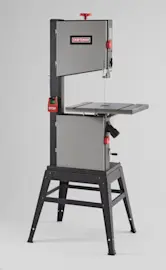
Owner’s manual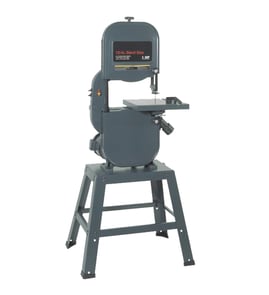


What is the 3-tooth rule for bandsaws?
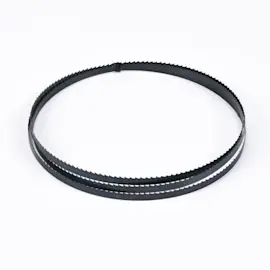
The 3-tooth rule is a bandsaw blade selection guideline: during a cut on your Craftsman 113242610 12-inch band saw, at least 3 blade teeth should be in contact with the material at all times. This prevents tooth snagging and stripping, improves chip clearance, and helps the blade track smoothly.
How to use the rule (pick the right TPI)
Use the material thickness to choose a blade tooth count (TPI, teeth per inch) that keeps 3 or more teeth engaged.
- Measure the stock thickness at the cut line (include tubing wall thickness for metal)
- Choose a TPI that gives 3 to 6 teeth in the cut for most work
- If you see tooth grabbing or rough, jumpy cutting, go to a higher TPI
- If the cut burns (wood) or loads up with chips, go to a lower TPI
- For curves, also match blade width to the radius (a wide blade will bind in tight turns)
Quick reference chart
This table shows a practical way to apply the 3-tooth rule.
| Material thickness | Typical blade choice | What you’ll notice |
|---|---|---|
| 1/8 in to 1/4 in | 14 to 24 TPI | Cleaner cut, less tooth snagging |
| 1/4 in to 1/2 in | 10 to 14 TPI | Good general-purpose control |
| 1/2 in to 1 in | 6 to 10 TPI | Faster cutting, better chip clearing |
| Over 1 in | 3 to 6 TPI | Efficient ripping, larger chips |
Why it matters on a 12-inch band saw
On a saw like the Craftsman 113242610, the blade, guides, and tracking work best when the teeth are cutting consistently. Too few teeth in the cut makes the blade “hook” the work; too many teeth packs the gullets with dust or chips, which increases heat and wandering.
Related setup tips that affect cut quality
Blade selection works best when the saw is adjusted correctly.
- Install the blade with teeth pointing down and toward the table
- Tension the blade, then verify tracking before cutting
- Set the table square to the blade for straight cuts
- Avoid forcing tight curves; sharp radius cuts can twist and bind the blade
For model-specific adjustment steps (tracking, table squaring, and blade installation), use the 113242610 owner’s manual. For replacement blades and other repair parts, start with the model parts list, or search by model number on Sears PartsDirect.
Last updated: February 2026
Why are band saws so expensive?
Band saws cost more because they are built for accuracy and stability: rigid frames, balanced wheels, reliable blade tracking, and a motor drive system that can maintain consistent cutting under load. On a Craftsman 113242610 12-inch band saw, long-term cost also includes blades, tires, belts, and routine tune-ups.
What you are paying for
- Rigidity and alignment: heavier frames and trunnions hold the table square to the blade.
- Wheel system quality: better wheels, bearings, and tires reduce vibration and improve tracking.
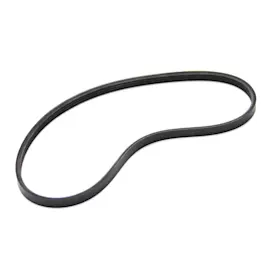
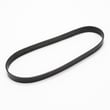
- Motor and drive components: pulleys and V-belts must transmit power smoothly.
- Cutting capacity: larger throat and resaw height typically increase material and machining cost.
- Safety and adjustability: guards, tensioning, guides, and tilt mechanisms add parts and precision.
Ownership costs that add up
Even if the saw itself is a one-time purchase, these recurring items affect total cost:
| Cost area | What typically wears | What you notice first |
|---|---|---|
| Blade | dull teeth, cracks, kinks | burning, drift, slow cutting |
| Tires | glazing, cracking, flat spots | vibration, poor tracking |
| Bearings | roughness, play | noise, wobble, inconsistent cut |
| Belt/pulleys | stretching, slipping | bogging down, squeal |
Why it matters for cut quality
A band saw that stays aligned cuts straighter, wastes less material, and is safer to use. When tracking and guide settings are correct, you avoid common problems like blade drift, excessive vibration, and premature blade wear.
Practical ways to control cost without sacrificing results
- Use the widest blade your cut allows for straighter ripping and resawing.
- Match blade tooth count to material thickness (fewer TPI for thicker stock).
- Keep blade tension and guide pins set correctly; the 113242610 owner's manual walks through alignment and adjustment basics.
- Replace wear items early (tires, belt, bearings) to prevent secondary damage.
- When ordering, use the exact model number and part number conventions shown in the manual parts list.
For replacement parts and diagrams for Craftsman model 113242610, start with the parts list for this model, or search by model number on Sears PartsDirect.
Last updated: February 2026
How do I find the model number on my 113242610?
The model number for your Craftsman band saw is printed on an identification plate attached to the saw. On model 113242610, that plate is on the back cover; use that exact number whenever you look up diagrams, manuals, or replacement parts in the [owner's manual].
Where to look on the saw
Check these common spots first (starting with the correct one for this model):
- Back cover (the ID plate is attached here on model 113242610)
- Rear of the frame or cabinet area near the motor
- Inside the lower wheel cover (sometimes near the hinge side)
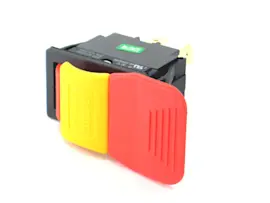
- Near the switch box or power cord entry point
- On the base or stand if your saw is mounted
What the model number looks like
For Craftsman tools, the model number is typically a numeric format with a dot in printed materials (example: 113.242610). When searching parts online, it’s often entered without punctuation (example: 113242610).
| Printed on plate/manual | Enter for parts search | What it identifies |
|---|---|---|
| 113.242610 | 113242610 | Your exact 12 inch band saw version |
Why it matters
The model number ties your saw to the correct parts list, diagrams, and adjustments. Even small model variations can use different wheel tires, blade guides, bearings, or guards, so matching the model number prevents ordering the wrong part.
Tips if the plate is hard to read
- Wipe dust off the plate and use a flashlight at an angle
- Take a close-up photo and zoom in
- Copy the number exactly as shown (including any prefix/suffix if present)
Last updated: March 2026