Owner’s manual
 View engine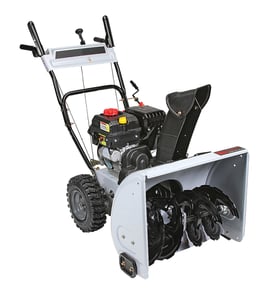



What is the typical lifespan of a gas snowblower?
A typical gas snowblower lasts 10 to 15 years with normal homeowner use and consistent maintenance. For the Craftsman 536881121 snow thrower, following the lubrication, belt checks, tune-ups, and storage steps in the owner's manual helps push service life toward the high end of that range.
What affects lifespan the most
- Fuel care and storage: stale fuel and moisture cause hard starting and carburetor issues.
- Oil changes and correct oil level: protects the engine under cold, heavy load.
- Lubrication schedule: the manual calls out regular lubrication points (including auger shaft greasing intervals).
- Belt and drive adjustments: the manual notes the auger drive belt needs adjustment early and then periodically.
- Operating conditions: deep, wet snow and gravel driveways increase wear on auger, impeller, and drive components.
Maintenance schedule we recommend (typical)
| When | What to do | Why it matters |
|---|---|---|
| After each use | Inspect for loose/damaged parts; tighten fasteners | Prevents small issues from becoming major failures |
| Every 10 hours | Grease key points (especially auger shaft fittings) | Reduces seizure and premature wear |
| Early season + mid-season | Check and adjust belts and controls | Keeps auger/drive engagement strong and reduces slippage |
| End of season | Clean, lubricate, protect bare metal; treat or drain fuel | Prevents rust, gum deposits, and storage damage |
Quick signs your snowblower is nearing end-of-life
- Repeated hard starting even with fresh fuel and a good spark plug
- Drive slipping, inconsistent speeds, or frequent belt issues
- Excessive vibration, grinding noises, or recurring shear/auger problems
- Rust-through on the housing or severe corrosion on key assemblies
Why it matters
A snowblower that is maintained and stored correctly is more reliable during storms and costs less over time. The Craftsman 536881121 manual even recommends an annual checkup or tune-up to help ensure maximum performance for the next season.
Last updated: January 2026
How to find snowblower model number?
On a Craftsman snow thrower, the model number is printed on the product identification label; for model 536881121, the manual shows it as 536.881121. Check the rear of the unit near the axle and wheels, then match that number when ordering parts.
Where to look on the machine
Most Craftsman snowblowers place the ID label in one of these spots:
- Rear of the snowblower between the wheels (near the axle)
- Back of the frame behind the operator position
- Side of the frame near the engine mount area
- Under or behind the control panel area
- On the auger housing frame (less common)
What the model number looks like
For this Craftsman unit, the model number is typically formatted with a dot in printed materials.
| Where you see it | Example for this unit | What to enter when searching parts |
|---|---|---|
| ID label on the machine | 536.881121 | 536881121 |
| Manual cover | 536.881121 | 536881121 |
Tips to avoid ordering the wrong part
Using the correct model number matters because parts like chute hardware, cables, and drive components can vary by series.
- Write down the full model number exactly as shown
- If the label is dirty, wipe it clean and use a flashlight to read stamped characters
- Take a photo of the label before ordering
- Use the model number (not engine numbers) to look up chassis parts
- Use the engine model number only when ordering engine-specific parts (carburetor, ignition, internal engine parts)
Why it matters
The model number ties your snowblower to the correct parts diagrams and part lists, which prevents mismatches on items like the chute system, auger controls, and drive components.
For model-specific identification details and diagrams, use the 536881121 owner's manual.
Last updated: January 2026
What is the most common problem with snow blowers?
The most common problem we see on snow blowers like the Craftsman 536881121 is a no-start or hard-start condition caused by fuel issues (stale gas, gummed carburetor) or ignition maintenance (spark plug). Clogs in the discharge chute and drive/auger engagement issues are also frequent.
Quick checks that fix the most problems
- Use fresh fuel and confirm the fuel cap is tight; check fuel supply before each use.
- Let the engine adjust to outdoor temperature before clearing snow.
- If it will not start or runs rough, inspect and service the spark plug.
- If snow is not discharging well, stop the engine and clear the chute safely (never by hand).
- If performance drops in deep or wet snow, reduce ground speed (keep throttle at full for best throwing).
Safe way to clear a clogged chute (important)
A clogged chute is common and can be dangerous. Our manual for this model is clear: disengage the auger, stop the engine, remove the key, disconnect the spark plug wire, and use a pry bar to clear packed snow. See the 536881121 owner's manual for the full safety steps.
Common symptoms and the most likely cause
| Symptom | Most common cause | What to do first |
|---|---|---|
| Will not start / starts then dies | Old fuel, dirty carburetor, fouled spark plug | Drain/replace fuel; check spark plug |
| Poor throwing / chute plugs | Wet snow, low ground speed setting, packed chute | Slow down; clear chute safely |
| Auger does not turn | Shear pin or belt/engagement issue | Inspect auger drive and linkage |
| Excess vibration | Impact damage or loose hardware | Stop and inspect before restarting |
Why it matters
Most “snowblower problems” are simple maintenance items, but ignoring them can lead to unsafe operation. The manual also recommends a yearly checkup/tune-up to keep performance strong season to season.
Last updated: January 2026
What is the best gas-powered snowblower?
The best gas-powered snowblower is the one that matches your snow depth, driveway size, and storage space. If you already own Craftsman model 536881121, it is a dual-stage snow thrower with features like 120V electric start; use it as your baseline when comparing new machines. See the 536881121 owner's manual for the exact operating and maintenance details for your unit.
How we recommend choosing the “best” gas snowblower
We focus on capability first, then ease of use and long-term serviceability.
- Snow conditions: light powder vs heavy, wet snow
- Clearing area: sidewalks, single-car, or multi-car driveways
- Stage type: single-stage vs two-stage
- Starting method: recoil vs 120V electric start (if you have an outlet)
- Maintenance access: belts, friction drive, lubrication points, fasteners
Quick match guide
| Your conditions | Best type to shop | What to prioritize |
|---|---|---|
| Up to ~6 inches, smaller areas | Single-stage gas | Lighter weight, quick maneuvering |
| 6 to 18+ inches, heavier snow | Two-stage gas | Strong traction, tall intake housing |
| Frequent drifts and plow piles | Two-stage gas | Drift-handling accessories, easy chute control |
If you already own Craftsman 536881121
This model is built for larger jobs and includes a maintenance schedule that keeps performance strong season after season.
- Check engine oil level before use
- Use clean, fresh unleaded gasoline
- Tighten loose fasteners and inspect for worn parts
- Lubricate key points at the recommended intervals
For drift-prone areas, the manual explains how to set drift cutters; the replacement part listed for this model is the drift cutter 762348E701MA.
Why it matters
Choosing the right size and stage prevents clogging, reduces belt and drive wear, and makes clearing faster and safer, especially when snow is wet or packed.
Last updated: January 2026