Error Codes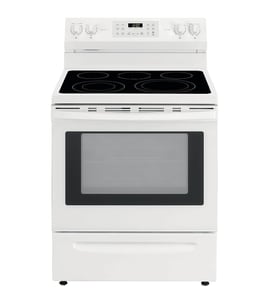



What is the life expectancy of a KitchenAid oven?
A KitchenAid oven like the KitchenAid KFDC506JSS01 dual fuel range typically lasts 15 years. With normal household use and basic care, 10 to 15 years is common; consistent cleaning, proper airflow, and prompt repair of heating or control issues help it reach the full lifespan.
Typical life expectancy (what to expect)
Most freestanding ranges and wall ovens fall into a predictable range.
| Appliance type | Typical life expectancy |
|---|---|
| Dual fuel range/oven (like KFDC506JSS01) | 10 to 15 years |
| Heavy-use household cooking (daily high heat) | Closer to 10 years |
| Light to moderate use with good maintenance | Around 15 years |
What shortens an oven’s life fastest
These are the most common wear points we see on ranges like this.
- Overheating from blocked vents or heavy grease buildup
- Slamming or forcing the oven door, which stresses hinges and latches
- Running self-clean too often (high heat stresses wiring and controls)
- Ignoring early symptoms like slow preheat, uneven baking, or error beeps
- Power surges or loose electrical connections at the terminal block
Parts that often determine “end of life”
If the oven stops heating, overheats, or will not unlock, these are common repair areas that can extend the usable life.
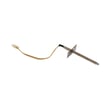
- Oven safety overheat protection: range high-limit thermostat WP4449751
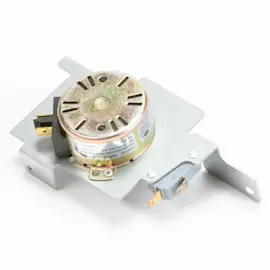
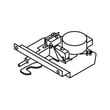
- Door lock system for self-clean and safety: motorized latch W11029221
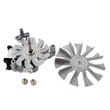
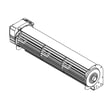
- Oven airflow and even heating support: convection f W10860984
Why it matters
Knowing the expected lifespan helps you decide whether to repair or replace. If your KFDC506JSS01 is under about 10 years old, repairing a failed thermostat, latch, or fan is often the most cost-effective path; beyond 15 years, multiple electronic or wiring issues can add up.
Last updated: January 2026
How can I tell what KitchenAid model I have?
For a KitchenAid range like model KFDC506JSS01, the model number is printed on the appliance’s rating label, not on the control panel. Once you find and match that label, you can order the correct parts and confirm the exact configuration (dual fuel, freestanding, 36 inch) for your range.
Where to find the model number on a KitchenAid range
On most KitchenAid freestanding ranges, the rating label is typically located in one of these spots:
- On the oven frame behind the storage drawer or warming drawer (pull the drawer out and look along the frame)
- Along the oven door frame (open the oven door and check the left or right side trim)
- Behind the lower kick panel or toe grille (if your model has one)
- On the back of the range near the power cord area (best checked when the range is safely pulled out)
If you see KFDC506JSS01 on the label, that is your exact model.
What to write down (and why)
Record these items exactly as shown on the label:
- Model number (example: KFDC506JSS01)
- Serial number
- Brand (KitchenAid)
- Type (range/oven, dual fuel)
Why it matters
Small model number differences can change which parts fit, especially for items like an oven latch motor, convection fan components, or control boards.
Quick check: model number vs. part number
| What you’re looking at | Example | What it’s used for |
|---|---|---|
| Model number | KFDC506JSS01 | Identifies the exact range |
| Part ID | WPW10169757 | Identifies a specific replacement part |
| Part number | W10169757 | Manufacturer number tied to the part |
If you already have the model number
Once you confirm the model, match parts by the exact model and symptom. For example, if your oven light is out and the bulb is the issue, use the model-specific part listing for wall oven light bulb WPW10169757.
Last updated: January 2026
What is the purpose of KFDC506JSS01?
The KitchenAid KFDC506JSS01 is a 36-inch freestanding dual-fuel range built to give you strong cooktop performance (high-heat searing plus low, steady simmering) and precise oven baking and roasting control. It is designed for everyday cooking flexibility across a wide temperature range.
What this range is designed to do well
- Sear and sauté at high heat on the cooktop burners
- Hold a steady low flame for simmering sauces and melting
- Provide consistent oven temperatures for baking and roasting
- Support multi-rack cooking with convection airflow (when equipped)
- Combine gas cooktop responsiveness with electric oven precision
Key features you will notice in real use
| Cooking need | What you want | How a dual-fuel range helps |
|---|---|---|
| Fast browning | High burner output | Strong cooktop heat for searing |
| Gentle cooking | Stable low flame | Better simmer control |
| Even baking | Tight temperature control | Electric oven heat is typically more consistent |
| Faster roasting | Air circulation | Convection fan can improve heat distribution |
Why it matters
When you choose parts or troubleshoot performance on the KFDC506JSS01, it helps to think in terms of two systems: the gas cooktop (flame, igniters, valves) and the electric oven (heating, sensors, controls). That split design is the main purpose and advantage of this KitchenAid range.
Parts that support safe, consistent operation
If the range overheats, will not maintain temperature, or shuts down unexpectedly, these model-compatible parts are commonly involved:
- Range high-limit thermostat WP4449751 (helps protect against overheating)
- Convection f W10860984 (supports convection airflow for more even cooking)
- Motorized latch W11029221 (supports door locking functions used on some oven modes)
Last updated: January 2026
Is KitchenAid considered high end?
Yes. For a KitchenAid range like model KFDC506JSS01, we consider KitchenAid an upper-mid-range to premium brand: strong cooking performance, solid fit and finish, and pro-style features at a price below true luxury lines.
What “high end” usually means for a KitchenAid range
KitchenAid typically lands in the premium tier because it often includes features and build details that go beyond basic ranges.
Common “high end” signals include:
- Heavy-duty grates and pro-style burner layouts
- More precise oven temperature control and convection cooking
- Higher-quality knobs, handles, and door hardware
- More cooking modes and better heat distribution than entry-level models
- A broader parts and service ecosystem for long-term ownership
Premium vs luxury: a quick comparison
KitchenAid is usually premium, while “luxury” is a separate tier with higher pricing and more specialized features.
| Tier | What you typically get | Where KitchenAid fits |
|---|---|---|
| Entry-level | Basic burners, fewer modes, lighter hardware | Not typical |
| Premium | Pro-style design, strong performance, more features | Typical |
| Luxury | Highest-end materials, brand prestige, specialized options | Sometimes adjacent, not the norm |
Why it matters when you’re buying parts or planning repairs
Premium ranges often use more specialized components (controls, latches, convection systems). When performance issues show up, replacing the correct part by model is the fastest path to a reliable fix.
If you are troubleshooting a cooking or heating issue on KFDC506JSS01, these parts are commonly involved:
- Range high-limit thermostat WP4449751 (can trip if the oven overheats)
- Motorized latch W11029221 (used for door locking functions)
- Wall oven light bulb WPW10169757 (if the oven light is out)
Last updated: January 2026