

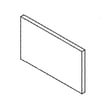
How do I tell what model my GE washer is?
Your GE washer’s model number is printed on a rating label attached to the cabinet. On the GTW540ASP2WS style top-load design, we typically find it under the lid opening, on the back of the control panel, or on a cabinet side near the bottom.
Where to look on a GE washer
Check these common label locations first:
- Under the lid, around the tub opening or lid frame
- On the back of the control panel (rear panel area)
- On the left or right cabinet side near the bottom edge
- On the back of the washer cabinet
- If you have a front-load GE washer instead: inside the door opening or door jamb
What the model number looks like (and why it matters)
GE model numbers are a mix of letters and numbers (for example, GTW540ASP2WS). Getting the exact model number helps us match the correct washer parts, diagrams, and repair instructions.
| What to capture | Example | Why we need it |
|---|---|---|
| Model number | GTW540ASP2WS | Identifies the exact washer design |
| Serial number | (varies) | Helps confirm production version |
| Brand | GE | Narrows parts families |
Tips to avoid mix-ups
Use these quick checks so you record the right information:
- Copy the model number exactly as printed (letters and numbers matter)
- Take a clear photo of the label before ordering parts
- If the label is worn, use a flashlight and view from an angle to read faint print
- Don’t use the control panel marketing name alone; use the full model number
If you’re ordering parts after you find the model
Once you confirm the model, we can help you choose the right replacement parts for common issues (no drain, no spin, lid won’t lock). For example, a no-drain symptom often points to the GE washer drain pump assembly WH23X28418.
Why it matters
Using the exact model number prevents ordering the wrong GE washer parts, especially for components like the drain pump, lid lock, shifter, and control board that can vary by revision.
Last updated: February 2026
Why is my GE top load washer leaking from the bottom?
A bottom leak on a GE GTW540ASP2WS top-load washer usually comes from a drain or fill water path issue (hose, pump, or inlet valve), or from an internal tub seal leak that shows up as water under the center of the machine. Start by pinpointing where the water first appears.
Quick checks (fastest way to narrow it down)
- Unplug the washer; then dry the floor and run a short Fill or Rinse to watch for the first drip.
- Look for water at the back where the supply hoses connect (hot and cold).
- Check the standpipe or laundry tub for overflow during drain.
- Inspect the drain hose for splits, loose clamps, or rubbing holes.
- If the leak only happens during drain, focus on the pump and drain hose.
- If the leak happens during fill, focus on the inlet valve and supply hoses.
Most common causes and what to do
| When it leaks | Most likely source | What we recommend |
|---|---|---|
| During fill | Inlet valve, supply hoses | Check hose washers, tighten connections; replace the valve if it drips or seeps |
| During drain | Drain pump, drain hose | Inspect pump housing and hose connections; replace the pump if it weeps from the body |
| During agitation/spin | Tub seal or tub-to-pump hose | Look for water tracking from the center bottom; plan for a deeper repair |
Parts that often fix a bottom leak on this model
- GE washer drain pump assembly WH23X28418 if the leak appears mainly while draining.
- Washer drain hose WH41X32477 if you see cracks, pinholes, or wetness along the hose.
- Washer water inlet valve assembly WH13X26535 if water drips during fill or when the washer is off.
Why it matters
A leak from the bottom can damage flooring and can also lead to electrical issues if water reaches wiring or the control area. Catching it early usually keeps the repair limited to a hose, clamp, pump, or valve instead of larger internal components.
Last updated: February 2026
How much does it cost to replace a gasket on a GE washing machine?
For a GE washer like model GTW540ASP2WS, replacing a gasket typically costs $20 to $80 for the part, plus $150 to $350 for labor if you hire service. Total installed cost is usually $170 to $430, depending on which gasket and how involved the disassembly is.
What “gasket” usually means on this washer
On top-load GE washers, customers often mean one of these seals:
- Tub-to-pump hose seal or clamp area (leaks during drain)
- Drain hose connection seal (leaks at the standpipe or pump outlet)
- Tub ring splash seal area (water splashing over the top of the tub)
- Lid-related sealing issues (less common; usually not a true gasket)
If you are seeing water at the front or top edge, the tub ring is a common place to check; for GTW540ASP2WS, that part is washer tub ring WH44X24150.
Cost breakdown (typical ranges)
| Cost item | Typical range | What changes the price |
|---|---|---|
| Part (gasket/seal) | $20 to $80 | Which seal, OEM vs aftermarket, kit vs single seal |
| Labor | $150 to $350 | Access difficulty, rusted fasteners, diagnostic time |
| Service call/diagnostic | $0 to $120 | Some companies roll this into labor |
How we recommend confirming the right part before you buy
- Find the leak location: front/top, back, under center, or at the drain standpipe.
- Run a quick fill test: fill and pause; look for drips before agitation.
- Check drain leaks: watch during drain and spin; pump and hose leaks show up here.
- Inspect for splash-out: water marks high on the cabinet often point to the tub ring.
- Match by model: use GTW540ASP2WS to ensure the seal fits your exact GE washer.
Why it matters
A small gasket or seal leak can quickly cause cabinet rust, floor damage, and repeated out-of-balance problems if water reaches suspension or drive components. Fixing the correct seal early is usually the lowest-cost repair.
Last updated: February 2026
What would cause a GE washer to not spin?
On the GE GTW540ASP2WS washer, a no-spin problem is usually caused by a lid lock issue, an out-of-balance load, a drain problem that leaves water in the tub, or a drive system fault (shifter, clutch, motor, or control). Start with load balance and draining checks first.
Quick checks we recommend first
- Redistribute the load; wash 1-2 bulky items with a few towels to balance.
- Make sure the tub is draining; standing water often prevents high-speed spin.
- Confirm the lid closes firmly and the lock engages; a failed lock can stop spin.
- Unplug the washer for 2 minutes, then retry a Spin/Drain cycle.
- Check for error codes and match them to symptoms using GE gtw top load washer error codes.
Most common causes (and what they look like)
| What you notice | Likely cause | What to check next |
|---|---|---|
| Washer won’t spin and won’t drain | Clog, kinked hose, or failed pump | Inspect hose routing; listen for pump hum; consider GE washer drain pump assembly WH23X28418 |
| Lid closes but cycle stops before spin | Lid lock not sensing closed/locked | Inspect lock and striker alignment; consider GE washer lid lock assembly WH08X37938 |
| Agitates but won’t shift into spin | Shifter not moving the drive system | Look for grinding/clicking; consider washer shifter assembly WH03X30517 |
| Spins weakly or slips under load | Worn clutch or drive components | Check for burning smell or black dust; consider washer clutch WH05X24185 |
| Violent shaking, then no/limited spin | Suspension out of spec | Check for bouncing tub; consider washer suspension rod and spring assembly WH16X26911 |
Why it matters
A washer that cannot drain or confirm the lid is locked will often block spin to prevent leaks and reduce injury risk. Fixing the root cause also prevents repeated off-balance events that can damage the tub ring, gear case pulley, or control board.
When a part replacement is likely
Replace a component when the symptom is consistent and repeatable:
- Pump runs loudly, intermittently, or not at all during drain.
- Lid lock never clicks/locks, or the washer stops as spin begins.
- Shifter clicks repeatedly and the basket never ramps up.
- Clutch slips (slow spin, wet clothes) even with small balanced loads.
Last updated: February 2026


