Owner’s manual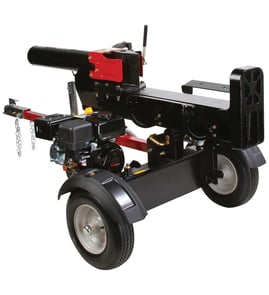

How big of a log will a 20 ton log splitter handle?
A 20-ton log splitter typically handles firewood rounds up to about 24 inches long (length limit) and commonly splits 12 to 16 inch diameter logs reliably; larger diameters can work if the wood is straight-grained and not knotty. For your Swisher LS12534H12V, keep log length at 24 inches or less per the owner's manual.
Practical size guidance (what you can expect)
Log splitter “tonnage” is about splitting force, not a guaranteed maximum diameter. In real use, these factors matter most:
- Wood species: knotty hardwood (oak, elm, hickory) needs more force than softwood
- Grain and knots: twisted grain and knots are the biggest “stopper”
- Moisture: very stringy green wood can be harder to finish-split cleanly
- Round shape: oversized, out-of-round rounds tend to shift and bind
- Wedge condition: a damaged or mushroomed wedge reduces performance
Quick reference table
| Log characteristic | 20-ton splitter performance | What to do if it struggles |
|---|---|---|
| 12 to 16 inch diameter, straight grain | Typically splits well | Split normally; keep hands on the sides of the log |
| 16 to 20 inch diameter, some knots | May slow or stall | Reposition the round; split from the edge; make “halves” first |
| 20+ inch diameter, knotty hardwood | Often inconsistent | Noodle with a saw first, or plan multiple splits and repositioning |
Safe operating limits we follow for LS12534H12V
These points directly affect both safety and successful splitting:
- Keep log length to 24 inches or less
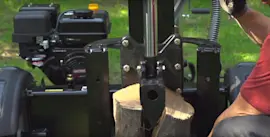
- Place hands on the sides of the log, not the ends
- Split with the grain only (never across the grain)
- Keep one operator at the controls; keep others 20 feet away
- Operate on level ground with stable footing; avoid wet, muddy, or icy surfaces
Why it matters
Trying to split rounds that are too long or too knotty increases the chance of the log shifting, binding the wedge, or kicking out. Staying within the 24-inch length limit and choosing manageable diameters helps your 20-ton splitter work faster and safer.
Last updated: February 2026
What are the components of a log splitter?
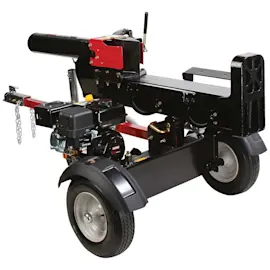
A Swisher log splitter such as model LS12534H12V is built around an engine-driven hydraulic system that pushes a hydraulic cylinder to drive the wedge through the log. The core components include the engine, hydraulic reservoir and pump, control valve, hydraulic cylinder, and the splitting wedge (plus the frame and towing hardware).
Main components you will see on LS12534H12V
- Engine: provides power to drive the hydraulic pump (shipped with oil but no gasoline).
- Hydraulic reservoir (tank): holds hydraulic fluid; has a dipstick and fill point.
- Hydraulic pump: pressurizes fluid to create splitting force.
- Hydraulic control valve and handle: directs fluid to extend or retract the cylinder.
- Hydraulic cylinder (ram): extends to push the wedge through the wood.
- Splitting wedge: the steel wedge that actually splits the log.
- Beam/frame and log cradle/table: supports the log and guides the wedge travel.
- Hoses and fittings: carry hydraulic fluid between the reservoir, pump, valve, and cylinder.
- Towing hardware (coupler, safety chains): lets you tow the splitter safely when equipped.
How the hydraulic system works (quick overview)
When the engine runs, it turns the hydraulic pump. The pump sends pressurized fluid from the reservoir to the control valve. Moving the valve handle routes that pressure to one side of the hydraulic cylinder to extend the ram; reversing the valve routes fluid to retract it.
| Component | What it does | Common issue if it fails |
|---|---|---|
| Hydraulic pump | Builds pressure/flow | Slow splitting, whining, leaks |
| Control valve | Directs fluid to extend/retract | Won’t extend, won’t retract, leaks |
| Hydraulic cylinder | Converts pressure into pushing force | Won’t extend, drifts, seal leaks |
| Reservoir/fluid | Supplies clean fluid | Foaming, overheating, weak force |
Why it matters
Knowing the major components helps you troubleshoot faster. For example, a wedge that will not extend usually points to a hydraulic flow or control problem (pump, valve, fluid level) rather than the wedge itself.
Helpful references for troubleshooting
- For safety rules, fluid fill guidance, and control familiarization, use the owner's manual.
- For common hydraulic leak points and symptoms, use log splitter hydraulic cylinder leaks, log splitter hydraulic pump leaks, and log splitter valve leaks.
Last updated: February 2026
What are common problems with log splitters?
Common problems with the Swisher LS12534H12V log splitter include slow or weak splitting, the wedge not extending or returning smoothly, hydraulic oil leaks, and engine starting or running issues. Most causes are low or contaminated hydraulic fluid, air in the system, or routine fuel and ignition maintenance.
Most common symptoms and likely causes
- Slow ram or weak force: low fluid, aerated fluid, clogged suction screen/filter, worn pump, sticking control valve
- Wedge will not extend or retract: low fluid, air in system, beam binding, valve issue, cylinder seal wear
- Hydraulic oil leaks: loose fittings, cracked hose, worn seals at cylinder or valve
- Engine will not start: stale fuel, fouled spark plug, dirty carburetor, restricted fuel line
- Engine runs rough/misfires: old fuel, carburetor varnish, restricted fuel flow, ignition tune-up needed
Quick checks we recommend first
Follow the safety rules in the LS12534H12V owner's manual; operate outdoors, keep hands clear of the splitting area, and keep others back.
- Run outdoors only with ventilation
- Set up on level ground; block wheels
- Keep bystanders 20 feet away
- Look for fresh oil at hoses, pump, valve, and cylinder
- Check hydraulic fluid level and condition (foamy or milky fluid indicates air or contamination)
Symptom-to-fix guide
| What you notice | Most likely cause | What to do next |
|---|---|---|
| Slow cycle time | Low/dirty fluid, air in system | Top off with the specified fluid; cycle the ram to purge air; check for suction leaks |
| Won’t extend wedge | Low fluid, binding, valve/cylinder issue | Verify fluid; inspect beam for binding; then diagnose valve/cylinder |
| Oil under splitter | Hose/fitting/seal leak | Tighten fittings; replace damaged hoses or seals |
| Won’t start | Fuel or spark problem | Replace old fuel; check spark plug; inspect fuel line and carburetor |
Why it matters
Low hydraulic fluid, air in the system, or leaks reduce splitting force and can overwork the pump. Safe footing and proper operating distance help prevent severe injuries.
Last updated: February 2026
What's the best log splitter to get?
The best log splitter is the one that matches your wood size, splitting volume, and where you work. If you already own a Swisher LS12534H12V, you will get the best results by operating it safely and maintaining the engine oil and hydraulic system exactly as specified in the LS12534H12V owner's manual.
How to choose the right splitter (what matters most)
- Tonnage: Most homeowners do well with 20 to 30 tons; frequent splitting of large, knotty hardwood fits better in the 30+ ton range.
- Power type: Gas is best for remote work areas; electric is best for small-to-medium wood where you have reliable power.
- Cycle time: Faster cycle times reduce fatigue when you are doing big piles.
- Horizontal vs. vertical: Vertical capability helps when rounds are too heavy to lift.
- Hydraulic build quality: Pump, valve, cylinder, hoses, and fittings drive long-term reliability.
- Safety and ergonomics: Stable footing, one-operator use, and proper PPE matter as much as raw power.
Quick match guide
| Your situation | Best fit | What to look for |
|---|---|---|
| Occasional use, smaller rounds | Electric or small gas | Easy starting, simple maintenance |
| Regular firewood, mixed species | Mid-range gas | 20 to 30 tons, reasonable cycle time |
| Large hardwood, knotty rounds, high volume | Heavy-duty gas | 30+ tons, strong beam, proven hydraulics |
If you already have the Swisher LS12534H12V
This model is intended only for splitting wood and is designed for single-operator use. For best performance and safety, follow these key points from the manual:
- Operate outdoors with adequate ventilation
- Keep children, pets, and bystanders at least 20 feet away
- Wear eye and hearing protection, steel-toed shoes, and tight-fitting gloves
- Use level ground and block the wheels
- Do not start or run the splitter without oil in the engine and hydraulic reservoir
Hydraulic fluid and startup basics
For the LS12534H12V, fill the hydraulic reservoir to the top mark on the dipstick using one of the fluids listed in the manual (Dexron III or Mercon III automatic transmission fluid, 10W AW hydraulic fluid, or Pro-Mix AW-32 hydraulic oil). If you are troubleshooting leaks or weak splitting force, use how to maintain the hydraulic system in a log splitter to walk through checks for the pump, valve, cylinder, hoses, and fittings.
Why it matters
Correct tonnage prevents stalled wedges, and correct fluids prevent slow cycling, overheating, and premature wear. Safe footing and one-operator control reduce the most common causes of log splitter injuries.
Last updated: February 2026