Owner’s manual

What is the most common cause of air compressor failure?
The most common cause of air compressor failure is poor maintenance that lets moisture, dirt, and heat damage key components. On the Craftsman 919167340 air compressor, daily tank draining and safe operating practices in the owner's manual help prevent rusted tanks, overheating, leaks, and premature wear.
What fails first when maintenance is skipped
When upkeep is inconsistent, these issues show up most often:
- Water left in the tank causes internal rust and tank thinning
- Air leaks at fittings, hoses, or valves make the pump run longer and hotter
- Restricted airflow (dirty intake/filter area or blocked ventilation) leads to overheating
- Electrical supply problems (wrong voltage, poor grounding, weak circuit protection) cause hard starts and motor stress
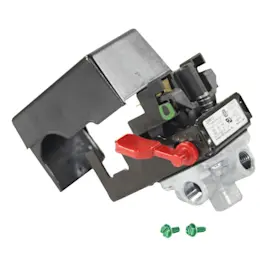
- Pressure-control problems (unloader, safety valve, pressure switch) create cycling issues and overpressure risk
Quick prevention checklist (high impact)
Use this routine to reduce breakdowns on most portable air compressors:
- Drain the tank daily or after each use to remove condensed water
- Keep the compressor on a stable surface; avoid vibration and tipping
- Maintain good ventilation; do not run with covers/guards removed
- Fix small leaks early so the unit does not run continuously
- Verify the outlet circuit provides correct voltage, grounding, and fuse protection
Common failure causes and what you typically notice
| Cause | What you notice | What to do first |
|---|---|---|
| Water in tank (rust) | Tank seep/leak, weak tank, frequent draining produces rusty water | Drain daily; replace tank or compressor if tank leaks |
| Air leak | Hissing, slow pressure build, frequent cycling | Soap-test fittings; tighten or replace leaking components |
| Overheating | Hot motor/pump, thermal trips, slow recovery | Improve airflow; reduce duty cycle; clean intake area |
| Electrical issue | Hums, trips breaker, won’t restart | Check power source, cord, and circuit capacity |
Why it matters
Most “sudden” failures are really accelerated wear. Water left in the tank can rust it from the inside, and leaks or overheating force the pump and motor to run longer than designed, shortening the life of seals, valves, and electrical components.
Helpful DIY troubleshooting
For replacement parts, use the parts list for Craftsman 919167340, or search by model on Sears PartsDirect.
Last updated: February 2026
What is the lifespan of an air compressor?
A typical homeowner-grade air compressor lasts 10 years. For your Craftsman 919167340 air compressor, lifespan depends most on duty cycle, cooling airflow, and routine maintenance; running it within the manual’s guidance (no more than 30 minutes of pumping per hour) helps it reach that full service life.
Typical lifespan by compressor type
| Compressor type | Typical lifespan | What usually ends its life |
|---|---|---|
| Oil-free portable (DIY) | 10 years | Pump wear, overheating, leaks |
| Oil-lubricated portable | 15 years | Poor oil care, dirty intake air |
| Shop/industrial (heavier duty) | 20 years | High hours, neglected service |
What matters most for the Craftsman 919167340
The manual calls out a 50% duty cycle maximum (up to 30 minutes of pumping per hour). Staying within that limit prevents overheating and premature pump and motor wear. See the 919167340 owner's manual for the duty-cycle guidance and maintenance schedule.
Maintenance that extends life (do these consistently)
- Drain the tank after use to reduce internal corrosion.
- Check the safety valve regularly.
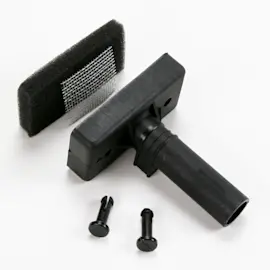
- Keep the air filter clean; service it more often in dusty or humid areas.
- Keep ventilation openings clear and maintain at least 12 inches of clearance for cooling airflow.
- Fix air leaks promptly so the unit does not run longer than necessary.
Quick “replace vs. repair” decision guide
- Repair makes sense when: it builds pressure normally, shuts off correctly, and only has a single failed component (like a gauge, regulator, or pressure switch).
- Replacement makes sense when: it cannot build tank pressure, runs hot, cycles excessively, or has multiple leaks that keep returning.
Why it matters
Air compressors usually fail early from overuse (high duty cycle) and neglected maintenance, not from age alone. Following the duty-cycle limit and the routine checks in the manual reduces wear on the pump, valves, and motor and helps your compressor reach its expected lifespan.
For step-by-step troubleshooting when performance drops, use our DIY guide: air compressor won't build tank pressure. If you need to look up parts by model number, start with the parts list for 919167340 or search by model on Sears PartsDirect.
Last updated: February 2026
What are the 4 types of compressors?
The four common compressor types are reciprocating (piston), rotary screw, centrifugal, and axial. Your Craftsman 919167340 is a shop-style air compressor that works like a positive-displacement unit (it builds tank pressure until it reaches cut-out pressure and shuts off); see the owner's manual for operating details and safety limits.
The 4 compressor types (quick comparison)
| Type | How it compresses air | Typical use | Key tradeoff |
|---|---|---|---|
| Reciprocating (piston) | Piston(s) compress air in a cylinder | Home shops, garages, intermittent tool use | Louder; best for lower duty cycles |
| Rotary screw | Two rotating screws trap and compress air | Continuous-duty shops, industrial air | Higher cost; very steady airflow |
| Centrifugal | High-speed impeller accelerates air, then converts velocity to pressure | Large plants, high-volume systems | Efficient at high flow; complex |
| Axial | Multiple rotor/stator stages compress air along the shaft | Turbines, aerospace, specialized industrial | Very high flow; specialized design |
How this relates to your Craftsman 919167340
Most Craftsman portable compressors are designed for intermittent use. In our manual for this model, the compressor builds tank pressure until it reaches cut-out pressure, then the motor shuts off to protect the tank. The manual also calls out a 50% duty cycle guideline (about 30 minutes of pumping per hour).
Why it matters
Choosing the right compressor type helps you match airflow demand to the tool. If the compressor runs too long trying to keep up, you can get overheating, frequent breaker trips, and slow tool performance.
Practical tips when selecting or using a compressor
- Match your tool’s SCFM at PSI requirement to the compressor’s output.
- For frequent, continuous air use, rotary screw is usually the better fit.
- For home projects and nailers, a reciprocating compressor is commonly sufficient.
- Use the regulator to set outlet pressure; the tank gauge shows stored pressure.
- Stay within the recommended duty cycle to avoid overheating.
Parts and help
If you are maintaining or repairing the Craftsman 919167340, use the parts list for this model; for broader model-based lookup and ordering, use Sears PartsDirect.
Last updated: February 2026
Is it worth it to repair a compressor?
Yes; repairing your Craftsman air compressor model 919167340 is worth it when the problem is a control or leak issue (pressure switch, check valve, regulator, gauges, fittings). If the pump is worn out or the tank is compromised, replacement is the better value and safer long term.
How we decide: repair vs. replace
Use this quick checklist before spending money on parts.
- Repair makes sense when it still builds pressure but has starting, cycling, or leak problems.
- Repair makes sense when the fix is external and accessible (switch, valve, regulator, fittings).
- Replace makes sense when the tank won’t hold air or shows severe corrosion.
- Replace makes sense when the pump is failing (knocking, overheating, very low output).
- Safety first: disconnect power and bleed off all air pressure before service; follow the owner's manual.
Cost and effort guide (typical)
Use these typical ranges to compare repair effort to the value of the compressor.
| Problem | Complexity | Best choice most of the time |
|---|---|---|
| Air leaks at fittings/valves | Low | Repair |
| Won’t start (electrical/control) | Medium | Repair |
| Won’t build tank pressure (valves/seals) | Medium to high | Depends |
| Pump rebuild needed | High | Depends |
| Tank won’t hold air | High risk | Replace |
Fast triage checks before you buy anything
- Unplug the compressor; bleed the tank to 0 PSI.
- Drain the tank; heavy rusty water points to internal corrosion.
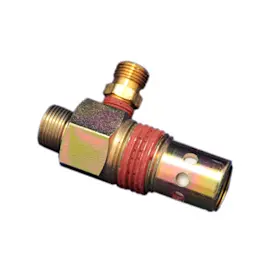
- Listen for leaks at the regulator, safety valve, and check valve area.
- Watch gauges: if tank pressure rises but outlet pressure won’t adjust, suspect the regulator.
DIY help for common repairable symptoms
Why it matters
A good repair restores safe pressure control and reduces run time, heat, and noise; neglected maintenance shortens compressor life.
For diagrams and replacement items, use the model parts list, or search by model number on Sears PartsDirect.
Last updated: February 2026