Installation guide
 Owner’s manual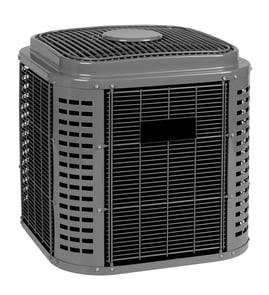





What brand of AC does ICP make?
International Comfort Products (Icp) builds central air conditioner and heat pump equipment that is sold under multiple brand names. For your Icp HHP036AKA1 system, the exact “badge” on the outdoor unit can vary by distributor, but it is commonly one of several Icp family brands.
Common Icp brand names you may see
These are widely used brand names associated with Icp equipment:
- Comfortmaker
- Heil
- Tempstar
- AirQuest
- Arcoaire
- KeepRite
How to confirm which Icp brand you have
The most reliable way is to read the data plate on the outdoor condenser cabinet.
- Look for the brand name/logo printed on the unit’s front panel
- Find the model number (for this page: HHP036AKA1) and serial number on the rating label
- Match the model number to the documentation and wiring diagram in the installation guide
- If you are ordering repair parts, match by model number first, then confirm the part by description
Why it matters
Icp family brands often share designs, but parts can still vary by model and production run. Using the correct model number helps ensure you get the right electrical and refrigeration components (for example, a contactor or capacitor) for safe, reliable operation.
Quick reference
| What you’re checking | Where to look | What to write down |
|---|---|---|
| Brand name | Front panel or rating label | Brand/logo text |
| Model number | Rating label | HHP036AKA1 |
| Electrical details | Rating label | Voltage, phase, MCA/MOP |
Last updated: February 2026
How much does a heat pump with AC cost?
For an Icp heat pump system like model HHP036AKA1 (heat pump with central AC), the typical installed cost for a replacement system is about $6,000 to $25,000. Your final price depends mostly on system size (tons), efficiency rating, ductwork and electrical needs, and local labor and permit costs.
What drives the price most
- Capacity (tons): Larger homes need larger outdoor units and indoor coils.
- Efficiency level: Higher-efficiency heat pumps cost more up front but can lower operating costs.
- Electrical and controls: New disconnect, wiring, thermostat upgrades, or low-voltage control changes.
- Ductwork and airflow: Repairs, sealing, or resizing; proper airflow is critical (many systems target 350 to 450 CFM per ton across the indoor coil).
- Refrigerant work: Evacuation, charging, and commissioning time.
- Site conditions: Pad/platform, snow level considerations, and clearances.
Typical cost ranges (installed)
| Scenario | What it usually includes | Typical range |
|---|---|---|
| Like-for-like heat pump swap | Outdoor unit plus basic startup/charge | $6,000 to $12,000 |
| Mid-level upgrade | Higher efficiency, some electrical/thermostat work | $10,000 to $18,000 |
| Full system replacement | Outdoor unit, indoor coil/air handler, duct or electrical updates | $15,000 to $25,000 |
Why installation details matter for HHP036AKA1
Correct setup affects comfort, reliability, and energy use. For example, the installation guidance calls out practical clearances (often 48 inches above for discharge air and 18 inches around the coil on three sides, with one side sometimes reduced) and proper commissioning practices like allowing the system to run before taking charge readings.
Parts cost vs. installed cost
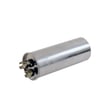
Parts are only one piece of the total. If you are budgeting a repair instead of replacement, common service parts for this model include a capacitor 1172120 or central air conditioner condenser fan motor, 1/3-hp 1085926, but labor, diagnostics, and refrigerant handling often exceed the part price.
For model-specific installation and wiring details, use the installation guide.
Last updated: February 2026
Who supplies ICP parts?
Icp parts are supplied through HVAC distribution channels, and for your Icp HHP036AKA1 heat pump we supply compatible replacement parts directly through our parts listings. For installation and service requirements, follow the safety and code guidance in the installation guide.
Where Icp parts typically come from
Most Icp replacement parts are distributed through:
- Authorized HVAC wholesalers and distributors
- OEM parts supply networks (brand-specific distribution)
- Service companies that source parts through distribution
- Parts retailers that list model-specific components (like our HHP036AKA1 parts list)
How to make sure you are buying the right part
For central air conditioner and heat pump repairs, matching the correct component matters for fit, wiring, and system performance.
- Confirm the model number on the unit data plate matches HHP036AKA1
- Match the part by function (contactor, capacitor, fan motor, control board)
- Compare electrical ratings and terminal style before ordering
- Use the wiring diagram and service notes in the owner's manual
- If the repair involves refrigerant piping or charge, use a qualified technician
Common parts customers replace on this model
| Part type | What it does | Example from our parts list |
|---|---|---|
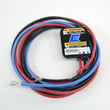
| Contactor | Switches high-voltage power to the outdoor unit | Contactor (part number 1050699) |
| Capacitor | Helps start/run the compressor or fan motor | Capacitor 1172120 |
| Condenser fan motor | Moves air across the outdoor coil | Central air conditioner condenser fan motor, 1/3-hp 1085926 |
Why it matters
Heat pump and condenser repairs involve high voltage and, in many cases, refrigerant handling. The installation instructions call out that work by unqualified persons can create hazards and that installation must conform to applicable electrical codes. Using the correct matched components helps prevent repeat failures and protects system performance.
Last updated: February 2026
Is it worth replacing an AC with a heat pump?
Yes; replacing a traditional central AC with a heat pump is worth it when you need both cooling and efficient electric heating from one system. For the Icp HHP036AKA1, the decision comes down to your heating needs, local climate, and whether your indoor equipment and controls are compatible; use the installation guide to confirm setup requirements.
When a heat pump replacement makes the most sense
A heat pump is the right upgrade when it can cover most of your heating season efficiently and your home is set up for proper airflow and controls.
- You want one outdoor unit for both heating and cooling
- Your current AC is near end of life and replacement is already planned
- You have mild to moderate winters where heat pumps carry the load well
- Your ductwork and indoor blower can support proper airflow (commonly about 400 CFM per ton)
- You can use a compatible thermostat and any needed auxiliary electric heat
What to verify for an HHP036AKA1-STYLE installation
The installation instructions for this model focus on placement and clearances to prevent recirculation, noise issues, and coil blockage.
| Item to verify | Target guidance | Why it matters |
|---|---|---|
| Discharge clearance above unit | 48 inches (120 cm) | Prevents discharge air recirculation and capacity loss |
| Coil intake clearance | 18 inches (40 cm) on three sides; one side can be 6 inches (15 cm) | Protects airflow through the outdoor coil |
| Snow and drainage | Platform above average winter snow levels; well-drained location | Prevents coil blockage and water intrusion |
| Overhangs | Avoid roof overhangs without guttering; keep 48 inches vertical clearance | Prevents restricted discharge and water problems |
Why it matters (comfort and operating cost)
Heat pumps move heat instead of generating it, so they reduce heating energy use compared with electric resistance heat. In colder weather, auxiliary heat can run; correct thermostat setup and airflow keep comfort steady.
Parts that commonly come up during heat pump service
If you are troubleshooting an existing HHP036AKA1 while deciding, these parts often affect “no heat/no cool” or intermittent operation:
- Capacitor 1172120 (weak capacitor can prevent the compressor or fan from starting)
- Central air conditioner condenser fan motor, 1/3-hp 1085926 (failed fan motor can lead to overheating and shutdown)
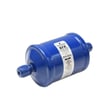
- Drier BFK083S (used in sealed-system service to protect against moisture and contaminants)
Last updated: February 2026
How much power does a 36000 BTU air conditioner use?
A 36,000 BTU (3-ton) central air conditioner or heat pump like the Icp HHP036AKA1 typically uses about 3,000 to 5,000 watts while running (about 13 to 22 amps at 230V), with a brief higher surge when the compressor starts.
Typical power use for a 36,000 BTU (3-ton) system
Most 3-ton systems fall into these real-world ranges:
- Running watts: 3.0 to 5.0 kW
- Running amps at 208-230V: 13 to 22A
- Start-up surge: commonly 2 to 5 times running amps for a fraction of a second
- Daily energy (kWh): running kW × hours the compressor actually runs
- Big drivers: efficiency rating, indoor airflow, outdoor temperature, refrigerant charge
Quick estimate table
| Scenario | Approx. running watts | If it runs 6 hours/day | Approx. kWh/day |
|---|---|---|---|
| Higher efficiency / mild day | 3,000 W | 6 h | 18 kWh |
| Typical | 4,000 W | 6 h | 24 kWh |
| Lower efficiency / hot day | 5,000 W | 6 h | 30 kWh |
How to get the most accurate number for Icp HHP036AKA1
Use the unit rating plate values and your measured voltage. The installation information for this model specifies 208-230V, 60 Hz, single phase, and directs you to the rating plate for circuit protection details; see the installation guide.
- Locate the outdoor unit rating plate (usually inside the service panel)
- Record voltage, MCA (minimum circuit amps), and MOCP (max overcurrent protection)
- Measure actual running amps with a clamp meter (compressor plus condenser fan)
- Estimate watts: Watts = Volts × Amps
Why it matters
Knowing wattage helps estimate operating cost, confirm the circuit is sized correctly, and spot performance issues. Higher-than-normal amps often point to airflow problems, a weak capacitor, or a failing condenser fan motor.
Parts that commonly affect power draw
If the outdoor unit struggles to start or runs hot, these parts are common contributors:
- Capacitor 1172120 (weak capacitor can cause hard starts and higher amps)
- Central air conditioner condenser fan motor, 1/3-hp 1085926 (a failing motor can raise head pressure and amp draw)
Last updated: February 2026