 Owner’s manual
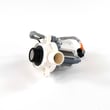



How do I prevent the UE error from happening again?
On the GE GTW685BSL2WS washer, a UE-style “unbalanced” event is prevented by loading and leveling correctly so the washer can balance the basket before and during spin. If the Spin light blinks and clothes end wetter than normal, redistribute the load and run a Drain & Spin cycle as described in the owner's manual.
What to do every time you load the washer
- Load items loosely and evenly around the basket; avoid packing clothes down.
- Mix large and small items (for example, add a few towels with a bulky item) to help balance.
- Avoid single heavy items (one blanket, one bath mat, one pair of jeans) when possible.
- Keep bulky items (sheets, blankets, towels) from laying across the infusor; load them around the outside of the basket.
- Use the right cycle and spin setting for the load; very high spin on an uneven load increases out-of-balance events.
If the Spin light blinks or the load is wetter than normal
When this model detects an out-of-balance condition, it may slow or limit spin speed while it tries to correct the load. Use this quick reset routine:
- Press Pause/Cancel and wait for the basket to stop.
- Open the lid and redistribute items evenly.
- Run Drain & Spin.
Quick symptom guide
| What you notice | What it usually means | What to do next |
|---|---|---|
| Spin light blinking during/after cycle | Washer detected out-of-balance and tried to correct | Redistribute load; run Drain & Spin |
| Clothes much wetter than normal | Washer could not reach full spin speed | Rebalance; reduce load size; try a different cycle |
| Washer shakes or “walks” | Leveling or floor stability issue | Level the washer; confirm all feet are firmly on the floor |
Check installation and leveling (biggest long-term fix)
An unlevel top-load washer is far more likely to go out of balance.
- Confirm the washer is level side-to-side and front-to-back.
- Make sure the washer sits solidly on the floor (no rocking).
- Verify the load size is appropriate; overloading makes balancing harder.
When it points to a worn part
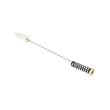
If you’re loading correctly and the washer is level but it still goes out of balance often, the suspension can be weak. On this model, a common wear item is the washer suspension rod and spring assembly WH16X26911.
Why it matters
Repeated out-of-balance spinning can leave clothes too wet, extend cycle time, and increase vibration that stresses the basket, suspension, and drive components.
Last updated: February 2026
Is the GE GTW685BSL2WS top load washer any good?
Yes. The GE GTW685BSL2WS is a solid top load washer for everyday family laundry because it combines a large-capacity tub with straightforward cycle and dispenser features; when it’s installed level and loaded correctly, it typically cleans well and spins out water effectively. For model-specific use and care details, use the GTW685BSL2WS owner's manual.
What “good” looks like on this model
When the washer is performing as designed, you’ll usually see:
- Consistent agitation and turnover (clothes move freely, not packed tight)
- Strong spin with minimal out-of-balance banging
- Proper dispensing from the detergent and softener compartments (GTW685 uses a large dispenser drawer)
- No standing water left in the basket after the cycle
- No lid-lock related interruptions during spin
Features that affect cleaning results
The manual highlights several day-to-day items that directly impact performance on GTW685 models:
- Detergent use: Use HE detergent; powdered HE detergent can be placed directly in the basket for best results in cooler temps.
- Single-dose packets: Put packets in the bottom of the wash basket (not in the dispenser drawer).
- Bleach: Add liquid chlorine bleach through the bleach dispenser (front left corner) and avoid spilling directly on clothing.
- Softener: Add liquid fabric softener to the softener compartment; do not use softener crystals in the drawer.
Quick “is it working right?” checks
Use this fast checklist before judging performance:
| Check | What you want to see | If not | Common next step |
|---|---|---|---|
| Load size | Basket not tightly packed | Poor turnover, residue | Reduce load, sort by fabric |
| Leveling | Washer stable on floor | Banging in spin | Re-level feet, redistribute |
| Draining | No water left after cycle | Wet clothes, odor | Inspect drain path and pump |
| Dispensing | Additives dispense at the right time | Softener/detergent left behind | Clean drawer, use correct products |
Why it matters
Most “this washer isn’t good” complaints come from setup and usage issues (overloading, not leveling, wrong detergent, or poor draining). Dialing in loading and dispensing on the GTW685BSL2WS usually restores the cleaning and spin performance people expect from a GE top load washer.
Last updated: February 2026
What is the life expectancy of a GE washing machine?
Most GE washing machines typically last 10 to 14 years with normal household use and consistent care. For your GE GTW685BSL2WS top-load washer, following the maintenance and usage guidance in the GTW685BSL2WS owner's manual helps you get the longest service life.
Typical life expectancy (what to expect)
Washer lifespan depends most on load size, installation, and routine maintenance.
- Typical range: 10 to 14 years
- Heavy use (multiple loads daily): often shorter
- Light use (few loads weekly): often longer
- Hard water, frequent overloading, and poor leveling: reduce lifespan
Maintenance that extends washer life
These steps prevent common wear issues like vibration, slow draining, and fill problems.
- Turn off the water faucets when not in use to reduce the chance of leakage from a hose failure.
- Replace fill hoses every 5 years (a key preventive step called out in the manual).
- Level the washer so it does not rock or rub the cabinet during operation.
- Avoid overloading; oversized loads strain the drive system, suspension, and basket.
- Use the right detergent amount; excess suds can cause poor rinsing and extra stress on draining.
What “normal” sounds and behavior mean
Some noises and pauses are part of normal operation on this style of GE top-load washer.
| What you notice | Usually means | Action |
|---|---|---|
| Clicks, brief hum, pauses | Normal cycle operation | No repair needed |
| Rocking or squeaking | Washer not level | Adjust leveling legs |
| Draining after lid left open | Automatic drain sequence | Close lid, restart cycle |
Why it matters
Knowing the expected lifespan helps you decide when maintenance is worth doing versus when a major repair (like a gear case or motor issue) may not be cost-effective. Preventive care also reduces nuisance problems such as out-of-balance loads and water leaks.
Last updated: February 2026


