



What is the disadvantage of a built-in microwave?
A built-in microwave like the Ikea IMBS104GSS00 looks seamless in cabinetry, but the tradeoffs are higher total cost, less flexibility to relocate, and more involved service access. Repairs can also take longer because the unit often must be pulled from the cabinet opening.
Common disadvantages to plan for
- Higher overall cost: the microwave plus cabinet modifications and possible trim or mounting hardware.
- Harder access for service: technicians may need to remove the unit to reach internal components.
- Less flexibility: you cannot easily move it to a new spot like a countertop microwave.
- More downtime risk: if a key part fails, the microwave may be unusable until the correct replacement arrives.
- Cabinet fit matters: ventilation clearances and cutout dimensions must be right to prevent overheating.
What this means for repairs on IMBS104GSS00
Built-in microwaves are typically straightforward to diagnose, but access is the challenge. If you are troubleshooting door-related no-start issues, a common wear item is the microwave door interlock switch W10211972.
Typical symptoms and likely areas
| Symptom | Common area to check | Example part for this model |
|---|---|---|
| Won’t start when door closes | Door interlock circuit | Door switch and wiring |
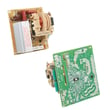
| Runs but does not heat | High-voltage/inverter system | Inverter, transformer |
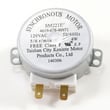
| Turntable not rotating | Drive motor or harness | Turntable motor |
Why it matters
Because a built-in microwave is integrated into your kitchen, even a small failure (like an interlock issue) can take the whole unit out of service and may require cabinet removal. Planning for access and using model-matched parts helps keep repairs efficient.
Last updated: February 2026
Are built-in microwaves hard wired or plug-in?
Most built-in microwaves, including many units like the Ikea IMBS104GSS00, are plug-in appliances that connect to a dedicated outlet inside the cabinet; hard-wiring is less common and is usually tied to specific installation requirements for the unit and the home.
What you’ll typically find with built-in microwaves
- Plug-in (most common): A power cord plugs into an outlet in the cabinet or wall cavity.
- Dedicated circuit: Many installations use a dedicated circuit to prevent nuisance tripping.
- Hard-wired (less common): Usually only when the installation kit or local electrical setup is designed for it.
- Access matters: Even plug-in models may require removing the microwave from the cabinet to reach the outlet.
Quick comparison
| Connection type | What it means | What you can check without disassembly |
|---|---|---|
| Plug-in | Cord to an outlet | Look for an outlet in the cabinet above/behind the unit; check for a visible cord path |
| Hard-wired | Wires in a junction box | Look for a junction box and conduit instead of an outlet |
Why it matters
The connection type affects installation planning, service access, and troubleshooting. For example, if the microwave is completely dead, a plug-in setup points you toward outlet power, a tripped breaker, or a blown internal fuse path (often involving the fuse holder).
If your microwave is dead (common related checks)
- Confirm the breaker is on and the outlet has power.
- If the outlet is powered but the unit is dead, internal protection components may be involved.
- Door switch problems can also prevent operation even when the display works.
If you’re diagnosing a no-power or no-run symptom on IMBS104GSS00, these model-matched parts are commonly involved: microwave door interlock switch W10211972 and fuse block W10245194.
Last updated: February 2026
Can a countertop microwave be converted to built-in?
A countertop microwave can be installed as a built-in only when the manufacturer offers a model-specific built-in trim kit that provides the required mounting and ventilation clearances. For Ikea model IMBS104GSS00, we treat it as a built-in microwave; we do not recommend converting a different countertop unit to “built-in” without the correct trim kit.
What makes a microwave “built-in” (and why a trim kit matters)
A trim kit is not just decorative; it’s the hardware and spacing system that helps the microwave fit a cabinet opening safely.
- Matches the exact microwave model it’s designed for
- Sets required air gaps and ventilation paths
- Provides mounting brackets and a finished frame
- Prevents cabinet heat damage and poor microwave performance
- Helps keep the unit stable and aligned in the cutout
How to decide what you can do in your kitchen
Use this quick checklist before planning a cabinet cutout or purchase.
| Your situation | What we recommend |
|---|---|
| You already own a countertop microwave | Only build it in if there is a trim kit made for that exact model |
| You want a built-in look | Choose a true built-in model (like IMBS104GSS00) or a countertop model with an approved trim kit |
| You are replacing an existing built-in | Match the cutout size and confirm the replacement is approved for built-in installation |
Common problems when a countertop unit is “built in” without a kit
- Overheating from blocked airflow
- Nuisance shutdowns or thermal trips
- Cabinet discoloration or warping from heat
- Door alignment issues that can prevent proper operation
Parts that are often involved in built-in microwave service
If your built-in microwave is having door or run issues, these model-matched parts are commonly checked or replaced:
- Microwave door interlock switch W10211972 (door sensing and run enable)
- Fuse block W10245194 (power protection and fuse mounting)
- Microwave turntable motor W10911403 (turntable rotation)
Why it matters
Microwaves rely on controlled airflow and precise mounting. Using the correct built-in trim kit (or a true built-in model like IMBS104GSS00) helps prevent overheating, nuisance failures, and cabinet damage.
Last updated: February 2026
What parts can be salvaged from a microwave?
Some microwave parts can be reused for repairs or projects, but we treat a microwave as a high-voltage device and focus on safe, practical salvage. For an Ikea IMBS104GSS00 built-in microwave, the most commonly reusable items are door safety parts, small motors, and certain wiring components.
Parts that are most practical to reuse
These are the parts we see reused most often because they are easier to remove and diagnose:
- Door safety switches (door interlock switches)
- Turntable drive parts (motor and coupler-style hardware)
- Light-related parts (lens, lamp holder)
- Wire harnesses and connectors (if not heat-damaged)
- Mounting hardware (screws, brackets, spacers)
If you are salvaging specifically to keep this model running, start with the microwave door interlock switch W10211972 and the microwave turntable motor W10911403.
Parts to avoid salvaging (high risk)
Microwaves contain components that can store or generate dangerous voltage even after unplugging. We recommend leaving these to trained service work:
- High-voltage capacitor
- High-voltage transformer
- Inverter and high-voltage power sections
- Magnetron-related circuits and thermal protection wiring
Why it matters
The door interlock system is a primary safety circuit; using the correct switch type and mounting position helps the microwave stop instantly when the door opens. Turntable and light parts are lower-risk, common wear items that can restore normal operation without touching high-voltage components.
Quick “salvage vs. replace” guide
| Component type | Typical reason to keep | Typical reason to replace |
|---|---|---|
| Door interlock switch | Clicks consistently, tests good | Intermittent, heat marks, broken actuator |
| Turntable motor | Runs smoothly, no grinding | Hums, stalls, noisy, overheats |
| Light lens/holder | Not cracked, not melted | Brittle plastic, discoloration, loose fit |
| Harness/connectors | Clean terminals, tight pins | Burnt terminals, loose pins, brittle insulation |
Helpful DIY prep before you start
- Unplug the microwave and confirm power is off at the outlet
- Take photos of wire routing and connector positions before disconnecting anything
- Label connectors so reassembly is accurate
- Inspect for heat damage around terminals and switches
- Use proper test tools and techniques (not guesswork)
For tool and safety basics, we recommend are diy appliance repairs safe and must have tools for appliance repair.
Last updated: February 2026
How much does it cost to have a built-in microwave installed?
Installing an Ikea built-in microwave like model IMBS104GSS00 typically runs $200 to $600 for labor when the cabinet opening and power connection are already compatible. If the cutout needs carpentry or the circuit/outlet needs changes, total installed cost commonly increases to $400 to $900+.
What drives the price up or down
Most of the cost comes from how close the new unit is to a like-for-like swap and how much work is needed to make the opening and electrical connection match.
- Like-for-like replacement in an existing cutout (fastest, lowest labor)
- Cabinet cutout adjustments (shimming, leveling, widening, adding support rails)
- Electrical changes (moving an outlet, adding a dedicated circuit, converting hardwire to corded or vice versa)
- Trim and fit work (aligning the face, securing mounting points, reinstalling trim)
- Removal and disposal of the old built-in unit
- Access constraints (tight cabinetry, limited clearance, heavy unit handling)
Typical cost ranges
| Scenario | Typical labor | Typical total (labor + common materials) |
|---|---|---|
| Straight swap in existing opening | $200 to $400 | $250 to $600 |
| Swap plus cabinet fit adjustments | $300 to $600 | $400 to $900 |
| Install plus electrical work | $400 to $900+ | $600 to $1,200+ |
How to estimate your install more accurately
Use these checks before scheduling service so you are paying for the right scope.
- Measure the cabinet cutout width, height, and depth and compare to your microwave’s required opening.
- Confirm whether the unit is plug-in or hardwired and where the outlet or junction box sits.
- Verify the circuit is appropriate for a built-in microwave; many installs require a dedicated circuit.
- Plan for safe removal; built-in units are heavier and often secured with brackets or trim.
- If the door does not latch or the microwave will not start, address that first; a failed interlock switch can stop operation (see microwave door interlock switch W10211972).
Why it matters
Built-in microwaves depend on correct fit, secure mounting, and a properly functioning door interlock. Getting the cutout and electrical details right up front prevents delays, repeat trips, and post-install problems like misalignment or a unit that will not run.
Last updated: February 2026


