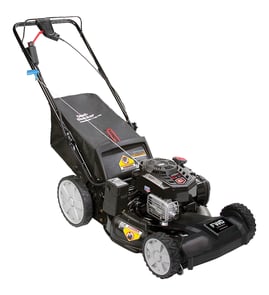





Is a 190cc lawn mower powerful?
Yes. A 190cc gas walk-behind mower engine is considered powerful for typical residential mowing; it delivers strong torque for thicker grass, mulching, and bagging. For your Poulan PR625P-96142012201 rotary mower, 190cc is a solid choice if you regularly cut dense or slightly overgrown lawns.
What 190cc power is best for
- Taller or thicker grass that bogs down smaller engines
- Mulching and bagging (both load the blade more than side discharge)
- Slight hills or uneven terrain where the blade speed needs to stay steady
- Faster mowing pace without stalling
- Larger yards where consistent cutting power matters
Quick comparison: 140cc vs. 190cc (typical)
| Engine size | Typical feel | Best fit |
|---|---|---|
| 140cc | Adequate power | Small, flat lawns; frequent mowing |
| 160cc | Noticeably stronger | Average lawns; mixed conditions |
| 190cc | Strong torque | Thick grass; mulching/bagging; larger yards |
What matters more than cc
Cc is a good shorthand, but real-world performance also depends on setup and maintenance.
- Blade condition: A dull or bent blade makes any engine feel weak. If cutting quality drops, consider replacing the blade with the correct 22-inch deck blade such as the lawn mower 22-in deck 3-in-1 blade 532420463.
- Drive system drag: Self-propelled mowers can feel sluggish if the drive components bind or slip.
- Fuel and air flow: Old fuel, a dirty air filter, or a partially clogged carburetor reduces power.
- Deck buildup: Wet grass packed under the deck increases load and can cause bogging.
Why it matters
Choosing enough engine power helps the mower maintain blade speed under load, which improves cut quality and reduces stalling, especially when mulching or mowing thick grass.
Last updated: February 2026
Why does my mower leave a strip of grass in the middle?
Your Poulan PR625P-96142012201 mower usually leaves a strip of uncut grass when the blade is dull or bent, the cutting deck is riding unevenly, or grass buildup under the deck disrupts airflow and lift. Correcting blade condition and deck setup typically fixes the “missed strip.”
Quick checks that fix most “striping” problems
- Inspect the blade edge for dullness, nicks, or a bent tip; replace if damaged.
- Clean the underside of the deck (caked grass changes cut quality and can cause a center strip).
- Verify the cutting height is equal on both sides (same notch/setting at each wheel).
- Slow down in thick or wet grass so the blade can lift and cut cleanly.
- Overlap your passes by a few inches, especially on turns and uneven ground.
- Check wheels for wobble or looseness that can tilt the deck while mowing.
Parts that commonly solve the issue
If the blade is worn, replacing it is the fastest, most reliable fix. If the deck is tilting because hardware is loose or missing, tightening or replacing fasteners helps the deck stay level.
| Symptom you see | Most likely cause | What to do |
|---|---|---|
| Clean strip down the center every pass | Dull blade or poor lift from buildup | Clean deck; replace blade |
| Strip appears only on one side | Deck height uneven or wheel issue | Match height settings; inspect wheels |
| Ragged cut plus striping | Blade damage or mowing too fast | Replace blade; reduce speed |
Recommended model-matched parts from this page:
- Lawn mower 22-in deck 3-in-1 blade 532420463
- Lawn mower nut 532409149 (common blade/fastener hardware)
Why it matters
A mower that leaves a center strip is usually not cutting efficiently; the blade is not lifting grass evenly, or the deck is not staying level. Fixing it improves cut quality, reduces repeat passes, and helps prevent extra strain on the engine and drive system.
Last updated: February 2026
Who makes PR625P-96142012201 lawn mowers?
Poulan makes the PR625P-96142012201 walk-behind mower, and Poulan is part of the Husqvarna group (Husqvarna AB). That means many Poulan mower designs and replacement parts are sourced through Husqvarna’s manufacturing and parts network.
What that means when you’re buying parts
When you shop parts for a Poulan PR625P-96142012201 rotary mower, you’ll often see Husqvarna-branded components listed because the brands share engineering and supply chains.
Common examples on this model’s parts list include:
- Blade and blade mounting hardware
- Drive system parts (drive cable, pulley, transmission items)
- Deck and handle hardware
- Wheels and wheel dust covers
Parts you can match to this model
Use your model number PR625P-96142012201 when selecting parts to ensure fit. Here are a few examples from the parts list for this mower:
- Lawn mower 22-in deck 3-in-1 blade 532420463 for cutting and mulching/bagging performance
- Lawn mower zone control cable 532420939 for operator presence control engagement
- Drive cable 588479201 if the self-propel function is not engaging consistently
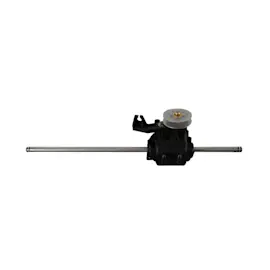
- Lawn mower transmission assembly 589600601 when the drive system is worn or slipping
Quick brand and parts ID guide
| Item | What you’ll see | What it indicates |
|---|---|---|
| Mower brand on the deck | Poulan | The retail brand of the mower |
| Parts listings | Poulan and Husqvarna names | Shared parts sourcing and compatibility |
| Best way to confirm fit | Model number PR625P-96142012201 | Matches the correct diagrams and parts list |
Why it matters
Knowing Poulan is under the Husqvarna umbrella helps you avoid ordering the wrong component when a listing shows “Husqvarna” in the part description. The correct match comes from the PR625P-96142012201 parts breakdown, not the brand name printed in the listing.
Last updated: February 2026
Should the deck of a lawn mower be higher or lower in the front?
For your Poulan PR625P-96142012201 rotary mower, the deck should sit slightly higher in the front than the rear. A small forward pitch helps the blade cut cleanly once, improves discharge and bagging, and reduces the chance of scalping.
Recommended deck pitch (typical)
Most walk-behind mowers cut best with the front of the deck about 1/8 to 1/2 inch higher than the back (many owners aim near 1/4 inch).
| Setup | What you see | Typical result |
|---|---|---|
| Front slightly higher | Front-to-back “nose up” | Cleaner cut, better airflow |
| Level front-to-back | Same height | Usually OK, can leave more clippings |
| Front lower | “Nose down” | More recutting, clumping, uneven cut |
How we set and check it
- Park on a flat, hard surface (driveway or garage floor).
- Turn the engine off and disconnect the spark plug wire.
- Set all height adjusters to the same cutting-height notch.
- Measure blade tip height at the front and rear (rotate the blade so the tip is at the measurement point).
- Adjust until the front measurement is slightly higher than the rear.
What to inspect if the pitch will not stay consistent
A mower that will not hold a consistent deck height often has worn or loose hardware.
- Height adjuster components and knobs (check for slop or stripped threads)
- Wheel wear or wobble (bent axle, worn hub)
- Loose fasteners on the deck and handle brackets
- Rear skirt damage that changes airflow and cut quality
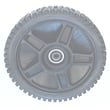
Helpful parts commonly involved on this model include the husqvarna lawn mower height adjuster knob 532701037 and the husqvarna lawn mower wheel, 8 x 1-3/4-in 581009201.
Why it matters
Correct deck pitch reduces double-cutting (which can bog the engine), improves mulching and bagging performance, and helps prevent uneven stripes or scalped spots, especially on slightly bumpy lawns.
Last updated: February 2026
What is the gap supposed to be on a lawn mower spark plug?
For the Poulan PR625P-96142012201 mower, set the spark plug gap to the specification for the exact engine and plug installed on your mower (the engine shroud label and the spark plug box list it). Most walk-behind mower plugs run 0.020 to 0.030 in.
How to find the correct gap for your exact setup
Use the most specific source available, in this order:
- Engine label or decal on the blower housing (often lists plug type and gap)
- Spark plug box (gap spec is usually printed on the carton)
- Spark plug manufacturer spec for that exact plug number
- If none are available, start at 0.030 in for many small engines, then correct it once you confirm the spec
How to set the spark plug gap (safe, accurate method)
- Let the engine cool completely; disconnect the spark plug wire.
- Remove the plug; inspect for heavy carbon, oil fouling, or cracked porcelain.
- Measure with a wire-style gap gauge (preferred) or feeler gauge.
- Adjust by bending only the ground electrode; do not pry on the center electrode.
- Recheck the measurement, reinstall, and tighten firmly (do not overtighten).
Typical gap ranges you will see on small gas mowers
| What you see on the plug/engine info | Gap you’ll commonly set | What it affects |
|---|---|---|
| Many standard small-engine plugs | 0.030 in | Reliable starting and smooth running |
| Some ignition designs and plug types | 0.020 to 0.025 in | Helps prevent misfire under load |
Why the gap matters
The gap controls how hard the ignition system has to work to fire the plug. Too wide causes hard starting and misfires; too tight causes weak spark and rough running.
If it still runs rough after gapping
A heavy cutting load can mimic ignition problems. If the mower bogs down in grass, inspect the blade and replace it if bent or badly worn; the lawn mower 22-in deck 3-in-1 blade 532420463 is a common wear item on this model family.
Last updated: February 2026