Error Codes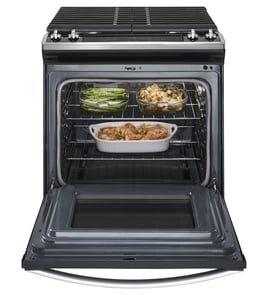




Does Whirlpool make gas ranges?
Yes. Whirlpool makes gas ranges, including freestanding gas ranges like model WFGS5030RS0. These ranges typically combine a gas cooktop with a gas oven and offer everyday cooking modes such as bake and broil.
What “gas range” means for this Whirlpool model
A gas range is a single appliance that includes both the cooktop and the oven. On a freestanding gas range, the unit slides into place between cabinets and usually has adjustable feet for leveling.
Common gas range features you will see across many Whirlpool models:
- Gas surface burners for stovetop cooking
- A gas bake burner and a broil burner in the oven
- Electronic ignition and flame sensing for safe lighting
- Oven racks and a storage drawer (on many freestanding designs)
Parts that support normal gas range operation
If you are maintaining or repairing a Whirlpool gas range like WFGS5030RS0, these parts are commonly involved in day-to-day performance:
| What you notice | Common part area | Example part for WFGS5030RS0 |
|---|---|---|
| Oven will not ignite or takes too long to light | Bake ignition | Electrode, bake W11524031 |
| Burners click but do not light consistently | Ignition system | Module-spk W10898291 |
| Range rocks or is not level | Leveling system | Range leveling leg WPW10058460 |
Why it matters
Knowing Whirlpool makes gas ranges helps when you are matching parts by brand and model number. For gas ignition, burner, and control components, the correct Whirlpool-compatible part for WFGS5030RS0 helps restore reliable lighting, steady flame, and consistent oven temperatures.
Last updated: February 2026
How to find whirlpool gas range model number?
On a Whirlpool gas range like model WFGS5030RS0, the model number is printed on a rating label attached to the range body. We typically find it around the oven frame area or behind the storage or warming drawer, where it stays readable and protected.
Where to look on a freestanding Whirlpool gas range
Check these common spots in this order:
- Behind the storage drawer or warming drawer: pull the drawer out and look on the frame rails or side walls
- Oven door frame: open the oven door and look along the front frame (left or right side)
- Lower front frame: near the bottom edge behind the drawer opening
- Back panel: on the rear of the range (use a flashlight)
Quick steps to find it fast
- Turn the oven and all burners off and let surfaces cool.
- Pull the storage or warming drawer straight out (many lift slightly, then pull).
- Use a flashlight and look for a white or silver sticker that says MODEL and SERIAL.
- Write the model number exactly as shown (letters and numbers matter).
What the label usually looks like
| What you see on the label | What it means | Why we need it |
|---|---|---|
| Model | The exact range version (example: WFGS5030RS0) | Ensures correct parts fit |
| Serial | The unit’s production code | Helps match revisions |
| Type / gas info | Fuel and certification details | Useful for service checks |
Why it matters
Whirlpool ranges often have multiple versions that look the same, but use different igniters, door parts, or controls. Using the exact model number helps us match the right replacement parts the first time.
If you are ordering oven-door related parts after you find your model number, a common match for this model is the door glass WP8053948.
Last updated: February 2026
What kind of gas is used in stoves?
Most stoves, including the Whirlpool WFGS5030RS0 free standing gas range, are set up to burn natural gas (from a home gas line) or propane (LP) (from a tank) to produce heat. The correct fuel matters because burner flames, oven ignition, and gas pressure settings are different for natural gas vs LP.
Natural gas vs propane (LP): what’s the difference?
- Natural gas is delivered through a utility line; it’s the most common default in many homes.
- Propane (LP) is stored in a tank; it’s common in rural areas or where natural gas service is unavailable.
- LP typically requires a conversion (orifices/regulator settings) so the range burns fuel safely and efficiently.
- Flame appearance changes when the wrong gas type is used (often yellow, lazy flames or soot).
- Cooking performance changes (slow preheat, uneven baking, weak burner heat).
Quick comparison
| Feature | Natural gas | Propane (LP) |
|---|---|---|
| Fuel source | Utility line | Tank |
| Typical home setup | Most common | Common where no gas line |
| Conversion needed | No (if range is set for NG) | Yes (if range is set for NG) |
| Common symptom if wrong | Poor flame, soot | Poor flame, overheating |
How to tell which gas your home uses
- Check your gas bill (natural gas utility) or tank (propane).
- Look behind the range for a flex gas connector to a wall shutoff (often natural gas, but not always).
- If you have a propane tank outside, your range is typically on LP.
Why it matters
Using the wrong gas type can cause soot, odors, poor burner ignition, and unsafe combustion. If you suspect the range is set up for the wrong fuel, stop using it and have the gas type and conversion verified.
Related parts you might see during service
- Manifold assembly W11730298 (distributes gas to the surface burners)
- Valve-gas W10898290 (controls gas flow into the range)
Last updated: February 2026
Why are gas stoves being discontinued?
Gas stoves are not universally “discontinued,” but many areas and builders are shifting away from new gas cooking because burning natural gas releases indoor air pollutants (like nitrogen dioxide and carbon monoxide) and methane, and some jurisdictions are tightening building-efficiency rules or limiting new gas hookups. For a Whirlpool gas range like model WFGS5030RS0, this mainly affects future installations and home fuel choices, not day-to-day operation.
What is driving the shift away from gas ranges?
Common reasons we see include:
- Indoor air quality: combustion byproducts can build up, especially with poor ventilation.
- Climate goals: methane is a greenhouse gas; reducing gas use supports emissions targets.
- Building codes and electrification: some new construction favors electric/induction for efficiency.
- Utility and infrastructure changes: fewer new gas lines in certain developments.
- Consumer preference: induction performance and easier cleaning are influencing buyers.
What this means if you already own a Whirlpool WFGS5030RS0
In most cases, you can keep using your range normally. The practical focus is on safe operation, ventilation, and maintaining key components.
Good operating habits
- Run a vent hood that exhausts outdoors when cooking.
- Crack a window if ventilation is limited.
- Keep burner flames steady and blue; address persistent yellow flames.
- Clean spills and burner areas so ports do not clog.
- Schedule service if you smell gas or ignition becomes unreliable.
Parts and service: what typically matters most
If your range is working well, parts availability is usually the bigger concern than “discontinuation.” For ignition and flame issues, these model-matched parts are commonly involved:
| Symptom | Common area to check | Example model-matched part |
|---|---|---|
| Clicking but no ignition | Spark/ignition system | Module-spk W10898291 |
| Oven won’t light or lights inconsistently | Oven igniter/electrode | Electrode, bake W11524031 |
| Heat leaking, long preheat | Door sealing | Seal, door W11542153 |
Why it matters
Understanding the trend helps you plan for future kitchen upgrades (gas vs. electric) while keeping your current Whirlpool gas range safe, efficient, and repairable with the right replacement parts.
Last updated: February 2026
Why is my Whirlpool gas oven not turning on?
If your Whirlpool WFGS5030RS0 gas oven will not turn on, the most common causes are a failed bake ignition system (no spark or weak ignition), a gas supply issue, or a control problem. Start by confirming the range has power and gas, then focus on bake ignition parts like the electrode, bake W11524031.
Quick checks first (fastest wins)
- Confirm the range has power (clock/display on, or interior light works if equipped).
- Make sure the gas shutoff valve is fully open.
- Try a cooktop burner: if no burners light, the issue is usually gas supply or ignition power.
- If burners light but the oven does not, the problem is usually in the oven bake ignition circuit.
- If you smell gas without ignition, stop and ventilate; do not keep retrying.
What to test next (most likely causes)
1) Bake ignition is not sparking or not lighting
On many Whirlpool free standing gas ranges, the bake burner lights when the bake electrode sparks and the gas valve opens.
- Inspect the bake electrode tip for cracks, heavy grease, or a broken ceramic insulator.
- Listen for rapid clicking when you start Bake; no clicking often points to an ignition/control issue.
- If clicking happens but no flame, check for gas flow and burner ignition.
2) Spark module or wiring issue
If multiple ignition points act up (intermittent spark, constant clicking, or no spark), the spark module or wiring can be involved.
- Look for loose, burned, or pinched wires at the electrode and harness connections.
- If spark is missing across functions, the module-spk W10898291 is a common suspect.
3) Control or gas valve problem
If ignition components look good but the oven still will not light, the electronic control or gas valve circuit can be at fault.
| Symptom | Most common direction |
|---|---|
| No spark sound at all | Control, wiring, or spark module |
| Spark present, no flame, no gas smell | Gas valve circuit or supply |
| Spark present, gas smell, no ignition | Electrode/grounding, burner alignment |
Why it matters
A gas oven that will not ignite can be a simple ignition part failure, but repeated ignition attempts can create unsafe conditions and can also overheat electrical components. A quick, methodical check helps you pinpoint the right Whirlpool range parts and avoid unnecessary replacements.
Last updated: February 2026