Installation guide
 Owner’s manual



Do all GE microwaves use the same mounting bracket?
No. GE over-the-range microwaves do not all use the same mounting bracket; the bracket (wall plate) and top-cabinet hole pattern are model-specific, so when replacing a unit you should install the bracket and hardware intended for your exact microwave, such as GE model JVM1870SK04. See the installation guide for the correct wall plate alignment and mounting steps.
GE over-the-range microwaves often fit the same general cabinet opening width, but the mounting details can still differ.
- Often similar: overall 30-inch cabinet space requirement and basic mounting concept (rear wall plate plus top cabinet screws)
- Commonly different: wall plate shape, tab locations, venting adaptor position, and top cabinet drilling template
- Never assume: old bracket holes will line up with the new microwave
- Best practice: use the new bracket, template, and screws that match the replacement model
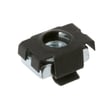
The JVM1870SK04 installs by hooking the microwave onto the lower tabs of the mounting plate, then securing it to the top cabinet with self-aligning screws. The wall plate must be level and positioned based on your cabinet bottom style (flat, recessed, or recessed with front overhang). Refer to the installation guide for the exact placement method.
| Checkpoint | What to verify | Why it matters |
|---|---|---|
| Wall plate location | Tabs touch cabinet bottom or a level line (for front overhang cabinets) | Keeps the microwave level and supported correctly |
| Centerline | Vertical centerline in the 30-inch space | Prevents a crooked install and misaligned holes |
| Top cabinet screws | Correct holes and screw locations | Prevents cabinet damage and loose mounting |
Using the wrong bracket can leave the microwave out of level, misalign the top cabinet screws, and stress the cabinet or chassis. A correct wall plate and template also helps the exhaust adaptor line up with your ductwork.
Last updated: February 2026
How to reset vent on GE microwave?
On the GE JVM1870SK04 microwave/hood combo, there is no “vent reset” for the fan itself; the vent fan is controlled by the VENTFAN pad, and it can also run automatically until the microwave cools down. If you mean the filter reminder, you reset it by pressing and holding the filter reset pad for about 3 seconds until it beeps (on models that have that reminder).
Use the vent fan button to change speeds or turn the fan off.
- Press VENTFAN once for high.
- Press VENTFAN twice for medium/high.
- Press VENTFAN a third time for low.
- Press VENTFAN a fourth time to turn the fan off.
- If your model has it, press VENTFAN BOOST for extra fan speed.
This model can turn the vent fan on automatically if it senses too much heat from the cooktop below. When that happens, the fan may stay on for up to 10 minutes or longer and then shuts off by itself once internal parts cool.
- Leave the fan running; it is protecting the microwave from heat.
- Reduce cooktop heat and move boiling pots to a rear burner when possible.
- Make sure the grease filter is installed and clean.
- After the cooktop cools, try the VENTFAN pad again.
Many GE over-the-range microwaves use a filter reminder timer (not a sensor). Resetting it restarts the countdown.
| What you see | What it usually means | What to do |
|---|---|---|
| “Filter” light/message is on | Filter reminder timer reached its interval | Clean/replace filters, then hold the reset pad ~3 seconds until it beeps |
| Fan keeps running | Automatic fan feature due to heat | Wait for cool-down; fan shuts off automatically |
A clean, properly installed grease filter helps airflow and reduces grease buildup in the vent area. It also helps prevent flare-ups from cooktop cooking from damaging the inside of the microwave.
For button locations and your exact control panel layout, use the JVM1870SK04 owner's manual.
Last updated: February 2026
What is the average lifespan of a GE microwave?
Most GE microwaves average 7 to 10 years of service life with normal household use and basic care. For your GE JVM1870SK04 microwave/hood combo, lifespan depends most on daily run time, keeping the cavity clean, and avoiding conditions that strain the magnetron and door interlock system.
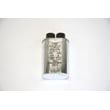
A microwave’s life is usually limited by high-voltage heating components (magnetron, capacitor, transformer) or safety/interlock parts in the door.
- Light use (reheating only): often closer to 10 years
- Daily cooking/long run times: often closer to 7 years
- Poor airflow or heavy grease buildup (over-the-range units): can shorten life
- Door slamming or misalignment: can wear interlock switches and latch parts faster
- Running empty or frequent arcing: can damage internal components
For model-specific care and cleaning guidance, follow the JVM1870SK04 owner's manual.
These symptoms commonly show up as parts wear or heat-system decline:
- Food takes longer to heat than it used to
- Loud humming or buzzing during heating
- Intermittent operation when closing the door
- Fan runs but heating is weak or inconsistent
- Burning smell, repeated arcing, or scorch marks
| Symptom | Most likely area | Example parts for JVM1870SK04 |
|---|---|---|
| Runs but does not heat | High-voltage heating system | Microwave magnetron WB27X10880 |
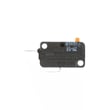
| Works only when door is held/pressed | Door latch or interlock | Micro-switch WB24X830, microwave latch body WB06X10676 |
| Dead/no display after a surge | Line fuse or power path | Use the JVM1870SK04 owner's manual for access and checks |
A microwave that is slow to heat or has door-interlock issues wastes time and can become unreliable. Catching wear early (especially door switch and latch problems) helps prevent nuisance shutdowns and protects key components like the magnetron.
Last updated: February 2026
What are common problems with GE JVM1870SK04 microwaves?
Common problems with the GE JVM1870SK04 microwave/hood combo include the oven not starting (power, door not fully closed, or control lock), arcing/sparking from metal or foil contact, weak or no heating, and venting or noise complaints. Use the troubleshooting charts in the JVM1870SK04 owner's manual to narrow the cause before replacing parts.
- Won’t start or looks dead: tripped breaker, blown house fuse, loose plug, power surge, door not latched
- “CONTROL LOCKED” or “LOCKED” on display: control lock is enabled (hold CLEAR/OFF about 3 seconds)
- Arcing or sparking inside: foil touching the cavity wall, metal rack installed incorrectly, metal-trim dishes, twist ties, or recycled paper towels with metal flecks
- Runs but doesn’t heat well: high-voltage system issue (often magnetron-related)
- Clicking or airflow changes: vent door opening/closing during operation can be normal on some models
- Reset power: unplug for 60 seconds, then plug back in (or reset the breaker).
- Open and close the door firmly; confirm it latches smoothly.
- Clear control lock if shown on the display.
- Remove any foil, metal, or metal-trim cookware; re-seat the rack correctly if used.
- Test with a cup of water for 60 seconds; compare results across power levels.
Door-interlock problems are a frequent cause when the unit has power but will not run.
| Symptom | What you notice | Common part to check |
|---|---|---|
| Won’t start, door feels “off” | Door doesn’t close crisply | Microwave latch body WB06X10676 |
| Starts only if you lift/push door | Intermittent operation | Micro-switch WB24X830 or switch-micro WB24X829 |
| Door closes but won’t engage switches | Lever feels loose/broken | Microwave door interlock switch lever WB06X10128 |
A microwave that will not start is often a simple power, latch, or switch issue, while arcing is usually caused by metal contact and can damage the cavity. Catching the root cause early helps prevent repeat failures and unnecessary part replacement.
Last updated: February 2026