Owner’s manual
 Error Codes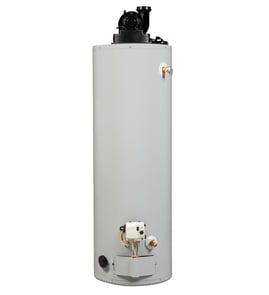





What is the typical lifespan of a gas hot water heater?
A typical gas water heater lasts 8 to 12 years. For the American FG1F5040T3NOV gas water heater, regular maintenance (especially periodic tank draining and anode-rod inspections) helps you reach the upper end of that range; see the FG1F5040T3NOV owner's manual for model-specific care and safety steps.
Typical lifespan by water heater type
| Water heater type | Typical lifespan | Notes |
|---|---|---|
| Gas tank water heater | 8 to 12 years | Most common residential type; burner and venting condition matter. |
| Electric tank water heater | 10 to 15 years | Fewer combustion parts; element and thermostat wear are common. |
What extends the life of a gas water heater
These maintenance habits reduce corrosion, sediment buildup, and ignition problems:
- Inspect the anode rod about every 3 years and replace it when it is more than 50% depleted.
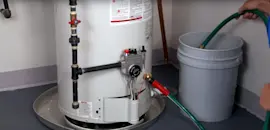
- Drain and flush the tank periodically to reduce sediment that can overheat the tank bottom.
- Keep the burner area clean and make sure combustion air openings are not blocked.
- Maintain proper venting and draft so exhaust gases move safely up the flue.
- Address water quality issues (hard water, softened water, odor) early; they can accelerate corrosion.
Anode rod maintenance (biggest lifespan factor)
The manual calls out anode-rod inspection and replacement intervals because the anode protects the tank from rusting through.
Use this quick guide:
- Good: rod is mostly intact with some surface pitting
- Replace soon: deep pitting, exposed core wire, or heavy scaling
- Replace now: more than 50% of the rod is gone
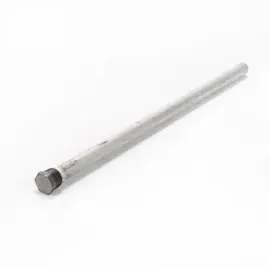
If you need the correct replacement for this model, use the water heater anode rod 100109594.
Why it matters
Once the tank itself corrodes and starts leaking, replacement is the practical fix. Staying ahead of corrosion (anode rod) and sediment (flushing) is what most often determines whether a gas water heater reaches 12 years instead of failing earlier.
Last updated: January 2026
What is the average cost of a 50 gallon gas water heater?
A 50-gallon gas water heater typically costs $600 to $2,000+ for the unit, and $1,000 to $3,000+ installed once you include labor, venting changes, and code-required materials. For the American FG1F5040T3NOV, the final installed price depends most on venting type and local labor rates.
Typical price ranges (unit vs. installed)
- Standard atmospheric vent (most common): lower unit cost, simpler install
- Power vent or high-efficiency models: higher unit cost, more complex venting and electrical needs
- Installation add-ons: new shutoff valve, sediment trap, vent connector, drip pan, expansion tank, permit
- Gas line work: resizing or extending gas piping can add cost
- Disposal and haul-away: often billed separately
| Type of 50-gallon gas water heater | Typical unit cost | Typical installed cost |
|---|---|---|
| Standard atmospheric vent | $600 to $1,200 | $1,000 to $2,500 |
| Power vent | $1,200 to $2,000+ | $2,000 to $3,500+ |
| High-efficiency/condensing | $1,500 to $2,500+ | $2,500 to $4,500+ |
What drives the installed cost the most
- Venting and combustion air requirements: Category I gas water heaters like this style often rely on proper combustion air and correct venting layout; changes here can add significant labor and materials. See the FG1F5040T3NOV owner's manual for venting and air supply requirements.
- Gas supply capacity: If the existing gas pipe is undersized for the heater BTU input and total run length, a plumber may need to upsize piping. The manual includes gas pipe capacity guidance.
- Safety valve and piping condition: Replacing a leaking or outdated relief valve or drain valve can add parts and labor.
Why it matters
A low unit price can turn into a high installed price if venting, combustion air, or gas piping needs upgrades. Pricing the job correctly helps avoid nuisance shutdowns, poor performance, and rework.
Last updated: January 2026
What is the average cost to replace a gas hot water heater?
For an American FG1F5040T3NOV gas water heater, the typical installed replacement cost is about $1,000 to $6,000. Total price depends most on tank size and efficiency, venting changes, gas line work, and local labor rates; labor is often a large share of the bill.
What drives the price most
- Type of heater: standard tank vs. high-efficiency or tankless
- Venting: reusing existing venting vs. upgrading to power-vent/direct-vent
- Gas piping: resizing or rerouting gas line, shutoff valve, sediment trap
- Code upgrades: expansion tank, drip pan, seismic straps (where required)
- Disposal and access: hauling the old unit, tight closets, attic installs
Typical cost ranges (installed)
| Replacement scenario | What’s included | Typical total cost |
|---|---|---|
| Basic like-for-like tank swap | Similar tank, minimal plumbing/vent changes | $1,000 to $2,500 |
| Mid-range upgrade | Some venting/plumbing updates, added code items | $2,500 to $4,000 |
| Complex install or premium system | Major venting changes, gas line work, tankless/high-efficiency | $4,000 to $6,000 |
What to check before you buy
Use the FG1F5040T3NOV owner’s manual to confirm installation requirements such as indoor, vertical placement, combustion air, and venting guidance. The manual also notes that the heater should be located where leakage will not damage surrounding areas and that a suitable drain pan helps protect property.
Why it matters
A gas water heater replacement is not just the tank. Venting, combustion air, and gas supply sizing affect safety and performance, and those items can quickly change the installed price.
Last updated: January 2026
What is the most common problem with a gas hot water heater?
The most common gas water heater problem is loss of ignition, usually when the pilot flame goes out and the heater shuts off for safety. On American model FG1F5040T3NOV, sediment buildup is also very common and can cause popping noises, poor efficiency, and premature tank wear; see the FG1F5040T3NOV owner's manual for safety and maintenance steps.
Most common causes (and what you typically notice)
- Pilot flame goes out: no hot water; burner will not stay lit.
- Thermocouple safety shut-off trips: pilot will not stay lit because the gas valve shuts off when no flame is sensed.
- Sediment buildup in the tank: rumbling, popping, or sizzling sounds; slower recovery and higher fuel use.
- Overheating safety shut-down (ECO/high limit): heater stops heating after overheating; service is required.
- Drafting or combustion air issues: lazy yellow flame or unstable burner operation.
Quick checks you can do safely
- Listen for tank noise: popping or rumbling points to sediment; plan a drain and flush.
- Look at the burner flame through the view area: a mostly blue flame with slight yellow tips is normal; all-yellow or odd color needs service.
- Confirm the temperature setting: water over 125°F increases scald risk; set to a safe level and verify at a faucet.
- If the heater ever got wet or flooded: stop using it and have a qualified technician evaluate it immediately.
Common symptoms and likely causes
| Symptom | Most likely cause | What usually fixes it |
|---|---|---|
| No hot water | Pilot out, thermocouple issue | Service/repair of pilot system; replace failed parts |
| Popping/rumbling | Sediment buildup | Drain and flush; consider maintenance schedule |
| Water too hot | “Stacking” from short draws, high setting | Add anti-scald device; adjust temperature |
| Water on floor | Valve/piping leak | Inspect connections; replace leaking valve (as needed) |
Parts that often come up in these repairs
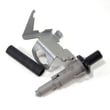
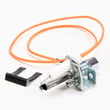
- Water heater pilot igniter 100110927 (pilot ignition issues)
- Drain valve 100109106 (leaks at the drain valve; flushing problems)
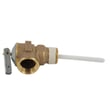
- T&p valve 100108279 (relief valve leaking or not operating correctly)
- Water heater anode rod 100109594 (odor control and tank protection)
Why it matters
Ignition and safety shut-offs protect against unsafe combustion and overheating, while sediment and anode-rod wear directly affect efficiency and tank life. Staying on top of flushing and basic inspection helps prevent “no hot water” calls and early tank failure.
Last updated: January 2026