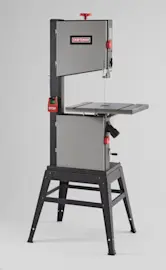
Owner’s manual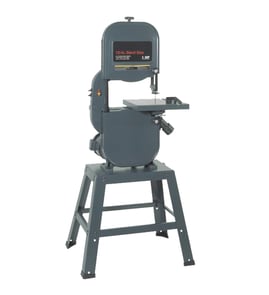


Can you resaw with a 14-inch bandsaw?
Yes, you can resaw with a 14-inch band saw, but the key limit is the saw’s maximum cutting height (resaw capacity), not the wheel diameter. For Craftsman model 113248210, the manual specifically lists resawing as a supported operation and recommends using a 1/2-inch blade; follow the setup steps in the 113248210 owner's manual.
Resawing success comes from blade choice, tension, tracking, and guide adjustment.
- Use a wide blade for straight cuts (commonly 1/2-inch when the saw supports it)
- Set the upper blade guides to just clear the workpiece to reduce blade twist
- Tension the blade correctly for its width, then re-check tracking
- Track the blade so it runs centered on the rubber tires
- Feed steadily; forcing the cut causes drift, burning, and rough surfaces
The Craftsman 113248210 is designed to run blades from 1/8-inch to 1/2-inch wide, and it calls out 1/2-inch for resawing.
| Operation | Blade width (in.) | Setup focus |
|---|---|---|
| Resawing | 1/2 | High tension, guides close, steady feed |
| Ripping/straight cuts | 1/2 | Tracking centered, fence alignment |
| Curve cutting | 1/8 to 1/4 | Lighter feed, tighter guide control |
A 14-inch band saw’s resaw height is determined by the distance from the table to the upper blade guide at full height (and any riser block installed), plus frame stiffness.
- Many classic 14-inch designs resaw about 6 inches without a riser
- With a riser, many reach about 12 inches
- If your cut wanders, correct blade tension and guide alignment before changing speed or motor components
- If the cut feels slow during resawing, use band saw cutting slowly
- For blade change and basic setup steps, use how to replace a band saw blade
- To look up diagrams and order replacement parts by model number, use the parts list for 113248210 or search on Sears PartsDirect
Resawing is one of the most demanding band saw operations. A properly tensioned wide blade with correctly set guides produces straighter veneers, less drift, and fewer stalled cuts.
Last updated: February 2026
What is the 3-tooth rule for bandsaws?
The 3-tooth rule means you choose a band saw blade pitch (TPI) so at least 3 teeth are in the cut at all times. On a Craftsman 113248210 band saw, this reduces snagging, tooth stripping, rough cuts, and blade breakage while improving control.
Use the workpiece thickness to pick a blade with the right teeth-per-inch (TPI).
- Measure the thickness where the blade enters the cut.
- Multiply thickness (in inches) by TPI.
- Target 3 to 6 teeth engaged for most wood cutting.
- For plastics and non-ferrous metals, use a finer TPI and a slower feed rate.
- If the saw slows down, reduce feed pressure and confirm blade tension and guide settings.
| Material thickness | Typical blade pitch that satisfies the rule | What you’ll notice if TPI is wrong |
|---|---|---|
| 1/8 in (0.125) | 18 to 24 TPI | Too coarse: grabbing and chipping |
| 1/4 in (0.25) | 10 to 14 TPI | Too fine: slow cutting, heat buildup |
| 1/2 in (0.5) | 6 to 10 TPI | Too coarse: rough cut, wandering |
| 1 in (1.0) | 3 to 6 TPI | Too fine: dust packing in gullets |
Your manual emphasizes choosing the right blade for the material and keeping tracking, guides, thrust bearings, and tension properly adjusted. When the tooth pitch is too coarse for thin stock, the blade can catch and kink; when it is too fine for thick stock, sawdust packs in the gullets and the saw cuts slowly or overheats.
These adjustments make the 3-tooth rule work the way it should:
- Blade direction: teeth point downward toward the table.
- Guide clearance: set guides about 1/32 inch from the gullet (not touching the teeth).
- Guard height: set the upper guide and guard to just clear the workpiece.
- Feed rate: if the band saw slows down, stop feeding and back the work slightly until speed recovers.
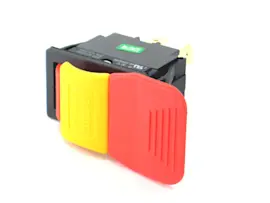
- Safety: unplug the saw, switch OFF, and remove the switch key before changing blades or making adjustments.
For model-specific setup steps and illustrations, use the 113248210 owner's manual. For replacement parts and diagrams for this Craftsman band saw, search by model on Sears PartsDirect.
Last updated: February 2026
What is the specs of the Craftsman 12 inch bandsaw 113248210?
The Craftsman 113248210 is a 12-inch band saw model; the most reliable model-specific “specs” we can confirm from the documentation are its model family, major assemblies, and the fact that it uses a band saw blade and wheel tires as service parts. For operating capacities and adjustments, use the 113248210 owner's manual.
We recommend using the manual’s specification and setup sections to verify the exact numbers for your saw (these can vary by version and setup).
- Cutting capacity (maximum cut height and throat capacity)
- Blade length and blade width range supported
- Blade speed (FPM) and pulley/belt drive details (if equipped)
- Table size and table tilt/bevel range
- Electrical requirements (voltage, amperage) and switch type
- Recommended blade tensioning and tracking procedure
From the parts lists in the manual, we can directly tie these items to the Craftsman 113248210 platform.
- Model coverage: 113.248210 is listed alongside closely related models (113.248320, 113.248440, 113.248510)
- Base components include a rear table and base cover called out as “Model 113.248210 only”
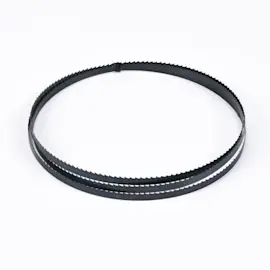
- Drive assembly includes a band saw blade and tire (wheel tire) as listed service parts
- Common serviceable areas shown: drive assembly, base components, bevel drive and motor mount
| Spec you need | Where to find it | Why it matters |
|---|---|---|
| Blade length and width range | Manual specifications section | Ensures the blade fits and tracks correctly |
| Max cut height and throat | Manual specifications section | Confirms what stock thickness you can cut |
| Table tilt/bevel range | Table/bevel adjustment section | Impacts angled cuts and accuracy |
| Electrical rating | Electrical/safety section | Prevents nuisance tripping and motor issues |
Band saw “specs” are more than the 12-inch class size; blade length, tensioning range, and table alignment determine whether the saw cuts straight, cuts at full speed, and keeps the blade on the wheels.
If you are asking for specs because the saw is not performing as expected, these guides map symptoms to the most common adjustments and parts involved.
We list replacement parts by model number; if you need to search beyond the model parts list, use Sears PartsDirect and search for Craftsman 113248210.
Last updated: February 2026