 Owner’s manual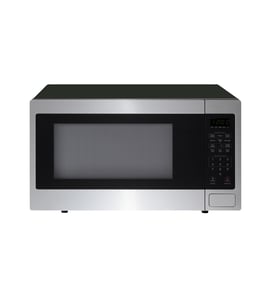




Are GE countertop microwaves good?
GE countertop microwaves, including the GE PEB1590SM2SS, are a solid choice for everyday reheating and cooking because they combine practical features (express cooking, sensor options, convection/combination modes on this model family) with widely available replacement parts and clear operating guidance in the PEB1590SM2SS owner's manual.
What “good” means for this GE model
When customers ask if a countertop microwave is “good,” we focus on the things that affect daily use and long-term ownership:
- Cooking flexibility: This model line supports microwave, convection, and combination cooking.
- Convenience controls: Express cook and sensor-style options help simplify common tasks.
- Serviceability: Common wear items (door switches, lamp parts, tray) are replaceable.
- Safety guidance: The manual includes clear rules to prevent arcing and unsafe operation.
Quick checklist before you buy or keep using it
- Confirm the microwave sits on a stable, level counter with airflow around it.
- Avoid storing items on top while it is running (heat and venting concerns).
- Use microwave-safe cookware; avoid metal items that can cause arcing.
- Keep the door closing smoothly; a misaligned latch can cause no-start issues.
- If heating performance changes, stop using it and troubleshoot before continued operation.
Common ownership pros and tradeoffs
| What you want | What this GE countertop microwave typically delivers | What to watch for |
|---|---|---|
| Fast everyday heating | Express cooking and straightforward time cook controls | Uneven heating if cookware is oversized or not rotated |
| More than basic microwaving | Convection and combination features | More settings to learn at first |
| Easy-to-fix wear items | Door interlock parts and light components are replaceable | Door switch issues can mimic bigger failures |
Why it matters
A “good” microwave is one you can use safely, get consistent results from, and keep running with reasonable repairs. For the GE PEB1590SM2SS, following the manual’s arcing and countertop-use rules helps protect the cavity, waveguide area, and door interlock system.
Related troubleshooting help
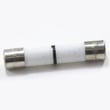
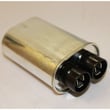
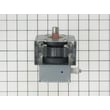
If your main concern is performance, use why is my microwave not heating to narrow down causes like door switch problems, fuse issues, or component failures.
Last updated: February 2026
What are common problems with GE profile microwaves?
Common problems on GE Profile microwaves like model PEB1590SM2SS include running but not heating, sparking (arcing) in the cavity, a dead display or no-start condition, loud buzzing or humming, and turntable or door issues. Many symptoms trace back to door interlock switches, fuses, or high-voltage components.
Most common symptoms and what they usually mean
- Runs but does not heat: high-voltage circuit issue (magnetron, diode, capacitor) or a safety interlock problem
- No power, dead display: blown fuse, loose power cord/outlet issue, or control problem
- Starts then stops when you close the door: door latch or interlock switch alignment problem
- Sparking inside (arcing): metal/foil contact, incorrect rack placement, or damaged interior/waveguide area
- Loud buzzing/humming: failing high-voltage part, cooling fan issue, or something contacting the fan
For operating and safety basics specific to this unit, follow the PEB1590SM2SS owner’s manual.
Quick checks we recommend first (safe, no disassembly)
- Confirm the outlet works by testing another small appliance.
- Remove any metal, foil, twist ties, or gold-trimmed dishes.
- Make sure the glass tray is seated and rotates freely.
- Listen for the cooling fan; airflow changes at different power levels can be normal.
- If arcing occurred, stop using the microwave until the cause is corrected.
Parts that commonly affect “won’t start” or “stops when door closes”
Door interlock problems are a top cause of no-start and intermittent operation. These parts are commonly involved:
| Symptom | Likely area | Example part for this model |
|---|---|---|
| Won’t start, door feels “off” | Door latch alignment | Latch body |
| Starts then stops, or blows fuse | Interlock circuit | Primary/monitor switch |
| Door closes but doesn’t “click” right | Latch and switch mounts | Latch body and switches |
If you are diagnosing door interlocks on PEB1590SM2SS, the primary switch WB24X10047 is one of the key safety switches in the door circuit.
Why it matters
Microwaves use safety interlocks to prevent operation with the door open, and arcing can damage interior components. Addressing door, cookware, and arcing causes early helps prevent repeat failures and unsafe operation.
Last updated: February 2026
What is the average life of a countertop microwave?
Most countertop microwaves last 7 to 10 years in typical home use. For your GE PEB1590SM2SS, lifespan depends mainly on how often you run it, how well it stays ventilated, and whether the door and power supply stay in good condition (see the PEB1590SM2SS owner's manual).
Typical lifespan ranges (what to expect)
- Light use (a few minutes per day): 9 to 12 years
- Average use (daily reheating and defrosting): 7 to 10 years
- Heavy use (multiple long cycles daily): 4 to 7 years
- Commercial or near-commercial use: 3 to 5 years
| Usage pattern | What wears fastest | What you notice first |
|---|---|---|
| Heavy daily use | Door switches, cooling airflow, control inputs | Intermittent starts, louder fan, uneven heating |
| Poor ventilation | Magnetron and high-voltage components | Longer cook times, overheating shutdowns |
| Power issues/extension cord use | Power supply and internal fuse | Flickering light, weak performance, nuisance blowing |
Signs it is near end-of-life
- Food takes noticeably longer to heat than it used to
- Unit runs but heats inconsistently from one cycle to the next
- Buttons or dial inputs become unreliable
- Burning smell, repeated arcing, or visible scorch marks inside the cavity
- It only runs with the door held a certain way (door latch or interlock issue)
What helps your microwave last longer
- Keep the cavity clean so splatters do not carbonize and cause arcing
- Use only microwave-safe cookware; avoid metal and non-approved materials
- Do not run the microwave empty
- Make sure the unit has airflow space around it and vents are not blocked
- Plug directly into a properly grounded outlet; if you must use an extension cord, follow the grounding and rating guidance in the manual
Why it matters
A microwave can still “run” even when heating output is dropping. Catching early symptoms helps you avoid wasted cook time and prevents damage to internal components from overheating or arcing.
Last updated: February 2026


