
Are all table saw arbor nuts the same size?
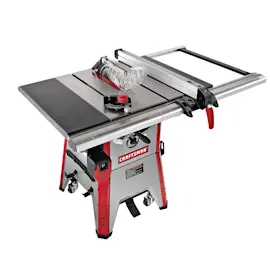
No. Arbor nuts are not universal; the nut has to match the arbor shaft thread size and thread direction on your specific saw. For a Craftsman 11323832 bench saw, you must use an arbor nut that matches that model’s arbor threads so the blade clamps securely and runs true.
What actually determines arbor nut “size”
Arbor nuts vary because several specs must match the saw:
- Arbor diameter (common blade bores are 5/8 inch on many 10-inch saws)
- Thread pitch (fine vs coarse threads)
- Thread direction (right-hand vs left-hand threads)
- Nut style (hex nut vs flange nut, thickness, washer face)
- Arbor length and stack-up (blade, stabilizers, washers, dado set)
Quick reference: what’s often true (but not guaranteed)
These are common patterns across many table saws, but always confirm on the actual arbor.
| Saw/blade category | Common blade bore | Arbor nut universality |
|---|---|---|
| Many 10-inch table saws | 5/8 inch | Not universal (threads vary) |
| Many 12-inch table saws | 1 inch | Not universal (threads vary) |
| Dado setups (stacked) | 5/8 inch bore (often) | Nut length and thread engagement become critical |
How we recommend confirming the correct arbor nut
- Unplug the saw and remove the throat plate and blade.
- Check thread direction: if loosening requires turning the nut “the opposite way” from normal, it may be left-hand threaded.
- Measure the arbor diameter with calipers (or compare to a known 5/8-inch bore).
- Match thread pitch using a thread gauge, or take the nut to match at a hardware counter.
- Verify full clamping: the nut should tighten with several full turns and clamp the blade firmly without bottoming out.
Why it matters
Using the wrong arbor nut (wrong threads, wrong direction, or wrong thickness) can prevent proper blade clamping, which leads to blade wobble, poor cut quality, and unsafe operation.
For help confirming you have the correct model before ordering parts, use how to find your appliance model number (and what it means for parts).
Last updated: February 2026
Can you use an 8 inch blade on a 10 inch table saw?
Yes, you can use an 8-inch blade on a 10-inch table saw like the Craftsman 11323832 as long as the blade fits the arbor and the saw’s guard and riving knife setup can be used safely. An 8-inch dado set is common on 10-inch saws because it is typically used for non-through cuts.
What must match before you install the blade
Check these items every time you change blades:
- Arbor size (bore): The blade’s center hole must match your saw’s arbor diameter.
- Kerf and riving knife: For through-cuts, the riving knife must be compatible with the blade thickness; many dado setups require removing the riving knife and guard.
- Arbor length and threads: A stacked dado set needs enough arbor length to fully engage the arbor nut.
- RPM rating: The blade’s max RPM must meet or exceed the saw’s no-load RPM.
- Clearance: The smaller blade reduces max cutting depth; confirm it still clears the throat plate and tilts without contact.
8-inch blade vs 10-inch blade: what changes
| Item | 10-inch blade | 8-inch blade |
|---|---|---|
| Max cut depth | Deeper cuts | Shallower cuts |
| Typical use | General ripping/crosscutting | Dados, grooves, some fine cuts |
| Guard/riving knife use | Usually compatible | Often not compatible with dado setups |
Safe setup tips (especially for dado work)
- Unplug the saw before changing blades.
- Use the correct throat plate (a dado or zero-clearance insert when appropriate).
- Tighten the arbor nut firmly and recheck after a few test cuts.
- Make test cuts in scrap wood and verify the blade runs true with no wobble.
- Use push sticks, featherboards, and proper fence alignment to prevent kickback.
Why it matters
Using an 8-inch blade is normal on many 10-inch saws, but the safety system (guard, anti-kickback pawls, riving knife) and arbor capacity determine whether the setup is safe and practical for your cut.
For more DIY safety guidance before you start, review are diy appliance repairs safe.
Last updated: February 2026
What is the best table saw out there?
The best table saw depends on how you work: portability (jobsite), power and accuracy (cabinet or hybrid), safety features, and budget. For owners of a Craftsman 11323832 bench saw, the “best” choice is the one that matches your typical rip capacity, fence accuracy needs, and shop space.
Quick picks by use case
- Jobsite and portability: 10-inch jobsite saw with a folding stand and rack-and-pinion style fence
- Serious woodworking accuracy: hybrid or cabinet saw with a heavier trunnion and better dust collection
- Safety-first priority: saw with advanced blade-stopping safety technology
- Budget DIY: entry-level jobsite saw with a solid fence and readily available blades
- Cordless convenience: battery-powered table saw if you already own that battery platform
What to compare (the specs that actually matter)
| What to compare | What “good” looks like | Why it matters |
|---|---|---|
| Fence design and rigidity | Locks parallel and stays square | Cleaner rips, less binding |
| Rip capacity | Matches your sheet-good workflow | Determines what you can cut safely |
| Motor and drive | Enough torque for hardwood | Reduces stalling and burning |
| Table flatness | Flat, stable surface | Improves accuracy |
| Dust collection | Effective port and shrouding | Cleaner cuts, better visibility |
| Safety features | Riving knife, guard, anti-kickback pawls | Reduces kickback risk |
How this relates to your Craftsman 11323832
If you are comparing new saws to a Craftsman 11323832, focus on whether the new saw improves the areas that typically drive upgrades:
- More consistent fence alignment
- Better dust collection
- More stable stand or heavier base
- Easier blade height and bevel adjustments
- Better guard and riving-knife system
Why it matters
A table saw is only “best” when it fits your materials and cutting style. The right fence, riving knife, and stable setup improve cut quality and reduce binding and kickback, which is the biggest real-world safety and accuracy win.
Helpful next step
If you are shopping for parts or trying to confirm your exact model before ordering, use how to find your appliance model number (and what it means for parts).
Last updated: February 2026
Are craftsman table saws any good?
Yes. Craftsman table saws like model 11323832 are a solid choice for DIY and light-duty woodworking when they are tuned correctly; they typically offer good value and adequate cutting power, but they are less forgiving about fence alignment and setup than pro-grade saws.
What they do well (typical strengths)
- Good value for homeowners and beginners doing weekend projects
- Plenty of capability for basic rip cuts and crosscuts in common lumber
- Straightforward design that is usually easy to maintain (belt, arbor, switch, guards)
- Wide parts availability over time for many Craftsman saw families
Common complaints (and how to work around them)
- Fence accuracy and repeatability: verify the fence is parallel to the blade and locks consistently
- Vibration/noise: check belt condition and pulley alignment; confirm the saw is bolted to a stable stand
- Blade quality: upgrading to a quality carbide blade often improves cut quality more than any other change
- Dust control: older bench saw designs often need a shop-vac setup and frequent cleanout
Quick “good fit” checklist for your projects
| If you mostly do this | Craftsman bench saw is usually | What to prioritize |
|---|---|---|
| DIY shelving, trim, small furniture | A good fit | Fence alignment, sharp blade |
| Repeated precision joinery | Only OK after tuning | Fence upgrades, measuring routine |
| Heavy daily use, thick hardwood ripping | Not ideal | Consider a heavier-duty saw style |
Why it matters
A table saw’s results depend heavily on alignment and stability. When the fence, blade, and miter slots are square and parallel, a value-focused saw can cut cleanly and safely; when they are off, you get burning, binding, and inaccurate cuts.
Practical next steps for model 11323832 owners
- Confirm the blade is parallel to the miter slot
- Set the fence parallel to the blade (or slightly relieved at the outfeed end)
- Inspect the belt for glazing/cracks and replace if worn
- Use a sharp, appropriate blade (rip vs. crosscut vs. combo)
- Keep the tabletop clean and waxed to reduce feed resistance
For help identifying the exact version and matching parts correctly, use how to find your appliance model number (and what it means for parts).
Last updated: February 2026
Can a 10 inch table saw rip a 4x4?
Yes. On the Craftsman 11323832, you can rip a 4x4 (actual size about 3-1/2 in. x 3-1/2 in.), but you will not cut through it in one pass because this saw’s maximum cut depth at 90° is 3 inches; plan on a controlled two-pass cut.
Best way to do it on model 11323832 (two-pass method)
- Use a sharp rip blade (fewer teeth, deeper gullets) to reduce burning and strain.
- Set blade height to the saw’s maximum for the first pass (do not exceed the saw’s limit).
- Keep the 4x4 tight to the fence; feed steadily without forcing.
- After the first cut, flip the stock so the uncut portion faces the blade.
- Align the second pass to meet the first kerf cleanly.
- Use infeed and outfeed support so the post stays flat and does not roll.
Safety setup checklist (important for thick stock)
- Use the blade guard and riving knife or splitter when your setup allows.
- Use a push stick or push block; keep hands out of the blade path.
- Stand slightly to the side of the cut line to reduce kickback exposure.
- Keep the fence parallel to the blade; do not steer the workpiece.
- Avoid twisted, bowed, or wet 4x4s that can pinch the blade.
What to expect: 10-inch vs. 12-inch table saws
| Saw/blade size | Typical max depth at 90° | 4x4 (3-1/2 in.) in one pass? |
|---|---|---|
| 10-inch table saw (11323832) | 3 inches | No |
| 12-inch table saw | About 4 inches | Often yes |
Why it matters
Ripping thick lumber increases binding and kickback risk because more blade is engaged in the cut. A two-pass approach with proper support and a true fence line keeps the cut stable and reduces motor load.
For general safety guidance before any DIY work, use: are diy appliance repairs safe.
Last updated: February 2026