 Owner’s manual
How much does it cost to replace a 100,000 BTU furnace?
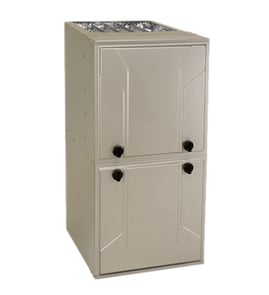
Replacing a 100,000 BTU gas furnace like the Goodman GMP100-3 typically costs about $4,000 to $9,000 installed in many U.S. homes. Your final price depends most on efficiency level, venting changes, and whether the job needs ductwork, electrical, or gas-line updates; see the owner's manual for model-specific requirements.
Typical installed cost breakdown
These are common line items that drive the total replacement price:
- New furnace equipment (often the biggest single cost)
- Labor for removal and installation
- Venting or flue modifications (especially if changing efficiency class)
- Thermostat and low-voltage wiring updates
- Permits and start-up testing
- Optional ductwork repairs, sealing, or return-air improvements
| Cost item | Typical share of total | Notes |
|---|---|---|
| Furnace equipment | 40% to 60% | Higher AFUE and two-stage/variable-speed costs more |
| Labor | 25% to 40% | Access, attic/crawlspace installs, and complexity raise labor |
| Venting, gas, electrical, permits | 10% to 25% | Often higher when changing vent type or upsizing gas line |
What changes the price the most
A “100,000 BTU” label is only part of the story. These factors usually move the quote up or down:
- Efficiency (AFUE) and venting type: High-efficiency furnaces often require different vent materials and routing.
- Blower and comfort features: Variable-speed blowers and multi-stage heat add cost but can improve comfort.
- Fit and airflow: If the new cabinet size or airflow needs differ, duct transitions or return-air work may be needed.
- Condition of safety controls: If you are repairing instead of replacing, parts like the board B1809913S or limit 290 1370905S can be involved in no-heat or shutdown issues.
Repair vs. replace: a quick rule of thumb
Use this as a practical decision guide:
- Repair when the furnace is under ~10 years old and the issue is isolated (ignition, limit switch, blower wheel).
- Replace when the heat exchanger is compromised, repairs are frequent, or total repair cost is approaching a large share of replacement.
- Get the size right: 100,000 BTU is common, but correct sizing depends on your home and duct system.
Why it matters
A properly installed, correctly sized furnace runs safer, cycles less, and maintains steadier temperatures. Installation details (venting, combustion air, airflow) often matter as much as the furnace brand.
If you decide to repair first, you can order GMP100-3 replacement parts from the parts list for this model, or search by model number on Sears PartsDirect.
Last updated: February 2026
Should a 25 year old furnace be replaced?
Yes. A 25-year-old gas furnace is past its typical service life, so we recommend planning to replace it even if it still runs. At this age, efficiency is usually lower and the risk of a no-heat failure rises, especially during peak winter demand.
Typical lifespan and what 25 years means
Most gas furnaces last 15 to 20 years. At 25 years, it is common to see more frequent breakdowns, harder-to-find parts, and higher operating costs.
Common age-related issues
- Heat exchanger and burner wear that can reduce reliable heat output
- Ignition and control problems (intermittent starts, short cycling)
- Blower wear (noise, vibration, weak airflow)
- Safety switch trips (limit switch opening due to overheating)
- Rising repair frequency and longer downtime waiting on parts
Repair vs. replace: a quick decision guide
Use this to decide what makes sense for your Goodman GMP100-3.
| Situation | Usually makes sense to… |
|---|---|
| Minor repair, furnace otherwise stable | Repair and keep running short-term |
| Repeated no-heat calls in one season | Replace |
| Expensive control or blower repair needed | Replace |
| Comfort issues (uneven heat, long run times) | Replace |
If you keep it running this season
If you are not replacing immediately, we recommend focusing on the most failure-prone items and airflow.
- Confirm filter is clean and return vents are open
- Listen for blower noise or wobble; a worn wheel can reduce airflow
- Watch for overheating symptoms (burners shut off, blower keeps running)
- If ignition is inconsistent, the control board is a common culprit
- Use the wiring diagram and sequence of operation in the GMP100-3 owner’s manual to match symptoms to components
Model-related parts that often come up on older furnaces
- Board B1809913S (hot-surface ignition control board)
- Blower wheel B1368016S (air movement and airflow)
- Limit 290 1370905S (high-limit safety switch)
Why it matters
A furnace that is beyond its expected lifespan can fail without warning and may cost more to operate. Replacing proactively helps avoid emergency no-heat situations and can improve comfort and heating performance.
For replacement parts you decide to install while you plan an upgrade, order from the parts list for model GMP100-3, or search by model on Sears PartsDirect.
Last updated: February 2026
What is error code 3 on furnace?
On a Goodman GMP100-3 gas furnace, error code 3 (three flashes) commonly points to a pressure switch problem, most often a pressure switch circuit stuck open. In practice, that means the furnace is not proving proper draft, so the control board stops ignition for safety. Check the diagnostic chart and wiring diagram in the owner's manual.
What usually causes error code 3
These are the most common, fixable causes we see with pressure switch faults:
- Blocked pressure switch hose (water, debris, cracks, or kinks)
- Loose or misrouted hose connections between the inducer housing and pressure switch
- Vent or intake restriction (snow, leaves, bird nest, sagging vent, condensate blockage)
- Inducer (draft) blower issue (not starting, weak airflow, noisy wheel, seized motor)
- Loose wiring at the pressure switch or control board spade terminals
- Failed pressure switch (does not close when inducer runs)
Quick checks you can do safely
Turn off power to the furnace at the switch or breaker before touching wiring.
- Confirm the filter is clean and supply/return vents are open (poor airflow can contribute to overheating and nuisance shutdowns).
- Inspect the rubber pressure hose for cracks, soft spots, water, or blockage; remove and gently clear it.
- Check the venting for obvious obstructions and make sure joints are secure.
- Reseat the pressure switch wires and look for burnt or loose terminals.
What the furnace is “looking for” (pressure switch logic)
| Furnace step | What should happen | What triggers code 3 |
|---|---|---|
| Call for heat | Inducer starts | Inducer does not run or runs weak |
| Draft proving | Pressure switch closes | Switch stays open (draft not proven) |
| Ignition sequence | Igniter and gas valve operate | Control locks out ignition for safety |
Parts that are often involved
If troubleshooting points to the control not reading the switch correctly, the ignition control can be part of the circuit to inspect.
- Board B1809913S (hot-surface ignition control board)
Why it matters
A pressure switch fault is a safety shutdown designed to prevent operation when the furnace cannot vent combustion gases correctly. Clearing restrictions and confirming proper inducer operation helps restore safe, reliable heat.
You can order replacement parts for your Goodman GMP100-3 from the parts list for this model, or search by model number on Sears PartsDirect.
Last updated: February 2026
What is the lifespan of a Goodman furnace?
A Goodman gas furnace like model GMP100-3 typically lasts 15 to 20 years. Lifespan depends most on annual maintenance, clean airflow (filter and blower), correct gas combustion, and avoiding repeated overheating that trips safety limits.
Typical lifespan ranges (what to expect)
Most homeowners see these timeframes when the furnace is installed correctly and maintained:
| Component | Typical service life | What shortens it fastest |
|---|---|---|
| Heat exchanger | 15 to 25 years | Overheating, restricted airflow, poor combustion |
| Blower motor and wheel | 10 to 20 years | Dirty filter, dust buildup, imbalance |
| Ignition and control electronics | 7 to 15 years | Power surges, moisture, loose wiring |
| Limit and rollout switches | 10 to 20 years | Chronic overheating, venting issues |
What helps your GMP100-3 reach the high end of its lifespan
- Replace or clean the air filter on schedule to keep airflow strong.
- Keep supply registers and return grilles open and unobstructed.
- Vacuum dust around the blower area and keep the cabinet clean.
- Have a yearly inspection to verify safe ignition, flame quality, and venting.
- Address short cycling quickly; it often points to airflow restriction or a control issue.
Parts that commonly affect reliability
If your furnace is running but acting erratic (no ignition, short cycling, blower issues, or nuisance shutdowns), these model-related parts are often involved:
- Board B1809913S (ignition control board)
- Limit 290 1370905S (high-limit safety switch)
- Blower wheel B1368016S (air movement and balance)
Why it matters
A furnace that is overheating, short cycling, or struggling to move air can wear out major components sooner and increase energy use. Keeping airflow and safety controls in good shape is the most practical way to protect the heat exchanger and extend overall furnace life.
For maintenance intervals and model-specific procedures, follow the owner's manual. You can also order replacement parts for your Goodman GMP100-3 from the parts list for this model.
Last updated: February 2026
What is the most common part to fail on a furnace?
On a Goodman GMP100-3 gas furnace, the most common “failure” is usually a maintenance-related item rather than a major component: a clogged air filter that overheats the furnace, or a dirty flame-sensing circuit that shuts the burners down for safety. Use the owner's manual to match the correct service checks and sequence of operation.
Most common furnace failures (what we see most often)
- Dirty air filter: restricted airflow can trip a limit switch and stop heat.
- Flame-sensing problem: a dirty flame sensor or poor grounding can cause short cycling (burners light, then shut off).
- Ignition/control issue: the ignition control board can fail or lose proper signal timing; on this model, the control is the board B1809913S.
- Overheat protection opening: a limit switch can open if airflow is low; a common safety device for this model family is the limit 290 1370905S.
- Thermostat or low-voltage wiring issue: loose connections, broken wires, or a blown low-voltage fuse.
Quick checks before replacing parts
- Set thermostat to HEAT and raise setpoint 3 to 5 degrees.
- Replace the air filter; confirm all supply registers are open.
- Turn power off, then back on at the furnace switch or breaker.
- Watch the start-up sequence: inducer, igniter glow, burner ignition, blower start.
- If burners light then shut off quickly, focus on flame-sensing and grounding.
Symptom-to-likely-cause guide
| What you notice | Most likely cause | What to do next |
|---|---|---|
| Blower runs, no heat | Thermostat call issue or control problem | Verify thermostat settings and wiring; check control diagnostics per manual |
| Igniter glows, no flame | Gas supply/valve issue or control timing | Confirm gas is on; follow manual ignition sequence checks |
| Flame starts then stops in seconds | Flame-sensing circuit issue | Clean sensor, check ground, inspect burner flame |
| Furnace shuts down after a few minutes | Overheating, airflow restriction | Replace filter, check blower wheel and ducts; verify limit operation |
Why it matters
Most “no-heat” calls are caused by airflow restriction or flame-proving shutdowns. Fixing those first prevents unnecessary replacement of high-cost parts like the ignition control board and helps protect the heat exchanger and blower system.
You can order model-matched replacement parts from the parts list for GMP100-3, or search by model number on Sears PartsDirect.
Last updated: February 2026