Owner’s manual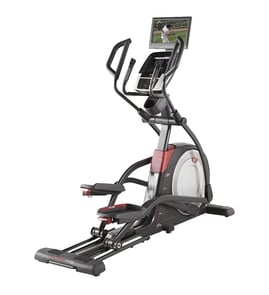

Is 2 miles on an elliptical equal to running?
Two miles on a Proform elliptical machine model 831238440 is not “equal” to running 2 miles because the elliptical’s console distance is an estimate based on stride and resistance, and it does not match the impact and pace of outdoor or treadmill running. A better comparison is time and effort level.
We recommend matching duration and intensity (breathing rate, heart rate, and resistance level) instead of matching miles.
- Compare workouts by minutes, not miles
- Use a steady effort you can hold for the full session
- Increase resistance or ramp level to match a harder run
- Track heart rate if your machine or wearable supports it
- Use the same warm-up and cool-down each time
| Goal | Better metric than “2 miles” | What to do on the elliptical |
|---|---|---|
| Match a 2-mile easy run | Time at easy effort | Maintain a pace where you can still talk |
| Match a 2-mile hard run | Time at hard effort | Increase resistance and keep cadence steady |
| Compare calories | Calories + heart rate | Use the same user profile settings each workout |
Ellipticals reduce impact and change muscle loading compared with running. Also, the console “distance” can vary based on cadence, resistance, and how the machine calculates stride length.
- Keep your posture tall and avoid leaning heavily on the upper body arms
- Use a consistent cadence (steady RPM) for the full interval
- Add resistance gradually until your breathing matches your running effort
- Use longer continuous intervals (10 to 30 minutes) to mimic a run
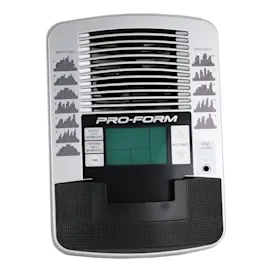
For console operation and workout setup details specific to this unit, follow the 831238440 user manual.
Last updated: January 2026
Is 20 minutes a day on elliptical enough?
Yes. On the Proform 831238440 elliptical machine, a 20-minute session is enough to improve cardiovascular fitness when you keep your effort in your training zone and stay consistent. The workout guidelines in the 831238440 owner's manual use 20 to 30 minutes of training-zone exercise as a standard session length.
A daily 20-minute elliptical workout works best when intensity matches your goal.
- Builds aerobic fitness and stamina when you maintain a steady pace
- Supports weight management when paired with nutrition and progressive intensity
- Improves consistency for beginners without overly long sessions
- Works well for low-impact training compared with running
- Scales easily by increasing resistance, cadence, or adding intervals
The manual’s structure is a solid way to plan your time.
| Phase | Time | Focus |
|---|---|---|
| Warm-up | 5 to 10 minutes | Light effort plus stretching and easy movement |
| Training zone | 20 to 30 minutes | Maintain heart rate in your training zone |
| Cool-down | 5 to 10 minutes | Reduce effort, then stretch |
If you only have 20 minutes total, keep a brief warm-up and cool-down and shorten the training-zone portion.
For general conditioning, the manual’s frequency guidance is a good baseline.
- Complete 3 workouts per week
- Rest at least 1 day between workouts at first
- After a few months, build up to 5 workouts per week if desired
“Enough” depends on intensity and recovery. Using a training-zone approach helps you get measurable cardio benefits from shorter workouts while reducing the chance of overuse soreness.
Last updated: January 2026
Is 30 minutes on the elliptical better than walking?
For the Proform 831238440 XP Thinline 480 elliptical machine, 30 minutes on the elliptical is typically better than walking if your goal is higher calorie burn with lower joint impact; walking is typically better for bone-loading impact and everyday functional movement. The best choice depends on your goals and consistency.
| Goal | Elliptical | Walking |
|---|---|---|
| Joint impact | Lower impact on knees/hips | Higher impact (varies by pace/surface) |
| Calorie burn potential | Typically higher (especially with resistance and arms) | Moderate; can increase with hills/incline |
| Muscle involvement | Legs plus upper body if you use the moving arms | Mostly lower body; great for gait and balance |
| Convenience | Indoor, consistent conditions | Outdoor options, easy to start anywhere |
We recommend using the features built into your machine to increase intensity safely:
- Use the upper body arms to turn it into a full-body workout.
- Change the ramp incline to vary the pedal path and muscle emphasis.
- Increase resistance gradually; sudden jumps can strain knees and ankles.
- Keep a smooth, continuous pedal motion; avoid stomping.
- Dismount safely: this model does not freewheel, so wait for the pedals to fully stop.
For the exact operating steps and ramp adjustment instructions, follow the 831238440 user's manual.
Walking wins when your priority is simple, repeatable movement that supports daily mobility.
- You want weight-bearing impact for bone health.
- You are rehabbing and need a very controlled intensity.
- You prefer outdoor time and varied terrain.
- You want to build a habit with minimal setup.
“Better” is the workout you can do consistently without pain. If joints get sore with walking, the elliptical’s lower-impact motion helps you keep training. If you need more real-world carryover (balance, gait, impact tolerance), walking is hard to beat.
Last updated: January 2026