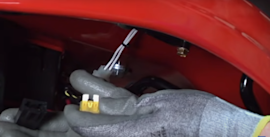
Installation guide
 Owner’s manual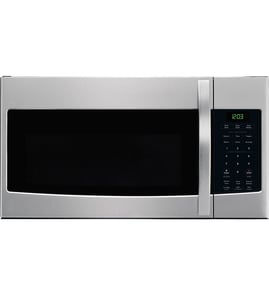


What is the capacity of the Frigidaire model FGMV176NTFC?
The Frigidaire microwave/hood combo model FGMV176NTFC has a 1.7 cu. ft. microwave oven capacity. This is the usable cavity volume for cooking and reheating, and it helps you judge what size dishes and cookware will fit comfortably.
Where we confirm the capacity
You can verify the 1.7 cu. ft. capacity in the specifications section of the FGMV176NTFC owner’s manual.
What “1.7 cu. ft.” means in real use
Capacity is about interior space, not exterior size. In day-to-day cooking, it affects what you can fit on the turntable and how tall or wide containers can be.
- Fits most standard dinner plates and medium casserole dishes
- Works well for family reheats and typical microwave-safe bowls
- Larger, taller containers may be limited by cavity height
- Turntable cooking uniformity means items should sit centered when possible
Quick spec snapshot
| Spec | Value |
|---|---|
| Model | FGMV176NTFC |
| Microwave capacity | 1.7 cu. ft. |
| Output power (cooking) | 1000 W |
Why it matters
Choosing cookware that matches the cavity size helps prevent turntable interference, reduces splatter from overcrowding, and improves heating results. If you are comparing models, capacity is one of the fastest ways to estimate how “roomy” the microwave feels.
Last updated: January 2026
What is the difference between 1.7 and 1.9 cu ft microwave?
A 1.9 cu. ft. microwave gives you about 0.2 cu. ft. more cavity space than a 1.7 cu. ft. model, which mainly helps fit wider or taller cookware. Your Frigidaire FGMV176NTFC is a 1.7 cu. ft. microwave/hood combo rated at 1000 watts, so the real-world difference vs 1.9 is capacity, not basic cooking capability.
What changes when you go from 1.7 to 1.9 cu. ft.
- Interior room: 1.9 cu. ft. typically fits slightly larger casserole dishes and taller containers.
- Usable turntable space: often a bit more clearance at the sides and front.
- Exterior size: many over-the-range units stay close to the same width (commonly around 30 inches), but depth and height can vary.
- Vent and mounting requirements: cabinet cutouts, ducting, and clearances can differ by model.
- Power (watts): some 1.9 cu. ft. models are higher wattage, but capacity and wattage are not the same thing.
FGMV176NTFC quick specs (for comparison)
Use these as your baseline when comparing to a 1.9 cu. ft. replacement.
| Spec | FGMV176NTFC (from manual) | What to compare on a 1.9 cu. ft. model |
|---|---|---|
| Capacity | 1.7 cu. ft. | 1.9 cu. ft. |
| Output power | 1000 W | 1000 to 1200 W is common |
| Outside dimensions (W x H x D) | 29.88 in x 16.41 in x 15.04 in | Must fit your cabinet space |
| Cavity dimensions (W x H x D) | 20.94 in x 14.43 in x 9.57 in | Check for larger usable height/width |
Why it matters
Capacity affects what you can physically fit and how evenly food can rotate on the turntable. Wattage affects how fast it heats. When you are deciding between 1.7 and 1.9 cu. ft., we focus on both: interior clearance for your dishes and output power for cooking speed.
Installation fit checks before switching sizes
If you are considering replacing a 1.7 with a 1.9 cu. ft. over-the-range microwave, confirm these first:
- Cabinet opening width and any side obstructions
- Distance from cooktop to the bottom of the microwave
- Venting style (recirculating vs outside exhaust) and damper/duct alignment
- Top cabinet depth and power cord clearance
- Mounting plate and bolt pattern compatibility
For the exact clearances and mounting guidance for this model, use the FGMV176NTFC installation guide.
Last updated: January 2026
What is the life expectancy of a Frigidaire microwave?
A Frigidaire microwave typically lasts 8 years (about 7 to 10 years with normal household use). For your Frigidaire FGMV176NTFC microwave/hood combo, keeping the cavity clean, protecting the door and latch, and replacing filters on schedule helps you reach the full expected lifespan; see the FGMV176NTFC owner’s manual.
Typical lifespan and what changes it
Most over-the-range microwaves fail early due to heat, grease buildup, or door-switch wear rather than the magnetron alone.
- Light use (reheating, short cook times): often 10+ years
- Normal use (daily cooking): typically 7 to 10 years
- Heavy use (multiple long cycles daily): often 4 to 6 years
- Poor ventilation or clogged filters can shorten life by overheating internal components
- Slamming the door can wear the latch and interlock system faster
Maintenance that extends life on FGMV176NTFC
Your Use & Care information emphasizes cleaning and filter service; it also notes to disconnect power before replacing filters and lights.
- Clean splatters promptly to prevent arcing and odor buildup
- Keep the vent grille and intake areas free of grease and dust
- Replace the charcoal filter (recirculating setups) about every 6 to 12 months depending on use
- Wash or replace the grease filter regularly to keep airflow strong
- Close the door gently so the latch and switches stay aligned
Quick maintenance guide
| Item | What it affects | Typical interval |
|---|---|---|
| Grease filter | Airflow, fan load, heat | Monthly cleaning (or as needed) |
| Charcoal filter (if used) | Odors, airflow restriction | 6 to 12 months |
| Interior cleaning | Prevents arcing, corrosion | Weekly or as needed |
Signs your microwave is nearing end of life
- Heats slowly or inconsistently
- Loud humming or burning smell during heating
- Fan runs but cooking performance drops
- Door feels loose, won’t latch cleanly, or unit won’t start unless you press the door
Parts that commonly relate to “won’t start” or door issues
If the unit is dead or only runs with the door held a certain way, the door interlock system is a common place to start.
- Crosley microwave door interlock switch 5304509460
- Kenmore elite microwave door interlock switch 5304509459
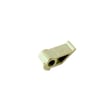
- Kenmore elite microwave latch body 5304509457
Why it matters
Microwaves rely on a sealed door and working interlock switches for safe operation; keeping the door, latch, and ventilation system in good shape prevents nuisance shutdowns and heat-related failures.
Last updated: January 2026