 Installation guide
 Owner’s manual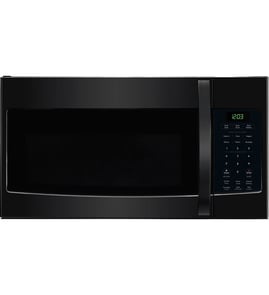

What are the parts of the microwave?
On the Sharp KB-3300JS range/microwave combo, the microwave section is a built-in Microwave Drawer and its key parts include the control panel, waveguide cover (do not remove), drawer guides, sealing surfaces, and drawer light. For the full labeled diagram, use the owner's manual.
Main microwave drawer parts (KB-3300JS)
These are the microwave-specific components called out in the parts diagram:
- Control panel (microwave controls are integrated here)
- Waveguide cover (labeled DO NOT REMOVE)
- Microwave Drawer (the cooking drawer itself)
- Microwave Drawer guides (help the drawer open and close smoothly)
- Drawer sealing surfaces (help contain heat and keep the cavity sealed)
- Drawer light (interior light for visibility)
- Microwave Drawer menu label (quick reference label)
How these parts work together
| Part | What it does | Common symptom if there’s an issue |
|---|---|---|
| Waveguide cover | Protects the waveguide area that routes microwave energy | Arcing, burning smell, uneven heating |
| Drawer sealing surfaces | Helps the drawer close and seal properly | Steam leaks, noisy closing, poor cooking results |
| Drawer guides | Supports smooth drawer travel | Drawer binds, won’t close evenly |
| Control panel | Lets you select time, power, and settings | Buttons unresponsive, display issues |
| Drawer light | Illuminates the cooking area | No interior light while operating |
Why it matters
Knowing the correct microwave drawer parts helps you describe symptoms accurately and avoid unsafe actions, especially around the waveguide cover and high-voltage microwave components.
Quick safety reminders
- Unplug power before inspecting anything around the drawer or control area.
- Do not remove the waveguide cover.
- If you see arcing (sparks) or smell burning, stop the cycle and disconnect power.
Last updated: February 2026
What are the three types of ranges?
The three main types of kitchen ranges are gas, electric, and dual-fuel (gas cooktop with an electric oven). Induction ranges are also common; they are a type of electric range that heats cookware using electromagnetic energy. For your Sharp KB-3300JS range/microwave combo, we recommend confirming the exact fuel and electrical requirements in the installation guide.
Quick breakdown of the 3 main range types
- Gas range: Gas burners; oven is usually gas (sometimes electric)
- Electric range: Electric cooktop (coil or radiant) and electric oven
- Dual-fuel range: Gas cooktop with an electric oven for more even baking
Induction vs standard electric (both are “electric”)
| Feature | Standard electric (radiant/coil) | Induction (electric) |
|---|---|---|
| How it heats | Heats the element, then the pan | Heats the pan directly |
| Cookware needs | Most flat-bottom pans | Magnetic cookware required |
| Typical response | Slower to change temp | Very fast temp changes |
Installation style is a separate “type” (how it fits your kitchen)
People also describe ranges by how they install:
- Freestanding: Finished sides and backguard; fits most cutouts
- Slide-in: Sits flush with counters; controls often front-mounted
- Drop-in: Less common; designed for a specific cabinet base
Why it matters
Range type affects utility hookups, cooking performance, and safety requirements. For example, our installation guidance for the KB-3300JS emphasizes a solid, level floor, proper electrical supply, and using the anti-tip bracket to reduce tip-over risk.
Last updated: February 2026
What is the sharp microwave drawer defect?
Some Sharp microwave drawer complaints describe arcing or sparking during cooking, burning smells, or the unit not heating properly. For the Sharp KB-3300JS specifically, we focus on safe operation and the most common, fixable causes first, using the safety and troubleshooting guidance in the owner's manual.
What to do if you see arcing, sparking, or smoke
- Press Stop/Clear and keep the drawer closed until any smoke clears.
- Remove the food and check for metal (twist ties, foil touching the cavity, metal-rimmed dishes).
- Do not use foil closer than 1 inch to any interior surface.
- Inspect the drawer front: seals, hinges, and latches must be intact and the drawer must close properly.
- If the drawer is damaged or the issue repeats with microwave-safe cookware, stop using the microwave function and have it serviced by a qualified technician.
Common causes (and what they look like)
| Symptom | Most common cause | What we recommend |
|---|---|---|
| Arcing/sparking | Foil too close, metal twist tie, metal-trim dish | Switch to microwave-safe cookware; follow foil spacing rules |
| Not heating | Controls not set correctly, Demo mode, power issue | Recheck settings; confirm Demo mode is off |
| Burning smell | Food splatter, overheated packaging, repeated arcing | Clean cavity; stop if arcing continues |
Why it matters
Arcing is more than a nuisance; it can damage internal components and indicates unsafe conditions. The KB-3300JS manual also emphasizes not defeating safety interlocks and not operating the unit if the drawer, hinges, latches, or sealing surfaces are damaged.
Helpful DIY guidance
If the microwave drawer is not heating and you have already ruled out cookware and settings, use the troubleshooting flow in the owner's manual to check power, control settings, and Demo mode before scheduling service.
Last updated: February 2026


