Owner’s manual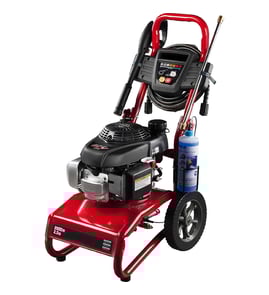



What is a good PSI for a gas pressure washer?
A good PSI for a gas pressure washer depends on the jobs you plan to do, but for typical home cleaning, 1,300 to 2,800 PSI is a strong, practical range. Your Briggs 020439-00 is rated at 2,200 PSI, which fits well for most residential tasks (driveways, siding, decks). See the owner's manual for the exact specifications and operating limits.
Quick PSI guide for common jobs
- 1,300 to 2,000 PSI: patio furniture, cars, grills, light mildew
- 2,000 to 2,800 PSI: decks, fences, siding, concrete spot cleaning
- 2,800 to 3,500 PSI: heavy concrete cleaning, paint prep (use extra care)
- Over 3,500 PSI: commercial-level cleaning; easy to damage surfaces
Match PSI to the right spray tip and technique
Higher PSI is not always better; the spray pattern and distance matter as much as pressure.
- Start with a wider fan tip and stand farther back
- Move closer only as needed to avoid etching wood or concrete
- Keep the wand moving; do not “park” the spray in one spot
- Use detergent siphoning for grime so you do not rely on maximum pressure
- Confirm the spray tip is fully seated in the quick-connect before spraying
Typical “safe starting point” settings
| Surface | Starting approach | What to avoid |
|---|---|---|
| Car paint | Wide fan, more distance | Narrow jet close-up |
| Wood deck | Medium fan, steady motion | Stripping fibers, gouges |
| Concrete | Medium fan, slow passes | Etching lines from holding still |
| Siding | Wide fan, spray downward | Forcing water behind siding |
Why it matters
Using the right PSI helps you clean faster while preventing surface damage and reducing strain on the pump, hose, and spray gun. It also helps you avoid running too close to the work area, which is where most accidental damage happens.
Related part that affects performance
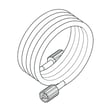
A worn, kinked, or leaking high-pressure hose can reduce cleaning power and cause pulsing. If you need a replacement for this model, use the pressure washer hose 84006753 (part number 196006GS).
Last updated: February 2026
How to adjust PSI on gas pressure washer?
On the Briggs 020439-00 gas pressure washer, you typically adjust cleaning pressure by selecting a different spray tip (0° red for maximum scouring, 25° green for gentler rinsing, and black for detergent). This changes the spray pattern and effective impact pressure at the surface; it is the normal “PSI adjustment” method for this model.
How to change pressure safely (spray tip method)
- Engage the spray gun trigger lock before changing tips.
- Pull back the collar on the quick-connect at the nozzle extension.
- Remove the current tip and insert the new tip.
- Release the collar and tug the tip to confirm it is locked in.
- Keep hands and body away from the spray; high-pressure water can cause serious injury.
Spray tip quick guide (what to use when)
| Spray tip | Typical use | What you will notice |
|---|---|---|
| 0° red | Heavy scouring on durable surfaces | Most concentrated stream; highest risk of surface damage |
| 25° green | General cleaning and rinsing | Wider fan; easier to control |
| Black | Applying detergent | Low-pressure soap application |
If pressure still feels too high or too low
- Verify water supply meets the minimum: at least 2.9 GPM and at least 20 PSI at the pressure washer end of the garden hose.
- Purge air from the pump by turning on the water, pressing the red button on the gun, and squeezing the trigger.
- Check for kinks, cuts, or leaks in the high-pressure hose and fittings.
- Inspect and clean the pump inlet screen before running; replace it if damaged.
- If the hose is damaged or leaking, replace it with the correct part for this model, such as the pressure washer hose 84006753.
Why it matters
Using the correct spray tip and a proper water supply helps you clean effectively without damaging paint, wood, or seals, and it also helps protect the pump from running hot or cavitating.
For model-specific operating steps and safety warnings, follow the owner's manual.
Last updated: February 2026
Can you put 87 gas in a pressure washer?
Yes. For the Briggs 020439-00 gas pressure washer, regular unleaded gasoline is the correct fuel, and 87 octane is a standard choice. Use clean, fresh fuel and follow the fueling and safety steps in the owner's manual to avoid hard starting and fuel-system damage.
Fuel type and what to avoid
Use these fuel rules for model 020439-00:
- Use regular unleaded gasoline (87 octane is fine).
- Do not use E85 or other unapproved gasoline blends.
- Do not mix oil into the gasoline.
- Add fuel outdoors with the engine off and cooled.
- Do not overfill; leave space for fuel expansion.
Quick fueling checklist (safe and reliable starts)
Before you pull-start the engine:
- Turn the pressure washer OFF and let it cool at least 2 minutes.
- Clean around the fuel cap so debris does not fall into the tank.
- Fill slowly and stop before the tank is full (leave expansion space).
- If fuel spills, wait until it evaporates before starting.
- Confirm oil level is correct and hoses are connected tightly.
Octane guidance (what to use)
Most owners do best with regular fuel; higher octane is not required for normal operation.
| Fuel option | Use it? | Notes |
|---|---|---|
| 87 octane regular unleaded | Yes | Best everyday choice for normal conditions. |
| Higher octane (89-93) | Optional | Can be used, but it typically does not improve cleaning power. |
| E85 or unapproved blends | No | Can damage the fuel system and cause poor running. |
| Gasoline mixed with oil | No | This is a 4-cycle engine setup; oil goes in the crankcase, not the fuel. |
Why it matters
Using the right gasoline helps prevent gum and varnish buildup in the carburetor and fuel system, reduces starting problems, and protects the engine so your pressure washer maintains consistent pressure and flow.
Last updated: February 2026
Why does my Briggs and Stratton pressure washer have no pressure?
Low or no pressure on your Briggs 020439-00 gas pressure washer almost always comes from restricted water flow (clogged inlet screen or nozzle), air in the supply, or a high-pressure hose/nozzle connection issue. Start with the quick water-supply checks, then move to the spray tip and hose.
Quick checks that fix most “no pressure” problems
- Verify the garden hose is fully on and delivering strong flow before it connects to the pump.
- Clean the inlet screen at the water inlet (debris here starves the pump).
- Remove the spray tip/nozzle and clear any grit; try a different tip if you have one.
- Purge air: connect water, squeeze the trigger until you get a steady stream, then start the engine.
- Confirm the trigger gun is not stuck and the wand connections are fully seated.
Step-by-step troubleshooting order (fastest to slowest)
- Water supply first: Use a short, unkinked garden hose and fully open the spigot.
- Inlet screen: Pull and rinse the screen; reinstall it flat and fully seated.
- Nozzle/spray tip: Clean the orifice; even a small blockage can drop pressure to near zero.
- High-pressure hose: Inspect for internal collapse, soft spots, or a damaged coupler; replace if suspect.
- Detergent mode check: If your unit has a low-pressure soap setting, make sure you are not in that mode.
When the hose is the problem
A worn or damaged high-pressure hose can leak at the fittings or restrict flow internally, which reduces pressure and causes surging.
| Symptom | Most likely cause | What we recommend |
|---|---|---|
| Pressure is weak and pulses | Air in system or restricted inlet/nozzle | Purge air; clean inlet screen and nozzle |
| Water leaks at hose ends | Worn O-ring or damaged coupler | Reseat connection; replace hose if coupler is damaged |
| Pressure drops when you move the hose | Internal hose damage | Replace the hose |
If you need a replacement, use the model-matched pressure washer hose 84006753.
Why it matters
Running a pressure washer with restricted inlet flow or a clogged nozzle can make the pump cavitate (draw air), which causes surging, poor cleaning performance, and faster wear on seals and valves. Keeping the inlet screen and nozzle clean protects the pump.
For model-specific operating steps and safety guidance, follow the owner's manual.
Last updated: February 2026