


How many sq ft will a 70,000 BTU furnace heat?
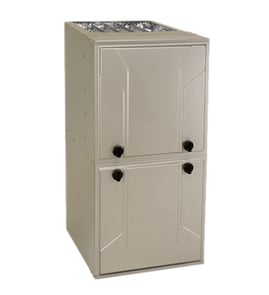
A 70,000 BTU gas furnace like the GE NF96U070V3B02 typically heats about 1,800 to 2,800 sq ft in many U.S. homes. The real number depends most on insulation, climate zone, ceiling height, and ductwork condition.
Quick sizing rule of thumb (what changes the sq ft)
Most homes fall into a range of 25 to 40 BTU per sq ft. Using 70,000 BTU:
- Mild climates / efficient homes: closer to 25 BTU per sq ft (more sq ft heated)
- Cold climates / older or leaky homes: closer to 40 BTU per sq ft (less sq ft heated)
- High ceilings (9 to 12 ft): reduces effective coverage
- Undersized or leaky ducts: reduces delivered heat to rooms
- Air sealing and attic insulation upgrades: increase coverage without changing the furnace
Coverage estimates (70,000 BTU)
| Home condition | BTU per sq ft (typical) | Approx. area heated |
|---|---|---|
| Very efficient, mild climate | 25 | ~2,800 sq ft |
| Average efficiency | 30 | ~2,300 sq ft |
| Older / drafty or colder climate | 35 | ~2,000 sq ft |
| Very drafty / very cold climate | 40 | ~1,750 sq ft |
How we recommend you sanity-check furnace size
Use these checks to confirm whether 70,000 BTU is a good fit for your home and comfort goals:
- Compare to your existing furnace BTU input and output on the rating plate
- Note whether you have hot and cold spots (often duct or airflow related)
- Check if the furnace short-cycles (oversized) or runs constantly (undersized)
- Replace a dirty air filter and confirm supply/return vents are open
- Have a contractor run a Manual J load calculation before changing furnace size
Why it matters
An oversized furnace can short-cycle, feel less comfortable, and waste energy; an undersized furnace can struggle on the coldest days. Getting the load right for your home helps the GE NF96U070V3B02 deliver steadier heat and better efficiency.
Related DIY help: how to find your appliance model number (and what it means for parts)
Last updated: February 2026
What is the most common part to fail on a furnace?
The most common “failure” we see on a GE gas furnace like model NF96U070V3B02 is a dirty, clogged air filter that restricts airflow and triggers the high-limit safety shutdown. After that, the most frequent no-heat causes are flame-sensing/ignition issues and thermostat power or setup problems.
Most common culprits (in order)
- Air filter: clogged filter overheats the heat exchanger area and trips the limit switch.
- Flame sensor: dirty sensor causes burners to light briefly, then shut off.
- Hot surface igniter (or spark igniter): cracked or weak igniter prevents ignition.
- Thermostat issues: dead batteries, loose wires, wrong mode (heat vs. cool), or incorrect programming.
- Condensate drain problems (high-efficiency furnaces): blockage can trip a pressure switch or safety.
- Pressure switch / venting issues: restricted intake or exhaust prevents safe operation.
Quick checks we recommend before replacing parts
- Set thermostat to HEAT and raise the setpoint 3 to 5 degrees.
- Replace the filter with the correct size and airflow rating (most homes use MERV 8 to 11).
- Verify furnace power: service switch on, breaker on, and blower door fully seated.
- Look through the sight glass (if equipped) for an ignition attempt.
- If burners light then shut off quickly, clean the flame sensor (lightly) and re-test.
Symptom-to-likely-cause guide
| What you notice | Most likely cause | What to do first |
|---|---|---|
| Runs briefly, then shuts down | Dirty filter or limit trip | Replace filter, check vents/registers |
| Ignites, then stops after a few seconds | Dirty flame sensor | Clean flame sensor, check grounding |
| No ignition at all | Igniter, pressure switch, or control issue | Confirm inducer runs; check venting |
| Nothing happens | Thermostat/power issue | Check batteries, breaker, door switch |
Why it matters
A clogged filter and airflow restrictions can cause repeated overheating cycles, which increases wear on limit switches, igniters, and the control board. Fixing airflow first prevents unnecessary parts replacement and helps the furnace run safely and efficiently.
For safe electrical testing basics, we use the steps in how to use a multimeter to test electrical parts video.
Last updated: February 2026
How much does it cost to replace a 70,000 BTU furnace?
Replacing a 70,000 BTU gas furnace typically costs about $4,000 to $9,000 installed, depending on efficiency level, venting changes, and labor in your area. For a GE gas furnace like model NF96U070V3B02, the biggest cost swings come from installation complexity, not the BTU rating alone.
What drives the total replacement price?
Most quotes combine the furnace, installation labor, and required code and safety items. Common cost drivers include:
- Efficiency tier (AFUE): higher-efficiency units usually cost more upfront
- Venting changes: PVC/intake-exhaust routing, chimney liner, or condensate drain work
- Ductwork and return air: resizing, sealing, or adding returns
- Electrical and controls: new disconnect, wiring repairs, thermostat upgrades
- Gas line work: sediment trap, shutoff valve, pressure adjustments
- Permits and inspection: often required for a furnace changeout
Typical cost ranges (installed)
These ranges are common for a 70,000 BTU class gas furnace replacement.
| Scenario | What it usually includes | Typical installed cost |
|---|---|---|
| Basic changeout | Similar efficiency, minimal venting changes | $4,000 to $6,000 |
| Mid-range upgrade | Some venting/condensate work, better filtration or thermostat | $6,000 to $8,000 |
| Complex install | Significant venting, duct, electrical, or gas modifications | $8,000 to $9,000+ |
How to get an accurate quote (and avoid oversizing)
We recommend confirming the install details before choosing equipment:
- Ask for a Manual J load calculation (not just “match the old furnace”)
- Confirm AFUE and whether it requires condensate drainage
- Verify venting material and route (PVC vs metal vent, intake requirements)
- Have them inspect duct sizing and static pressure
- Request a line-item list for permits, disposal, and startup testing
Why it matters
A furnace that is oversized or installed with incorrect venting can short-cycle, waste fuel, and create comfort problems. Paying for the right sizing and proper venting and condensate setup usually delivers the best long-term reliability and operating cost.
For help confirming you have the exact furnace model before ordering parts or comparing replacement options, use how to find your appliance model number (and what it means for parts).
Last updated: February 2026
What is the most expensive part to fix on a furnace?
For a GE gas furnace like model NF96U070V3B02, the most expensive repair is typically replacing the heat exchanger because it is labor-intensive and tied directly to safe operation. Other high-cost repairs often include the blower motor and the furnace control board.
Most expensive furnace repairs (typical cost drivers)
- Heat exchanger replacement: highest labor time; often drives a “repair vs replace” decision
- Blower motor (inducer or circulating blower): motor cost plus setup and airflow verification
- Control board (furnace control): part cost plus diagnostic time and wiring checks
- Gas valve: safety-critical component; requires careful setup and leak checks
- Draft inducer assembly: common on high-efficiency furnaces; includes motor and housing
Typical price ranges (parts + labor)
Costs vary by region and access, but these ranges are common for residential gas furnaces.
| Repair item | Typical total cost range | Why it runs high |
|---|---|---|
| Heat exchanger | $1,000 to $3,000+ | Major disassembly, long labor time |
| Blower motor | $400 to $2,000+ | Motor type, speed control, setup time |
| Control board | $300 to $1,500+ | Diagnostics, wiring verification |
| Draft inducer | $300 to $1,200+ | Venting-related checks, assembly swap |
How we recommend deciding: repair or replace
- Compare the repair cost to the furnace’s age and overall condition
- Ask for a diagnosis that identifies the failed component (not just “no heat”)
- Confirm whether additional parts are needed (gaskets, pressure switch tubing, wiring harness)
- If the heat exchanger is involved, prioritize a professional evaluation before proceeding
- Use our model number to match the correct replacement parts for NF96U070V3B02
Why it matters
The heat exchanger, blower system, and control board are core to combustion safety, airflow, and reliable ignition. When one of these fails, the repair cost climbs because the work includes extensive teardown, testing, and setup checks.
Related help: are diy appliance repairs safe
Last updated: February 2026
What are signs of a failing furnace part?
For the GE NF96U070V3B02 gas furnace, failing parts usually show up as comfort problems (weak or uneven heat), abnormal operation (short-cycling, hard starts), or safety-related shutdowns. Catching these symptoms early helps prevent no-heat calls and secondary damage to components like the blower and control board.
Common signs you should not ignore
- Frequent cycling: the furnace starts, stops, then restarts within a few minutes (often airflow, flame-sensing, or limit issues).
- No heat or weak heat: the inducer runs but burners do not stay lit, or supply air never warms up.
- Unusual noises: rattling, scraping, squealing, or booming at ignition (can point to blower, inducer, or burner issues).
- Uneven temperatures: some rooms stay cold even when the thermostat is calling for heat.
- Rising energy bills: longer run times or repeated retries can indicate declining efficiency.
- Burner problems: delayed ignition, burners lighting then shutting off, or repeated ignition attempts.
Quick checks we recommend (before ordering parts)
- Thermostat and power: confirm the thermostat is set to HEAT and the furnace switch and breaker are on.
- Airflow basics: replace a dirty filter, open supply registers, and make sure return grilles are not blocked.
- Venting and intake: check that PVC vent/intake terminations outdoors are clear of snow, leaves, or nests.
- Condensate drain (high-efficiency furnaces): make sure the drain line and trap are not clogged.
- Electrical diagnosis: if you are comfortable testing, use a meter to confirm safe, correct voltage and continuity where appropriate using how to use a multimeter to test electrical parts video.
Symptom-to-part area guide
| Symptom | Most likely area to inspect | What it often means |
|---|---|---|
| Starts then shuts off quickly | Flame sensing, limits, airflow | Safety circuit opening or flame not proven |
| No ignition, inducer runs | Ignition system, pressure switch, venting | Draft not proven or igniter not operating |
| Loud squeal or scraping | Blower motor, wheel, bearings | Worn motor/bearing or debris contact |
| Water around furnace | Condensate drain/trap | Drain restriction or leak |
Why it matters
A furnace that short-cycles, overheats, or fails ignition repeatedly can stress the igniter, inducer, blower motor, and control board. Addressing the root cause early improves reliability and helps keep heat output steady.
Last updated: February 2026
How to find a GE part number?
To find the correct GE part number for your GE NF96U070V3B02 gas furnace, we match parts by the model number first, then narrow it down by the exact component you need (for example: igniter, flame sensor, pressure switch, inducer motor, or control board). Start by confirming the model tag, then identify the part by location and function.
Step 1: Confirm the model number on the furnace
On furnaces, the model/serial tag is commonly found on the cabinet, often inside the burner compartment door area or on an interior panel. For this model, you want the tag to read NF96U070V3B02.
- Turn off power to the furnace at the breaker before opening panels
- Remove the front access door and look for a printed rating plate
- Write down the model number and serial number exactly as shown
- If the tag is dirty, wipe it gently so every character is readable
Step 2: Identify the part before you search
A part number search works best when you know what you are replacing and why.
- Note the symptom (no heat, short cycling, ignition failure, blower runs nonstop)
- Identify the system involved (ignition, gas valve, draft/venting, blower, controls)
- Look for any labels on the part (sticker, stamped number, wiring plug ID)
- Take a photo of wire positions and connectors before disconnecting anything
- Compare the old part’s markings to the replacement listing to avoid mismatches
Quick guide: what to search by
| What you have | Best way to find the GE part number | Why it helps |
|---|---|---|
| Furnace model tag | Search by NF96U070V3B02 | Filters to parts that fit your furnace |
| Part label/sticker | Search the printed number | Often the fastest match |
| Symptom + part name | Search “NF96U070V3B02 flame sensor” (example) | Helps when the label is missing |
Why it matters
Furnace parts are frequently revised by manufacturer part number, and many components look similar across models. Using the exact NF96U070V3B02 model number prevents ordering a part that fits a different GE furnace series.
For extra help with identifying the correct model number format before ordering, use how to find your appliance model number (and what it means for parts).
Last updated: February 2026
How to figure out furnace model?
To figure out your furnace model, we look for the rating plate (data tag) on the furnace cabinet and match the model number exactly as printed. For a GE gas furnace like NF96U070V3B02, the tag is usually inside the front service panel area or on the blower compartment.
Where to find the model number on a furnace
On most upflow/horizontal gas furnaces, the model and serial tag is in one of these common spots:
- Inside the upper front panel (burner/controls compartment)
- Inside the lower front panel (blower compartment)
- On a side wall of the cabinet near the gas valve or control board
- On or near the blower deck (the shelf the blower sits on)
- Occasionally on the exterior side panel near the electrical junction box
If your furnace has two front panels, remove the lower panel first (blower area), then check behind the upper panel.
What to write down (so you get the right parts)
Copy the information exactly as shown on the tag:
- Model number (example format: NF96U070V3B02)
- Serial number (S/N)
- Brand (GE)
- Fuel type (gas) and voltage (often 120V)
- Any “product number” or “unit code” listed
Quick checklist: model number vs. serial number
| Item | What it does | Used for |
|---|---|---|
| Model number | Identifies the furnace design | Correct parts lookup and diagrams |
| Serial number | Identifies your exact unit build | Warranty, production run details |
Why it matters
Furnace parts like the igniter, flame sensor, pressure switch, inducer motor, and control board can look similar across models but differ by mounting, wiring, and calibration. Using the exact model number prevents ordering the wrong replacement.
Helpful related DIY resource
If you need help confirming the tag information or searching it correctly, use how to find your appliance model number (and what it means for parts).
Last updated: February 2026
Does GE make furnaces?
Yes. GE sells gas furnaces, and the GE NF96U070V3B02 on this page is a GE-branded high-efficiency style furnace model. When you are shopping parts, matching the full model number is what ensures the replacement part fits your exact furnace.
What “GE furnace” means for parts and service
Even within the same brand, furnaces vary by cabinet size, airflow direction, and control style. For GE NF96U070V3B02, we recommend focusing on the identification details that drive correct parts selection:
- Confirm the model number on the furnace rating plate matches NF96U070V3B02 exactly
- Note whether the unit is upflow, downflow, or horizontal (this affects several assemblies)
- Record the serial number (often needed to match revisions)
- Identify whether the issue is ignition, heating, or blower related
- Use the parts breakdown to match the exact component name before ordering
Quick checks before ordering furnace parts
These steps prevent the most common “wrong part” problems:
- Turn off electrical power at the furnace switch or breaker before inspecting
- Verify fuel type is gas and the furnace is a 90+ AFUE condensing style (typical for “NF96” models)
- Compare wire connectors, mounting holes, and port locations on the old part
- If you are troubleshooting electrical components, test first instead of guessing
Helpful DIY references
- Use how to find your appliance model number (and what it means for parts) to confirm you are reading the furnace tag correctly.
- Use how to use a multimeter to test electrical parts video when diagnosing items like a pressure switch, flame sensor circuit, or control board inputs.
Common furnace parts customers replace (by symptom)
| Symptom | Common part area to check | What it affects |
|---|---|---|
| No heat, inducer runs | Ignition/flame sensing | Burner lighting and proving flame |
| No heat, no inducer | Safety/controls | Call for heat sequence and safeties |
| Runs then shuts off | Airflow/limit safety | Overheating protection |
| Blower won’t run | Blower motor/capacitor/control | Air delivery and comfort |
Why it matters
GE does make furnaces, but the exact model number (like NF96U070V3B02) is what determines the correct igniter, pressure switch, blower components, and control parts. One character off can mean a different cabinet or revision and a part that will not mount or connect correctly.
Last updated: February 2026