Owner’s manual
 Error Codes


How to read Kenmore model numbers?
Kenmore model numbers tell you who built the appliance and which design family it belongs to. For Kenmore refrigerator model 10651332716, the 106 prefix identifies the manufacturer family, and the remaining digits narrow down the exact configuration and revision so you can match the correct parts and instructions in the 10651332716 owner's manual.
What each part of a Kenmore model number means
Most Kenmore model numbers follow a predictable pattern:
- Prefix (first 3 digits): identifies the manufacturer family (for example, 106 is a common Kenmore refrigerator prefix)
- Core model digits: identify the base platform or series
- Trailing digits: identify feature variations, color codes, and production revisions
- Sometimes a dot format appears (example: 106.5133* in documentation); it still points to the same model family
Where to find the model number on a side-by-side refrigerator
On Kenmore side-by-side refrigerators, we typically see the model/serial label in one of these spots:
- Inside the fresh food compartment on a side wall
- Along the ceiling of the fresh food compartment
- Behind the crisper drawers area
- On the cabinet frame near the door hinge side
Why reading the model number matters
Using the full model number prevents ordering the wrong part and helps you use the correct troubleshooting and care steps. Even small digit changes can mean different ice maker, water valve, or door switch designs.
| What you’re doing | Why the full model number matters | Example for this model |
|---|---|---|
| Ordering parts | Ensures exact fit and wiring compatibility | Ice maker and dispenser parts vary by revision |
| Using instructions | Matches the correct diagrams and procedures | Use & care steps align to the 106.5133* family |
| Troubleshooting | Helps narrow down likely systems and symptoms | Cooling, ice, and water issues differ by platform |
Helpful next step for Kenmore 106 refrigerators
If you are troubleshooting and your refrigerator shows a fault or display issue, use the model-family resource: Kenmore 106 model refrigerator error codes.
Last updated: February 2026
How to replace an ice maker in a side by side refrigerator?
To replace the ice maker in your Kenmore side-by-side refrigerator model 10651332716, we shut off ice production, unplug power, remove the ice bin, swap the ice maker assembly and reconnect the harness, then restore power and water. Follow the diagrams in the 10651332716 owner's manual for your exact mounting points.
Before you start (prep and safety)
- Turn the ice maker Off (switch down or shutoff arm up).
- Unplug the refrigerator or disconnect power.
- Remove the ice storage bin for access.
- Use a flat-blade screwdriver and a 1/4-inch nut driver.
- Keep screws and brackets organized for reassembly.
Replacement steps (typical procedure)
- Remove the ice bin: press the release lever, tilt the bucket outward, lift up and out.
- Remove the ice maker: take out mounting screws, unplug the wire harness connector, lift the unit off the mounts.
- Install the new ice maker: set it on the mounts, reconnect the harness, tighten screws.
- Reinstall the bin and turn the ice maker back On.
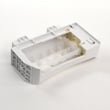
If you are replacing the complete assembly for this model, use the refrigerator ice maker W10873791.
Quick checks after installation
- Freezer door closes fully; bin is seated correctly.
- Water supply is on; supply line is not kinked.
- Wait for production; first ice often takes several hours.
Troubleshooting if it still won’t make ice
| Symptom | What we check first | Common fix |
|---|---|---|
| No ice | Ice maker Off, bin not seated | Turn On, reseat bin |
| No fill | Water supply issue | Open shutoff, check line |
| Small cubes | Low flow | Replace filter, improve flow |
Why it matters
Correct mounting, a fully seated bin and steady water flow prevent no-ice complaints, hollow cubes, and leaks.
Last updated: February 2026
How wide is a Kenmore side-by-side refrigerator?
Most Kenmore side-by-side refrigerators, including model 10651332716, are designed to fit a 36-inch-wide cabinet opening; the installation cutout width listed for this model family is 36 inches. For the exact overall exterior width of your unit, confirm the dimensions in the 10651332716 owner's manual.
What “width” means (and what to measure)
Refrigerator width can be described a few different ways. For a clean fit, we recommend checking all of these:
- Cabinet opening width: the space between cabinets (commonly 36 inches for side-by-sides)
- Refrigerator case width: the metal cabinet, excluding handles
- Door and handle projection: handles can add noticeable width
- Door swing clearance: extra side clearance needed to fully open doors
- Rear clearance: space behind the unit for airflow and water line routing
Installation clearances for Kenmore 106.5133* models
Your Kenmore 106.5133* Use and Care Guide calls out typical spacing needs for ventilation and door swing.
| Fit item | Typical requirement for this model family | Why it matters |
|---|---|---|
| Minimum cabinet cutout width | 36 in | Allows the refrigerator to slide into place |
| Side and top ventilation space | 1/2 in each side and top | Helps cooling performance and efficiency |
| Rear clearance | 2 in | Prevents heat buildup; allows water line space |
| Extra width if placed against an extended wall (for crisper removal) | 54 in opening recommended | Lets you remove crisper pans without interference |
Quick measuring tips (most accurate)
- Measure the opening at the front and back; use the smallest number.
- Measure the refrigerator without the doors open; then account for door swing.
- If you are tight on space, measure with handles installed.
- Plan for the 2-inch rear gap so the unit does not get forced forward.
Why it matters
A correct width measurement prevents installation headaches like doors that cannot open fully, crisper pans that will not slide out, and restricted airflow that can lead to warm temperatures.
Last updated: February 2026
What are the most common problems with Kenmore refrigerators?
The most common problems we see on Kenmore refrigerators like model 10651332716 are cooling complaints (too warm or too cold), moisture or water issues, ice maker and dispenser troubles, and unusual noises. Many of these come down to airflow being blocked, doors not sealing, or a failing fan or water valve.
Quick checks that solve a lot of calls
- Allow 24 hours for full cooling after a new install or after the unit has been unplugged.
- Make sure air vents are not blocked by food packages.
- Reduce door openings and confirm both doors close fully.
- If temperatures are off, adjust controls and recheck in 24 hours.
- Wipe normal interior moisture; heavy moisture usually points to door sealing or frequent openings.
Common symptoms and likely causes
| Symptom | What it usually points to | What to do first |
|---|---|---|
| Refrigerator or freezer too warm | Doors not sealing, vents blocked, controls not set for conditions | Clear vents, confirm door seal, adjust temp and wait 24 hours |
| Moisture buildup inside | Humid room air, doors opened often, door not closing | Minimize openings, check gasket contact all around |
| Ice maker not making ice | Water supply issue, valve issue, ice maker issue | Check water supply, then test components |
| Strange noises (gurgling, sizzling) | Normal defrost water movement | Monitor; this is typically normal operation |
Parts that commonly fix ice and water problems
If you have no ice, slow fill, or intermittent dispensing, these model-matched parts are frequent fixes:
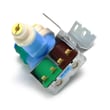
- Refrigerator water inlet valve WPW10179146 (controls water flow to the ice maker and dispenser)
- Refrigerator ice maker W10873791 (produces ice; failures can stop ice production entirely)
Why it matters
Cooling and moisture problems usually get worse over time. A door that is not sealing or vents that are blocked can cause longer run times, temperature swings, and frost or condensation that leads to more service issues.
For model-specific operating tips, noise descriptions, and troubleshooting steps, use the 10651332716 owner's manual.
Last updated: February 2026
What is the cubic foot of my Kenmore refrigerator model 10651332716?
Kenmore side-by-side refrigerator model 10651332716 has a total capacity of 21.9 cu. ft. (refrigerator plus freezer). For the exact breakdown by compartment and the specs tied to your color code (106.5133*), use the 10651332716 owner's manual.
What “21.9 cu. ft.” means
- It is the published interior volume for the whole refrigerator (fresh food + freezer).
- Shelves, bins, and the ice bucket reduce usable space but do not change the published capacity.
- Heavy frost buildup can reduce usable space and airflow.
Quick checks to confirm you are matching the right variant
- Verify the full model on the ID tag inside the fresh food section (106.5133 plus the color/variant code).
- Compare your feature set (dispenser, ice maker style, shelf layout) to the feature list in the manual.
- If you are measuring for fit, use cabinet dimensions and required clearances, not cubic feet.
Capacity vs. usable storage
| Item | What it tells you | What changes in real life |
|---|---|---|
| Total capacity (21.9 cu. ft.) | Overall size class | Nothing (it is a published spec) |
| Usable storage | What you can actually load | Ice bucket, bins, shelf positions, frost |
Why it matters
Capacity helps you compare refrigerator size, but day-to-day performance depends on airflow and organization. Keeping vents clear and door seals tight prevents frost that steals space.
Last updated: February 2026
What's the average lifespan of a Kenmore refrigerator?
Most Kenmore refrigerators average 12 to 15 years of service life with normal household use. For your Kenmore 10651332716 side-by-side refrigerator, consistent cleaning, good airflow around the cabinet, and keeping the doors sealing properly are the biggest factors that help you reach (or beat) that range; see the 10651332716 owner's manual for care guidance.
Typical lifespan and what affects it
A refrigerator’s lifespan depends more on operating conditions than brand name alone.
- Ventilation: blocked condenser airflow makes the compressor run hotter and longer
- Door seal condition: air leaks cause longer run times and temperature swings
- Cleaning habits: spills and debris can lead to odors, clogs, and fan issues
- Water and ice use: heavy dispenser use can expose weak points in valves and ice maker components
- Power quality: frequent outages or surges can stress controls and start components
Quick maintenance checklist (high impact)
Use this as a simple routine to extend life and reduce breakdowns.
- Vacuum dust from the grille and condenser area (as accessible)
- Keep food packages from blocking interior air vents
- Clean door gaskets with mild soap and water; dry thoroughly
- Confirm doors close on their own and sit level
- Replace worn dispenser or ice components when symptoms start (leaks, slow fill, hollow cubes)
What “end of life” usually looks like
These symptoms often show up as a refrigerator approaches major repair territory.
| Symptom | Common cause | What to check first |
|---|---|---|
| Warm fridge or freezer | Poor airflow or failed evaporator fan | Listen for fan noise; check vents |
| Water leaking | Clogged drain or valve seepage | Inspect supply line and valve area |
| No ice or slow ice | Fill problem or ice maker wear | Water supply, filter, ice maker |
| Loud humming/clicking | Start components or compressor strain | Clean airflow paths; check temps |
If you’re troubleshooting ice production specifically, the refrigerator ice maker W10873791 is a common wear item on this model family.
Why it matters
A refrigerator that runs efficiently holds safer food temperatures, uses less electricity, and avoids the long run times that accelerate wear on the compressor, fans, and controls.
Last updated: February 2026
Where is the model number on a Kenmore side by side refrigerator?
On Kenmore side-by-side refrigerator model 10651332716, the model number is printed on the appliance identification label inside the fresh food (refrigerator) compartment, typically along a side wall near the crisper drawers or near the top where the door closes. Use the 10651332716 owner's manual to match the label format for your exact series.
Where to look first (fast checks)
- Open the refrigerator (fresh food) door and check the left and right interior walls
- Look near the crisper pans and the ceiling area of the compartment
- Check the frame around the door opening (the cabinet face the door seals against)
- If you do not see it, remove items from the top shelf area and re-check the side wall
What the label looks like
Most Kenmore ID labels show both a model number and a serial number. The model number is the one you will use to order parts like an ice maker, door switch, or water inlet valve.
| Label item | What it’s used for | Example format |
|---|---|---|
| Model number | Finding correct parts diagrams and replacement parts | 106.5133* style family, or full model like 10651332716 |
| Serial number | Identifying production details for service | Letters and numbers combined |
Why it matters
Using the exact model number prevents ordering the wrong Kenmore refrigerator parts, especially for water and ice components that vary by series (for example, the refrigerator ice maker W10873791 or refrigerator water inlet valve WPW10179146).
Tips for reading and using the model number
- Write the model number exactly as shown, including all digits
- If the label shows a family like 106.5133*, use the full model from your paperwork when possible
- Use the model number when searching diagrams for the dispenser, doors, and cooling system
Last updated: February 2026