How to decode briggs and stratton engine model number?
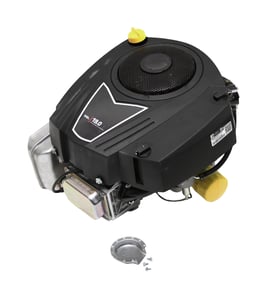
On a Briggs lawn and garden engine like model 15C107-0037-F8, the ID is typically split into three parts: model, type, and code. The model identifies the engine family, the type narrows the exact configuration, and the code indicates the production date.
Most Briggs & Stratton engine IDs follow this pattern:
- Model (first group): basic engine design and size family
- Type (second group): specific build details (governor, carburetion, crankshaft, starter, etc.)
- Code (third group): the manufacturing date code
For 15C107-0037-F8:
- 15C107 = model
- 0037 = type
- F8 = code suffix (often used with the date code format on the engine label)
Look for the engine ID stamped or printed on the blower housing, valve cover area, or a metal tag near the muffler or starter.
- Clean off grass and oil so the characters are readable
- Copy the full string exactly (including dashes and suffixes)
- Use the full model and type when ordering parts
- Use the code when matching production changes
| Example from your ID | Name | What it’s used for |
|---|---|---|
| 15C107 | Model | Identifies the engine family for parts lookup |
| 0037 | Type | Matches the exact configuration |
| F8 | Code/suffix | Helps match production date and revisions |
Briggs engines can have multiple carburetors, ignition parts, and fuel system layouts under the same model family. Using model + type + code helps us match the correct carburetor, gaskets, and fuel line routing for your exact build.
If you are troubleshooting a fuel or starting issue while decoding the ID, checking the condition of the Briggs & stratton lawn & garden equipment engine fuel line, red 791766 is a fast first step because cracks or air leaks can mimic carburetor problems.
Last updated: February 2026
How to tell how old a Briggs and Stratton engine is?
You can tell how old a Briggs engine is by reading the manufacture date code stamped on the engine (often near the valve cover, blower housing, or muffler area). For a Briggs 15C107-0037-F8, the code is typically formatted as YYMMDD (year, month, day).
Look for a stamped or printed code on the engine shroud or on the metal near the flywheel area. Common spots include:
- Blower housing (recoil starter cover)
- Valve cover area
- Muffler heat shield area
- Engine block near the spark plug
- A label plate near the model-type-code stamping
If the shroud is dirty, wipe it down and use a flashlight; the stamp can be faint.
Most Briggs small engines use a 6-digit manufacture date code:
- First 2 digits = year
- Next 2 digits = month
- Last 2 digits = day
If the code is 990115:
| Digits | Meaning | Example value |
|---|---|---|
| 99 | Year | 1999 |
| 01 | Month | January |
| 15 | Day | 15th |
Knowing the engine’s build date helps us match the correct carburetor, fuel system parts, and ignition components for your exact production run. It also helps when you are troubleshooting hard starting, fuel leaks, or primer issues.
When you are servicing a Briggs 15C107-0037-F8, these parts are often involved in age-related problems:
- Briggs & stratton lawn & garden equipment engine fuel line, red 791766 (cracking or leaking fuel line)
- Briggs & stratton lawn & garden equipment engine carburetor 594014 (varnish buildup, surging)
- Briggs & statton lawn & garden equipment engine carburetor primer assembly 793382 (primer bulb not drawing fuel)
Last updated: February 2026
How do I find the specs on my Briggs & Stratton engine?
To find specs for your Briggs engine, start by locating the engine identification numbers (Model, Type, and Code) stamped on the engine. For your Briggs model 15C107-0037-F8, those numbers let us match the correct parts list and confirm key specs like carburetor type, ignition system, and fuel system routing.
On most Briggs lawn and garden engines, the ID is stamped directly into the metal (not on a paper label). Check these common spots:
- On the blower housing (recoil starter shroud)
- On the valve cover area
- Near the spark plug
- Near the muffler or muffler guard
- On the crankcase near the oil fill/dipstick tube
Once you have the full Model, Type, and Code, we use it to confirm details such as:
- Correct carburetor and primer configuration
- Fuel line routing and diameter
- Ignition and stop switch style
- Starter type (recoil vs. electric start)
- Gasket and seal variations by production code
| Spec area | What changes | Example part you might match |
|---|---|---|
| Fuel system | Line routing, primer setup | Briggs & stratton lawn & garden equipment engine fuel line, red 791766 |
| Carburetion | Carb style and linkage | Briggs & stratton lawn & garden equipment engine carburetor 594014 |
| Safety/stop | Kill switch style | Briggs & stratton lawn & garden equipment engine stop switch 692310 |
Briggs engines often share the same base model number but use different Type and Code combinations. Using the full ID prevents ordering the wrong carburetor, gasket, or ignition part and saves time during troubleshooting.
- Wipe the area with degreaser and a rag first
- Use a flashlight at a low angle to highlight the stamping
- Take a close-up photo and zoom in
- Write down the numbers exactly as stamped (including dashes)
Last updated: February 2026
How to tell what HP a Briggs and Stratton engine is?
For a Briggs 15C107-0037-F8 lawn and garden engine, we identify horsepower by checking the engine’s power rating label or stamping and matching it to the engine’s model, type, and code. Many newer Briggs engines list torque instead of HP, which you can still use to compare engine power.
Check these common locations first (clean the area so the numbers are readable):
- Blower housing (recoil starter shroud) decal
- Valve cover area or cylinder shroud label
- Muffler heat shield area label
- Engine identification stamping (model, type, code)
- Equipment label on the mower or machine (sometimes lists HP)
Briggs often uses a gross torque rating on the label instead of a big “HP” number. If you see torque, you can still compare engines by torque and RPM.
| What the label shows | What it means | What to do next |
|---|---|---|
| “HP” | Horsepower rating is stated | Use that value for comparisons |
| “ft-lbs torque” or “Nm” | Torque rating is stated | Compare torque ratings, or convert torque and RPM to HP |
| Model/Type/Code only | Engine ID, not power | Use the ID to look up the power rating |
If you know the engine’s torque and operating RPM, use this common formula:
- HP = (Torque (ft-lb) × RPM) ÷ 5252
Most walk-behind mower engines run around 3,000 to 3,600 RPM under load, so torque differences usually tell the story even when HP is not printed.
Using the correct power rating helps you match the right carburetor, fuel system parts, and tune-up components for your Briggs 15C107-0037-F8. For example, fuel delivery issues that feel like “low power” often trace back to air leaks or restricted fuel flow.
If the engine bogs, surges, or won’t reach speed, these parts are frequent culprits:
- Cracked or soft fuel hose: Briggs & stratton lawn & garden equipment engine fuel line, red 791766
- Primer bulb not sealing or not pumping: Briggs & statton lawn & garden equipment engine carburetor primer assembly 793382
- Carburetor internal varnish or wear: Briggs & stratton lawn & garden equipment engine carburetor 594014
- Intake air leak at the gasket: Briggs & stratton lawn and garden equipment engine intake gasket 692555
Last updated: February 2026