 Owner’s manual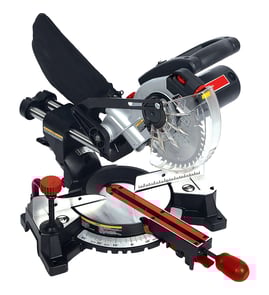

Can I cut a 4x4 with a 10 miter saw?
Yes, you can cut a 4x4 with a 10-inch miter saw, but whether it cuts in one pass depends on the saw’s maximum cutting capacity and the blade condition. For the Craftsman 113234610 (10-inch blade), many 4x4 cuts require flipping the lumber to finish the cut cleanly; confirm setup details in the 113234610 owner's manual.
What to expect with a 4x4 cut
A 4x4 is typically 3-1/2 in. x 3-1/2 in. actual size. On a non-sliding 10-inch miter saw like the Craftsman 113234610, the blade often will not reach through the full thickness in a single straight-down chop.
- Plan on marking all sides and flipping the 4x4 to complete the cut.
- Use a sharp 10-inch blade matched to the material (framing, hardwood, treated lumber).
- Keep the workpiece tight to the fence and fully supported.
- Make a dry run (power off) to confirm the blade path and clearance.
- Keep hands at least 4 inches from the blade path.
Setup and safety steps we recommend
The manual for this saw emphasizes eye protection and safe hand positioning, plus checking blade clearance and alignment before cutting.
- Unplug the saw before adjustments or blade checks.
- Wear ANSI Z87.1 safety goggles; add a face shield for dusty cuts.
- Clamp the 4x4 when possible to prevent shifting.
- Let the blade reach full speed, then feed only fast enough to avoid bogging or binding.
- After the cut, keep the head down and wait for the blade to stop before moving the work.
Quick comparison: 10-inch chop saw vs. 10-inch slider
| Saw type | Typical 4x4 approach | Why |
|---|---|---|
| 10-inch non-sliding (like 113234610) | Flip the 4x4 to finish | Limited vertical cut depth |
| 10-inch sliding | Often one pass (varies by model) | Added crosscut travel and capacity |
Why it matters
Trying to force a one-pass cut when the saw is at its limit increases the chance of binding, shifting, or a rough, out-of-square cut. A controlled two-pass (flip) cut is usually safer and more accurate on a 10-inch non-sliding miter saw.
If you need replacement parts or accessories for your Craftsman 113234610, start with the parts list for this model, or search by model number on Sears PartsDirect.
Last updated: February 2026
What should you never cut with a miter saw?
On a Craftsman 113234610 miter saw, we never cut short pieces you cannot support safely, and we never make cuts that can pinch or bind the blade. We also avoid materials and setups that can cause the cutoff to get trapped and thrown.
Materials and cuts to avoid
- Short pieces that keep your hands too close to the blade path (the manual warns not to try cutting short pieces).
- Freehand cuts (work must be held firmly to the fence; use proper support so it cannot slip).
- Rip cuts (cutting with the grain) because a miter saw is designed for crosscuts and angle cuts, not ripping.
- Ferrous metals (steel/iron) or masonry unless your saw and blade are specifically rated for that material.
- Warped, twisted, or irregular stock that cannot lie flat or be held by a jig/fixture so it will not rock, twist, or slip.
- Round stock (dowels, tubing) without a fixture; it can roll and make the blade “bite.”
Setups that create the biggest kickback risk
The manual calls out one critical rule: never confine the cutoff piece. That means the piece being cut off must be free to move sideways.
- Never hold, clamp, touch, or use a length stop against the cutoff
- Never trap the cutoff between the blade and a stop block
- Never reach in to grab cutoff pieces until the blade fully stops
Quick safety checklist before you cut
| Check | What we do | Why it matters |
|---|---|---|
| Blade speed | Let the blade reach full speed | Reduces binding and grabbing |
| Feed rate | Feed only fast enough to avoid bogging | Prevents binding and kickback |
| Work control | Hold firmly to the fence; support odd shapes | Prevents slipping and pinching |
| Hands | Keep hands at least about 4 inches from blade path | Reduces contact risk |
Why it matters
Most serious miter saw incidents come from binding, pinching, or unstable workpieces. When the blade binds or the cutoff is trapped, the saw can throw material violently or pull your hand toward the cutting area.
For model-specific operating and safety rules (including hand positioning and cutoff guidance), follow the 113234610 owner's manual. For parts and diagrams for this Craftsman miter saw, use the model parts list first, or search by model on Sears PartsDirect.
Last updated: February 2026
Why is 31.6 on a miter saw?
On a miter saw, 31.6° is a common reference angle used for compound cuts on crown molding when the molding is cut flat on the table. On the Craftsman 113234610, treat 31.6° as a helpful reference mark; use the saw’s miter lock and bevel lock to set and hold the angles accurately.
What 31.6° is used for
When crown molding is cut flat (not nested against the fence), you typically use a compound setup (miter plus bevel) so the finished joint closes at a corner.
Common uses:
- Inside corner crown molding joints
- Outside corner crown molding joints
- Repeatable “same corner” cuts without re-measuring each time
- Fast setup when you already know the molding spring angle
Typical companion angles (general guidance)
Many compound miter saw charts use 31.6° as the miter setting paired with a bevel setting around 33.9° for common crown spring angles. Always confirm with a crown chart for your molding profile.
| Crown cutting method | Miter setting | Bevel setting | Best for |
|---|---|---|---|
| Crown cut flat (compound) | 31.6° | 33.9° | Common crown installs using a chart |
| Crown nested (against fence) | 45° | 0° | Simple setup, depends on fence capacity |
| Flat trim (base/casing) | 45° | 0° | Standard picture-frame style corners |
How to set it safely on the Craftsman 113234610
Use the saw’s controls and safe operating steps described in the manual.
- Unplug the saw before adjustments
- Set the miter angle, then tighten the miter lock handle
- Set the bevel angle, then tighten the bevel lock handle
- Let the blade reach full speed before cutting
- Feed steadily to avoid binding; stop and unplug if vibration or unusual noise occurs
Why it matters
Crown molding magnifies small angle errors; a reference like 31.6° helps you get consistent compound cuts so joints fit tighter with less trial-and-error.
For control locations, locking steps, and operating safety for this model, use the 113234610 owner's manual. To look up replacement parts by model number, use Sears PartsDirect.
Last updated: February 2026