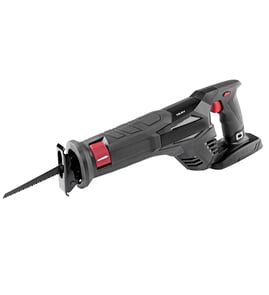

Is there a difference between a reciprocating saw and a sawzall?
A reciprocating saw is the tool type (a blade that moves back and forth), while Sawzall is a trademarked name commonly used as a generic nickname for reciprocating saws. Your Wen model 3700 is a reciprocating saw, regardless of what people call it.
- Reciprocating saw: The general tool category; used for demolition cuts in wood, metal, and plastic with the right blade.
- Sawzall: A brand name that many people use to mean “reciprocating saw,” similar to how some brand names become everyday terms.
- Recip / recip saw: Common shorthand for reciprocating saw.
Using the correct tool name helps you match the right blade type, shank style, and accessories for your Wen 3700.
- Choose blades by material (wood, metal, multi-material, pruning)
- Match the blade to the cut type (demolition, flush cut, fine cut)
- Use the right tooth count (TPI) for the job
- Confirm the saw’s blade clamp accepts the blade style you’re buying
| Term you hear | What it actually refers to | What to search for |
|---|---|---|
| Reciprocating saw | The tool category | “Wen 3700 reciprocating saw parts” |
| Sawzall | A brand nickname often used generically | “reciprocating saw blades” |
| Recip saw | Shortened tool name | “recip saw blade clamp” |
If you search only “Sawzall parts,” you can end up with mismatched accessories. Searching by the actual tool type and your exact model number (Wen 3700) keeps results focused on compatible parts and diagrams.
For help confirming the exact model number format before ordering, use how to find your appliance model number (and what it means for parts).
Last updated: February 2026
What should you not do with a reciprocating saw?
You should not use a Wen 3700 reciprocating saw with the wrong or damaged blade, operate it one-handed or without securing the work, or force the tool through the cut. These mistakes cause blade breakage, loss of control, and kickback-like reactions.
- Don’t use a dull, bent, cracked, or incorrect blade for the material (wood, metal, or demolition).
- Don’t remove, bypass, or tape down safety features (trigger lock, guards, or shoe/base components).
- Don’t cut freehand; clamp the workpiece and keep both hands on the saw.
- Don’t start the cut with the blade already pressed hard into the material.
- Don’t force the saw; let the blade speed do the work and keep the shoe firmly against the surface.
- Don’t cut into unknown areas where hidden wiring, nails, or pipes may be present.
| Check | What “good” looks like | If it’s not good, do this |
|---|---|---|
| Blade condition | Straight, sharp, correct type | Replace blade before cutting |
| Shoe contact | Shoe stays planted on the work | Reposition your stance and grip |
| Workpiece control | Material is clamped and stable | Clamp or support it securely |
| Cord/battery area | Clear of the cutting path | Reroute cord or reposition |
Reciprocating saws are designed for aggressive, fast cutting. Using the wrong blade, defeating safety features, or cutting without control increases vibration and binding, which can snap blades, damage the shoe assembly, and pull the saw off-line.
For electrical safety checks (especially if you suspect a cord or switch issue), use how to use a multimeter to test electrical parts video.
Last updated: February 2026
Can a reciprocating saw cut a 2x4?
Yes. A Wen 3700 reciprocating saw can cut a standard 2x4, but the cut is usually rougher and less square than a circular saw or miter saw. For best results, use a sharp wood-cutting blade and support the board to reduce vibration.
- Clamp the 2x4 to a stable surface so it cannot bounce or twist.
- Mark the cut line on at least two faces of the board to help you stay square.
- Use a wood blade with a coarse tooth pattern (fast cut) or medium tooth pattern (cleaner cut).
- Start slow to establish a kerf, then increase speed once the blade is tracking straight.
- Keep the shoe pressed firmly against the wood to control chatter.
- Let the blade do the work; forcing the cut bends blades and makes the cut wander.
| Goal | Blade type (typical) | What you will see |
|---|---|---|
| Fast rough cut | Coarse wood blade | Splintering, less square |
| Cleaner cut | Medium-tooth wood blade | Slower, straighter |
| Nails possible | Wood and metal (bi-metal) blade | Slower, more durable |
A reciprocating saw is great for demolition and quick cuts in tight spaces. For framing or finish work where accuracy matters, these tools usually perform better:
- Circular saw: straighter crosscuts with a guide
- Miter saw: fastest, most repeatable square cuts
- Hand saw: quiet, controlled, no power needed
A 2x4 cut that is out of square can throw off framing, brackets, and joints. Using the right blade, solid support, and steady technique helps your Wen 3700 cut cleaner and safer.
Related DIY help: are diy appliance repairs safe
Last updated: February 2026
Can I cut tree limbs with a reciprocating saw?
Yes; you can cut tree limbs with a reciprocating saw like the Wen 3700, as long as you use the right pruning blade and safe technique. For clean cuts and less kickback, we recommend supporting the limb, cutting in stages, and avoiding overhead cuts.
A reciprocating saw works well for pruning because the long stroke can clear sawdust and bite through green wood.
- Use a pruning blade (coarse teeth, designed for wood and green wood)
- Match blade length to limb size (longer blades help you avoid binding)
- Remove any metal in the cut path (nails, wire, fencing staples)
- Keep the shoe firmly against the branch to reduce vibration
- Let the saw do the work; forcing the cut increases bending and binding
For anything more than a small twig, use a simple 3-cut approach to prevent bark stripping.
- Undercut 6 to 12 inches out from the trunk (about 1/3 through)
- Top cut a few inches farther out until the limb drops
- Final cut just outside the branch collar (do not cut flush to the trunk)
| Limb diameter | What works best | Notes |
|---|---|---|
| Under 2 in. | Reciprocating saw + pruning blade | Fast, minimal setup |
| 2 to 4 in. | Reciprocating saw, longer blade | Cut in stages to avoid binding |
| Over 4 in. | Consider a chainsaw or pruning saw | More control and faster removal |
- Wear eye protection and gloves; wood chips travel fast
- Keep both hands on the saw; expect sudden movement when the limb releases
- Do not cut above shoulder height; reposition instead
- Watch for pinching; if the kerf closes, stop and re-support the limb
- Unplug the saw (corded) or remove the battery (if applicable) before changing blades
Using the correct pruning blade and a staged cutting method helps prevent bark damage, reduces blade binding, and lowers the chance of kickback. That protects both the tree and your saw.
For general DIY safety practices before starting, we recommend reviewing are diy appliance repairs safe.
Last updated: February 2026
Do all reciprocating saw blades fit all saws?
Most reciprocating saw blades fit most saws, but not all. For the Wen 3700 reciprocating saw, the blade must match the saw’s shank style and locking mechanism; if the shank profile or thickness is wrong, the blade can wobble, slip, or fail to lock.
Most modern reciprocating saws are designed around a common shank style (often called a 1/2-inch universal shank). That said, “universal” does not guarantee every blade fits every tool.
- Confirm the blade shank style matches your saw’s clamp (universal vs specialty).
- Check shank thickness; some clamps are picky about thicker or thinner shanks.
- Make sure the blade fully seats in the clamp before locking.
- Tug-test the blade after locking; it should not pull out.
- If the blade wobbles side-to-side at the clamp, do not run the saw.
Use this as a fast go/no-go check before you power up.
| Check | What you want | If it’s wrong |
|---|---|---|
| Shank style | Matches the saw’s clamp style | Blade will not seat or lock |
| Lock engagement | Lock clicks/holds firmly | Blade can slip or eject |
| Clamp fit | Minimal play at the clamp | Excess vibration, crooked cuts |
| Blade length | Appropriate for the cut | Binding or hitting the shoe/housing |
A blade that does not properly fit the clamp can cause poor cut quality, extra vibration, and unsafe blade movement. Correct fit also helps the motor and gearbox run cooler and last longer.
If you suspect a fit issue is actually a power or wiring problem (intermittent running, no start), use how to use a multimeter to test electrical parts video to verify power delivery and basic electrical health.
Last updated: February 2026