Owner’s manual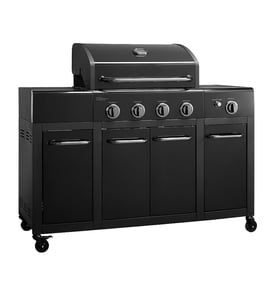


Where can I find my Kenmore grill model number?
On the Kenmore Elite gas grill model 14603358410, the model number is typically printed on a rating label attached to the grill body, most often on the back of the base or inside the cabinet area. Use that exact number when ordering parts or checking diagrams in the 14603358410 owner's manual.
Look for a silver or white sticker or metal tag with the model number (and often a serial number).
- Back panel of the grill base (rear of the cabinet)
- Inside the cabinet (open the doors and check side walls and rear panel)
- Side panel near the propane tank area
- Under the side shelf or near the control panel (less common)
- On the frame rail near the wheels or tank bracket
The label is usually easy to spot once you know what to look for.
| What you see on the label | What it means | What to write down |
|---|---|---|
| Model number | Identifies the exact grill version | 14603358410 |
| Serial number | Identifies your specific unit | The full serial number |
| Gas type info | LP or NG details | LP/NG marking (if shown) |
We use the model number to match the correct Kenmore Elite gas grill parts, such as the correct valve, igniter, manifold, or thermocouple. Even small model changes can affect fit and burner/ignition compatibility.
- Copy the model number exactly as printed (no extra spaces)
- Take a clear photo of the label for reference
- If the label is greasy or faded, wipe it gently and use a flashlight at an angle
- Match parts by model number first, then confirm using the part diagram
Last updated: January 2026
How do I troubleshoot my 14603358410?
To troubleshoot your Kenmore Elite gas grill 14603358410, we start by matching the symptom (won’t light, low heat, uneven flame, or side burner issues) to the fuel supply, ignition, and burner airflow. Use the lighting and inspection steps in the 14603358410 owner's manual as you work.
- Turn all control knobs OFF and close the LP tank valve.
- Let the grill cool completely before inspecting burners or wiring.
- If you smell gas, stop and correct the leak before lighting.
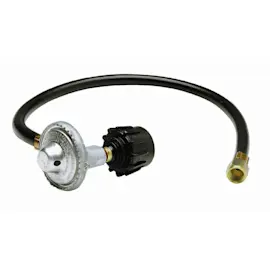
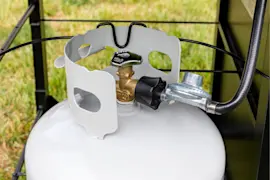
- Won’t light (main burners): confirm tank valve is open, regulator is seated, then try manual lighting; clean burner ports.
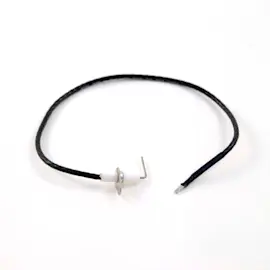
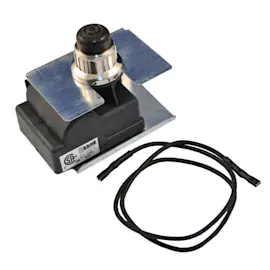
- Clicks but no ignition: check battery (if equipped), electrode gap, and wiring connections.
- Low heat: reset the regulator (close tank, turn knobs off, reopen tank slowly); clean burner tubes and ports.
- Uneven flame or yellow flames: clear burner ports and venturi tubes; check for grease buildup.
- Side burner won’t light: inspect the igniter and valve operation.
| Problem | Likely area | Example part on this model |
|---|---|---|
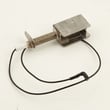
| Side burner won’t ignite | Ignition | Gas grill side burner igniter 41500213 |
| Side burner won’t adjust or won’t stay on | Gas control | Gas grill side burner valve 41500208 |
| Multiple burners act inconsistent | Gas distribution | Manifold 50600030 |
- Look for loose spade connectors, pinched wires, or corrosion.
- Verify the ground path is secure; a poor ground can prevent spark.
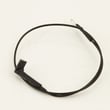
- If wiring is damaged, replace the affected harness or ground lead (for example, gas grill ground wire 30800244).
Most grill performance issues come from restricted gas flow or blocked airflow at the burners, not the cooking grates. A clean burner and a properly functioning igniter/valve restore safe, even heat and reliable starts.
Last updated: March 2026
What is the average lifespan of 14603358410?
A Kenmore Elite gas grill like model 14603358410 typically lasts 10 years with normal residential use and basic maintenance. Regular cleaning, keeping burners clear, and replacing wear items (igniters, valves, wiring) on time are what most directly extend service life.
- Heat and grease exposure: heavy high-heat cooking accelerates corrosion and burner wear.
- Outdoor storage: rain, salt air, and freeze cycles shorten the life of the firebox and hardware.
- Cleaning frequency: clogged ports and grease buildup cause uneven flames and flare-ups.
- Part replacement: replacing small failures early prevents bigger damage.
- Fuel system condition: leaks, weak flow, or sticking valves reduce performance and safety.
| Component | Typical replacement timing | What you notice first |
|---|---|---|
| Ignition parts | 2 to 5 years | Clicking but no spark, hard starts |
| Valves/manifold | 5 to 10 years | Sticking knobs, uneven flame, gas smell |
| Wiring/switches | 5 to 10 years | Intermittent ignition, no power to igniter |
| Structural panels/shelves | 8 to 12 years | Rust, looseness, sagging |
- Brush burner ports and clear spider webs from venturi tubes.
- Empty and clean the grease tray area after cooks.
- Check hose/regulator connections for leaks before the season.
- Keep the grill covered and out of standing water.
- Use the lighting and care steps in the 14603358410 owner's manual.
Most “grill is worn out” complaints are actually burner blockage, ignition failure, or a fuel-delivery issue. Replacing a failed part such as the gas grill side burner igniter 41500213 or addressing a sticking valve can restore normal heat and prevent flare-ups.
Last updated: March 2026