Owner’s manual
 View engine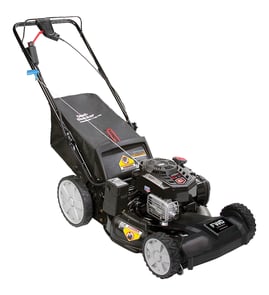


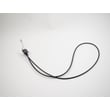
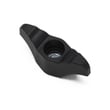
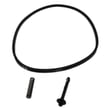
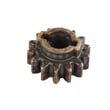
What are the common problems with Craftsman lawn mowers?
Common problems on the Craftsman 917375630 gas walk-behind mower include no-start conditions (stale fuel, dirty air filter, bad spark plug, disconnected plug wire, or the control bar not held down), loss of power from deck buildup, and self-propelled drive issues caused by debris in the drive wheels or worn drive parts. See the owner's manual troubleshooting chart for the fastest checks.
Most common symptoms and what they usually mean
- Won’t start: stale fuel, dirty air filter, bad spark plug, spark plug wire off, or control bar released
- Starts then runs poorly or loses power: grass and debris packed under the deck, cutting too low, or air filter restriction
- Excessive vibration: loose or damaged blade, or a damaged blade adapter
- Hard to pull starter rope: blade dragging in grass or a blade adapter issue
- Self-propelled won’t move or slips: drive wheels packed with grass, worn belt, cable out of adjustment, or transmission wear
Quick checks we recommend (in order)
- Hold the operator presence control bar down to the handle while starting (a released bar can prevent starting).
- Drain stale fuel and refill with fresh gasoline if the mower sat for weeks or over winter.
- Inspect the spark plug wire and spark plug; reconnect the wire and replace the plug if fouled.
- Check for deck buildup; clean grass and debris from under the mower (engine off, spark plug wire removed).
- For self-propelled issues, clean the drive wheel area; the manual calls out grass and trash packed around the dust cover, pinion, and gear teeth.
Parts that commonly solve these problems
| Symptom | Common fix | Example part for this model |
|---|---|---|
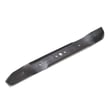
| Poor cut, vibration, hard starting | Replace a worn/bent blade | Lawn mower 22-in deck mulching blade 532406713 |
| Vibration, blade won’t stay tight | Inspect/replace blade adapter | Lawn mower blade adapter 532421176 |
| Self-propelled slips or won’t move | Replace worn drive belt | Belt 532157769 |
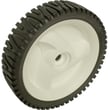
| Drive wheels bind or don’t pull | Clean/replace wheel drive pieces | Lawn mower wheel dust cover 581840401 and pinion.14.te 532403849 |
Why it matters
Most “common problems” trace back to airflow, fuel quality, and drag in the cutting or drive system. Fixing those basics prevents hard starting, protects the engine from overload, and restores consistent cutting and self-propelled performance.
Last updated: February 2026
What size of riding mower will fit through gates?
Most riding mowers need a gate opening that is wider than the mower’s maximum overall width (tires plus deck and discharge side). Plan on a minimum 48-inch gate for many lawn tractors, and 60 inches for many zero-turn mowers; confirm by measuring the mower you plan to use.
Gate width guidelines (typical)
These are practical “fits without scraping” targets based on common mower widths.
| Mower type | Typical overall width (widest point) | Gate opening that fits reliably |
|---|---|---|
| Small rear-engine rider | 30 to 42 in. | 42 to 48 in. |
| Lawn tractor (42-in deck class) | 42 to 50 in. | 48 to 54 in. |
| Zero-turn (entry level) | 46 to 60+ in. | 60 to 72 in. |
How we measure for a sure fit
- Measure the narrowest clear opening between gate posts at the height the mower passes through.
- Measure the mower at the widest point: usually rear tires, deck edge, or discharge chute.
- Include anything that sticks out: bagger frame, bumper, anti-scalp wheels, chute, or hitch.
- Add 2 to 4 inches of clearance for steering corrections and uneven ground.
- If you will drive through at an angle or on a slope, add extra clearance for tire tracking.
Important note for Craftsman 917375630 owners
Craftsman 917375630 is a walk-behind mower, not a riding mower. If your real goal is getting this mower through a gate, focus on the mower’s widest points (handle width, wheels, and discharge or mulcher door). The 917375630 owner’s manual shows the mower controls and components so you can spot anything that protrudes.
Why it matters
Correct gate clearance prevents damage to gate posts and the mower deck, and it reduces the risk of losing control while maneuvering in tight spaces.
Last updated: February 2026
Which lawn tractor has the tightest turn radius?
The Craftsman 917375630 is a gas walk-behind mower, not a lawn tractor, so it does not have a tractor-style “turn radius” spec. For this model, maneuverability comes from how you control forward drive with the drive control bar and how you set cutting height at the wheels; see the 917375630 owner's manual.
What to use instead of “turn radius” for this model
Because 917375630 is a walk-behind mower, these are the practical maneuverability factors we use:
- Self-propel drive engagement: lift the drive control bar to move forward; release it to stop.
- Wheel cutting-height settings: raising or lowering the wheels changes deck height and can affect how easily the mower rolls.
- Pace and overlap: slower pace and tighter overlap around obstacles reduces trimming.
- Deck cleanliness: heavy grass buildup under the housing increases drag.
- Wheel and drive wear: worn wheels, drive belt, or transmission parts reduce control on turns.
Quick comparison: lawn tractor vs walk-behind mower
| Feature | Lawn tractor | Craftsman 917375630 walk-behind |
|---|---|---|
| Turning spec | Turn radius (inches/cm) | Not typically specified |
| How it turns | Steering system | You pivot the handle and rear wheels |
| Drive control | Pedals/levers | Drive control bar at the handle |
| Best for | Large open lawns | Tight areas, edging, smaller lawns |
If your mower feels hard to maneuver
These checks fix most “won’t track straight” or “hard to turn” complaints on self-propelled walk-behind mowers:
- Inspect the drive belt for glazing, cracking, or stretching; replace if worn (see belt 532157769).
- Check the wheels for wobble or binding; a damaged wheel can drag (see lawn mower wheel 532433121).
- Confirm the drive control bar is fully held against the handle during use.
- Clean packed grass from the deck to reduce resistance.
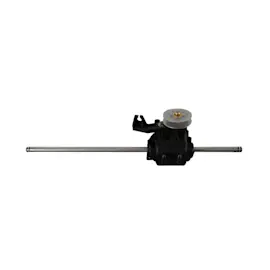
- If forward drive is weak or intermittent, the transmission can be the cause (see lawn mower transmission assembly 532415226).
Why it matters
“Turn radius” is a tractor metric; for a walk-behind mower like the Craftsman 917375630, the real goal is smooth drive engagement and low rolling resistance so you can pivot cleanly around trees, beds, and fences.
Last updated: February 2026
Why is my self-propelled lawn mower pulling to one side?
If your Craftsman 917375630 self-propelled mower pulls to one side, the most common causes are uneven wheel height settings, a drive system issue on one wheel (belt, pulley, transmission, or pawls), or a wheel that is dragging or loose. Use the checks and adjustments in the owner's manual to correct the cause.
Quick checks (fastest fixes first)
- Set all wheels to the same cutting height; uneven wheel heights can make the mower track sideways.
- Inspect both rear wheels for damage, wobble, or binding; a dragging wheel will steer the mower.
- Check for grass and debris packed under the deck; buildup can increase drag on one side.
- Confirm the drive control bar fully engages and releases; partial engagement can pull the mower.
- Look for a loose or worn drive belt; a slipping belt can cause uneven drive.
Drive system causes on self-propelled mowers
On the 917375630, the self-propel system relies on the belt and gearcase/transmission to drive the wheels. If one side is not driving evenly, focus on these parts:
- Drive belt condition and routing (cracks, glazing, stretching)
- Drive pulley wear or wobble
- Transmission/gearcase output consistency
- Wheel drive pawls (if one pawl sticks, one wheel can “push” more than the other)
Helpful parts commonly involved:
- Belt 532157769
- Drive pawl 532404845
- Lawn mower transmission assembly 532415226
- Lawn mower drive pulley 532416987
What to inspect and what it usually means
| What you notice | Likely cause | What to do |
|---|---|---|
| Mower pulls more when self-propel is engaged | Uneven drive to the wheels | Inspect belt, pulley, pawls, transmission |
| Pulling changes when you raise or lower cut height | Wheel heights not matched | Re-set all wheels to the same notch |
| One rear wheel feels harder to spin by hand | Binding wheel or drive component | Clean debris; inspect wheel and drive parts |
| Excessive vibration plus pulling | Blade or adapter issue | Check blade tightness and condition |
Why it matters
A mower that pulls to one side is harder to control and can leave an uneven cut. Fixing wheel height, deck drag, or a slipping drive belt also reduces strain on the transmission and improves self-propel performance.
Last updated: February 2026