Error Codes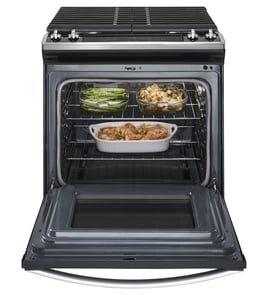





Are GE gas stoves good?
Yes. GE gas ranges, including the GE PGS930YP8FS slide-in gas range, are a solid choice for everyday cooking because they typically deliver strong burner performance, consistent oven heat, and practical features for the price. Long-term satisfaction usually comes down to proper installation, cleaning, and timely replacement of wear parts.
When customers say a gas stove is “good,” they usually care about these real-world factors:
- Burner power and control: fast boil plus stable low simmer
- Oven performance: even baking and reliable ignition
- Ease of cleaning: sealed cooktop areas, removable caps and grates
- Feature set: convection, air fry, griddle options (varies by model)
- Serviceability: parts availability and straightforward repairs
GE ranges are widely known for strong day-to-day cooking performance. The most common issues we see across gas ranges (any brand) are ignition-related and maintenance-related.
| Area | What’s typically strong | What commonly causes trouble |
|---|---|---|
| Cooktop burners | High heat output and responsive flame changes | Clogged burner ports, dirty burner bases, moisture after cleaning |
| Oven bake/broil | Good heat for roasting and broiling | Weak igniter, temperature sensor drift, airflow restrictions |
| Controls/electronics | Useful cooking modes on higher-end models | Heat exposure, power surges, loose wiring connections |
On the GE PGS930YP8FS, these are examples of parts that can directly affect heating and ignition when symptoms show up:
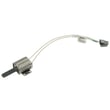
- Range oven burner igniter WB13X40206 (bake ignition and heat)
- Range broil igniter WB13X40207 (broil ignition and heat)
- Range oven temperature sensor WB24X25557 (temperature accuracy)
- Range spark module WB13X24741 (surface burner sparking)
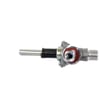
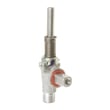
- Range gas valve and regulator assembly WB21X33225 (gas flow regulation)
A “good” gas range is one that lights reliably and holds temperature. Most complaints that sound like “this range isn’t good” trace back to a single service part (igniter, sensor, spark module) or to cleaning-related burner blockage, not to the entire appliance being low quality.
Last updated: January 2026
How to reset GE oven control board?
For the GE PGS930YP8FS slide-in gas range, the most reliable way to reset the oven control board is to fully power-cycle the range at the home breaker for about 60 seconds, then restore power and let the control finish booting before pressing any keys.
- Press Cancel/Clear once to stop any active cooking cycle.
- Turn OFF the range circuit breaker (or unplug if accessible).
- Wait 60 seconds (up to 2 minutes if the control was frozen).
- Turn the breaker ON.
- Wait for the display to stabilize, then set the clock and test Bake.
These checks fix the most common causes of “won’t respond” or recurring error beeps.
- Confirm the breaker is not a GFCI/AFCI that is tripping intermittently.
- If the display is dead but burners work, check for a loose connection at the control area; a wiring issue can mimic a bad board.
- If the oven overheats or shuts down after heating, inspect the cooling airflow path; a failing cooling-fan control can cause protective shutdowns.
- If temperatures are consistently off, the sensor circuit is a top suspect; consider testing or replacing the range oven temperature sensor WB24X25557.
- If the touch panel is unresponsive or keys trigger randomly, the user interface assembly can be the issue; the glass & touch board asm WB27X48969 is the related part for this model.
| Action | What it fixes | What it won’t fix |
|---|---|---|
| Cancel/Clear | Minor keypad glitches, stopping a cycle | Persistent error codes, dead display |
| Breaker power-cycle | Frozen control, many temporary faults | Failed sensor, bad igniter, damaged wiring |
A full power reset clears temporary logic faults in the electronic oven control so you can quickly tell the difference between a one-time glitch and a real hardware problem (sensor, touch panel, wiring, or cooling system).
Last updated: January 2026
What does F930 mean?
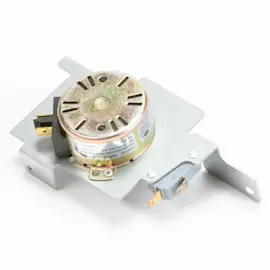
On the GE PGS930YP8FS slide-in gas range, the F930 code points to a door lock problem during Self Clean. The control is not seeing the door lock switch change state as expected, so it may stop the cycle and sound an alarm.
- Press Clear/Off to silence the alarm and cancel the cycle.
- Let the range cool completely; the door lock can stay engaged until temperatures drop.
- Try power-cycling the range (turn the breaker off for 1 minute, then on).
- Check that the door is fully closed and aligned (no cookware or racks interfering).
- If the door unlocks, run a short Bake test to confirm normal operation.
Most F930 situations come down to the lock mechanism not moving freely or the control not reading it correctly.
| Likely cause | What you may notice | Typical fix |
|---|---|---|
| Door lock mechanism sticking | Door will not lock or unlock | Inspect lock linkage; replace lock assembly if worn |
| Door lock switch not changing state | F930 returns quickly after starting Self Clean | Test/replace lock switch or lock assembly |
| Wiring connection issue | Intermittent F930, especially after moving the range | Check harness connections to lock and control |
| Control sensing issue | Lock moves but code persists | Diagnose control circuit; replace control if confirmed |
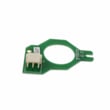
If you confirm the oven is heating normally but the code appears only with Self Clean, focus on the lock circuit and related sensing. If you are also seeing cooling fan behavior that seems abnormal (fan not running, running constantly, or noisy), the cooling system can contribute to overheating and control faults; the range cooling fan sensor board WB27X28659 is one component used in that system.
Self Clean relies on a working door lock for safety. If the lock does not engage and report correctly, the range will stop the cycle to prevent unsafe operation.
Last updated: January 2026