Owner’s manual
 View engine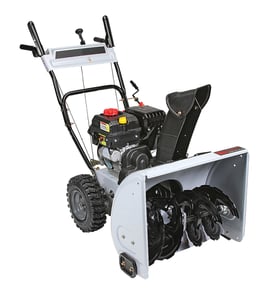


Where is the model number on a MTD snowblower?
On an MTD gas snowthrower like model 31AS68EE791, the model number is printed on the equipment ID label (a sticker or metal tag) attached to the machine. It’s commonly located on the rear of the unit near the axle area, between the wheels.
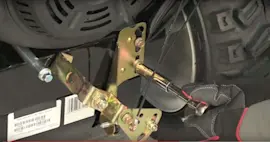
- Rear of the snowblower frame between the wheels
- Back of the housing near the axle or wheel mounts
- Lower rear panel area behind the auger housing
- Handle support frame near where the lower handle bolts on
- Under the belt cover area (some versions place labels near service panels)
Most MTD labels include both a model number and a serial number. Once you find it, record it for parts lookup and service reference (the manual also prompts you to write these down).
| What you’ll see | Why it matters |
|---|---|
| Model number | Ensures the correct parts diagrams and part numbers for your exact build |
| Serial number | Helps match production variations and revisions |
| Date of purchase (your note) | Useful for maintenance tracking and service history |
MTD snowblowers often have multiple versions that look similar but use different cables, belts, and auger hardware. Using the exact model number helps us match the right items, such as an auger clutch cable or the correct shear pins.
For model-specific identification tips and record-keeping, use the 31AS68EE791 owner’s manual.
Last updated: February 2026
How many years should a snowblower last?
For the MTD gas snowthrower model 31AS68EE791, the published average useful life is 7 years or about 60 hours of operation; with consistent maintenance and proper off-season storage, many gas snowblowers deliver reliable service beyond that baseline. See the 31AS68EE791 operator’s manual for the maintenance and storage schedule.
The manual’s useful-life statement is a safety and inspection benchmark, not an automatic failure date. After that point, we recommend having the machine inspected annually so worn mechanical and safety systems do not create unsafe operation.
Typical real-world lifespan (gas snowblower): 10 to 20 years with good care.
| Measure | What it tells you | What to do |
|---|---|---|
| 7 years / 60 hours | Baseline useful-life guideline for 31AS68EE791 | Plan annual inspections after this point |
| 10 to 20 years | Common service life with maintenance | Keep up with seasonal service and storage |
- Change engine oil on schedule and before storage.
- Drain fuel for storage longer than 30 days by running the engine until it stops.
- Clear snow from the machine before storing to help prevent freeze-up.
- Check fuel line, tank, cap, and fittings for cracks or leaks; replace as needed.
- Lubricate the hex (gear) shaft at least once per season or every 25 hours; keep oil off the drive plate and friction wheel.
Wear items and controls that are often replaced over time include:
- Shear pins (protect the auger/gearbox during jams), such as Craftsman snowblower shear pin 738-04124A
- Skid shoes and shave plate/scraper (protect the housing and improve scraping)
- Drive and auger control cables (keep engagement safe and consistent)
A snowblower that is past its useful-life benchmark can still run well, but worn drive components, cables, or fuel-system parts increase the chance of poor performance or unsafe operation. Staying ahead of wear and storage-related fuel issues is what keeps a gas snowthrower dependable for the long haul.
Last updated: February 2026
What is the most common reason snowblower won't start?
On the MTD gas snowthrower model 31AS68EE791, the most common no-start cause is fuel-related (stale gas that restricts the carburetor), followed by a simple starting setup issue like the safety key not fully inserted or the choke not set for a cold start. Use the steps in the 31AS68EE791 owner's manual to confirm the correct start sequence.
- Push the safety key fully in; the engine will not start without it.
- Set the choke to CHOKE for a cold engine; move toward RUN as it warms.
- Use fresh gasoline; drain old fuel if it has been sitting.
- Confirm the throttle is set to FAST/RUN (not OFF).
- Inspect the spark plug for fouling; clean or replace if needed.
- Make sure the recoil starter is pulled correctly (pull slowly to resistance, then pull rapidly).
| Symptom | Most likely cause | What we recommend |
|---|---|---|
| No response at all | Safety key not inserted, throttle OFF | Insert key fully; set throttle correctly |
| Starts then dies | Stale fuel, choke moved too fast | Replace fuel; run briefly at half-choke, then move to RUN |
| Pull cord kicks back hard | Pulling incorrectly, engine not set up to start | Pull to resistance, then pull rapidly; recheck choke/key |
| Smell of fuel, plug wet | Flooded engine | Move choke to RUN, wait a few minutes, then retry |
A correct start setup (key, choke, throttle) prevents unnecessary wear on the recoil starter and reduces kickback risk. Fresh fuel keeps the carburetor passages from gumming up, which is the most common root cause after storage.
Last updated: February 2026
Why is my MTD snowblower carburetor leaking gas?
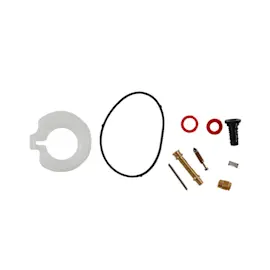
On MTD gas snowthrower model 31AS68EE791, a carburetor gas leak is usually caused by a float/needle that is stuck open, a damaged bowl gasket, or a cracked/corroded carburetor body. Stop using the snowblower until the leak is corrected and follow the fuel-safety steps in the 31AS68EE791 owner's manual.
- Fuel shutoff (if equipped): Turn it OFF; if fuel still drips, the carburetor is not sealing internally.
- Carburetor bowl area: Look for wetness around the bowl rim (often a bowl gasket issue).
- Overflow/venting: Fuel dripping from the air intake or carb throat points to a float/needle not closing.
- Mounting and intake: Check for loose carb mounting screws and a damaged intake gasket.
- Storage/tilt: If the unit was stored tilted, fuel can migrate and leak; the manual notes keeping the engine level during storage.
| Symptom | Most likely cause | Typical fix |
|---|---|---|
| Leaks only when parked | Bowl gasket seep or loose bowl screw | Replace gasket; snug fasteners |
| Constant dripping, strong fuel smell | Float stuck, needle/seat worn, debris in valve | Clean carb; replace needle/seat or carb |
| Wet, stained carb body | Cracked or corroded carburetor | Replace carburetor |
| Leak after off-season | Old fuel varnish holding needle open | Drain old fuel; clean carb |
- Move the snowblower outdoors, away from ignition sources.
- Turn the fuel valve OFF (if equipped) and wipe up spilled fuel.
- If the leak continues, drain fuel by running the engine until it stops (the manual recommends this for storage and to prevent fuel-system gumming).
- Remove the carb bowl and check for water, grit, or varnish; clean and reassemble.
- If the auger or drive controls need to be moved for access, keep hands clear of moving parts and disengage controls before starting, as outlined in the manual.
A leaking carburetor wastes fuel, can flood the engine (hard starting, rough running), and creates a serious fire risk. Fixing the float/needle sealing problem early also prevents gum buildup that can lead to more extensive fuel-system service.
Last updated: February 2026
What are the parts of a snowblower called?
On an MTD gas snowthrower like model 31AS68EE791, the main parts are typically grouped by what they do: snow-moving parts (auger, impeller, chute), drive parts (friction wheel, belts, cables), and wear items (shear pins, skid shoes, shave plate) that protect the machine and set scraping height. See the 31AS68EE791 owner's manual for the exact names used for your unit.
- Auger: pulls snow into the housing
- Impeller: throws snow out through the chute
- Chute assembly: directs where snow is discharged
- Shear pins: sacrificial pins that break if the auger jams (protects the gearbox)
- Skid shoes (slide shoes): set scraper height and protect the housing
- Shave plate (scraper blade): the wear edge that scrapes snow off the surface
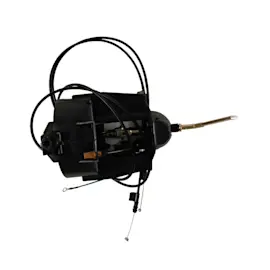
- Cables: engage/disengage auger and drive systems
These are common replacement items we see for this model:
| Part type | Example part name | Example part number |
|---|---|---|
| Shear pin | Craftsman snowblower shear pin 738-04124A | 738-04124A |
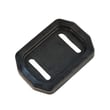
| Skid shoe | MTD snowblower skid shoe 731-06439 | 731-06439 |
| Shave plate | Shave plate 790-00120 | 790-00120 |
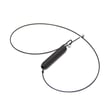
| Auger clutch cable | MTD snowblower auger clutch cable 946-04230B | 946-04230B |
Snowblower parts are often similar across MTD-built machines, but the exact shear pin style, cable length, and wear-part mounting pattern can vary by model and build. Using the correct OEM-style shear pin is especially important because it is designed to fail first during a jam.
Use the exploded views and parts lists in the 31AS68EE791 owner's manual to match:
- The part name used by MTD
- The location on the machine
- The hardware that attaches it (bolts, nuts, cotter pins)
Last updated: February 2026