Error Codes




What are common problems with State ES640DOCT water heaters?
Common problems on a State ES640DOCT electric water heater include no hot water, not enough hot water, fluctuating temperatures, tripped high-limit reset, leaking at fittings, and rumbling or popping noises from sediment. The most frequent causes are a failed heating element, a bad thermostat, or mineral buildup.
Most common symptoms and likely causes
- No hot water: tripped breaker, high-limit reset tripped, failed heating element, or failed lower thermostat
- Not enough hot water: one element not heating, thermostat set too low, heavy sediment reducing capacity
- Water too hot: thermostat contacts stuck closed or thermostat miscalibrated
- Fluctuating temperature: thermostat cycling issues, loose wiring, element starting to fail
- Rumbling/popping: sediment scale on the element or tank bottom
- Discolored or smelly water: anode rod depleted (tank corrosion protection reduced)
Parts that commonly fix these issues (for ES640DOCT)
If troubleshooting points to a failed component, these are common replacements for this model:
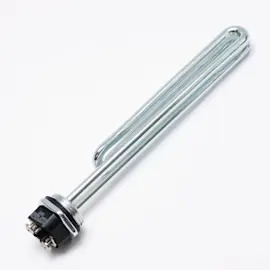
- Element 100108283 (heating performance issues, no hot water)
- Thermostat 100108421 (temperature control problems, overheating, inconsistent temps)
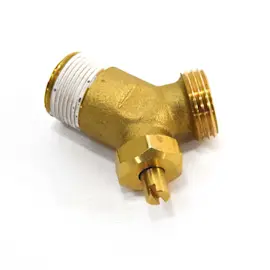
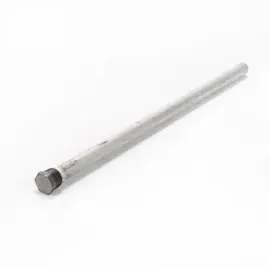
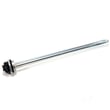
- 2-way 100109624 (anode rod; odor, discoloration, corrosion protection)
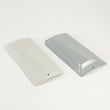
- Access panel 100109599 (damaged or missing cover affecting insulation and access)
Quick checks we recommend before replacing parts
- Confirm power: check the breaker and verify the heater is getting the correct voltage.
- Check the reset: press the high-limit reset button (often behind an access panel).
- Look for leaks: inspect inlet/outlet connections and the drain valve area.
- Listen for sediment noise: rumbling usually points to scale buildup and a need to drain/flush.
- Test components: ohm-test the element and verify thermostat operation before ordering.
Troubleshooting guide by symptom
| Symptom | Most likely cause | Common fix |
|---|---|---|
| No hot water | Element open or thermostat failed | Replace element or thermostat |
| Water too hot | Thermostat stuck closed | Replace thermostat |
| Rumbling/popping | Sediment/scale | Drain and flush tank |
| Smelly/discolored water | Worn anode rod | Replace anode rod |
Why it matters
Catching element, thermostat, and anode rod problems early helps prevent repeated breaker trips, inconsistent hot water, and accelerated tank corrosion. Sediment control also improves efficiency and reduces noise.
Related help: water heater category landing page
Last updated: February 2026
What brand of electric water heater is the most reliable?
A.O. Smith, Rheem, and Bradford White are the most consistently reliable electric water heater brands because they pair durable tank construction with strong parts support. For your State ES640DOCT electric water heater, long-term reliability is driven just as much by maintenance and timely replacement of wear parts.
What “most reliable” means in real-world use
When we compare electric water heater reliability, these factors matter most:
- Tank corrosion protection (anode rod condition)
- Heating element durability and correct electrical match
- Thermostat accuracy and safe temperature control
- Water quality (hard water and sediment)
- Availability of replacement parts for repairs
How to make a State ES640DOCT run like the “top” brands
Most reliability complaints come from a few predictable issues. These steps prevent the common failures:
- Flush sediment periodically to reduce overheating and slow recovery
- Keep thermostats set to a safe, consistent temperature (commonly 120°F)
- If temperatures swing, test and replace the lower thermostat as needed
- If hot water is limited, test the heating element for continuity and heavy scale
- Keep the access panels installed to protect wiring and insulation
Parts to check on ES640DOCT (based on common symptoms)
| Symptom | What to check first | ES640DOCT part to consider |
|---|---|---|
| No hot water or limited hot water | Heating element open or scaled | Element 100108283 |
| Water temperature swings | Thermostat out of calibration | Thermostat 100108421 |
| Missing or damaged cover/insulation | Heat loss, exposed wiring | Access panel 100109599 |
Note: The part listed as “2-way” (part ID 100109624) is not clearly identified by name as an anode rod in the ES640DOCT parts list. For anode-rod related maintenance, use our repair steps first, then match the correct anode rod by model and diagram callout.
Why it matters
Brand reputation helps, but electric water heaters are maintenance-driven. Controlling sediment, keeping thermostats accurate, and replacing a failing element early prevents most “unreliable” performance.
For step-by-step repair help, use how to replace an electric water heater heating element.
Last updated: February 2026
What is the average cost of a 40-gallon electric hot water heater?
A typical 40-gallon electric water heater usually costs about $400 to $900 for the unit alone, with installed totals commonly around $900 to $2,000+ depending on labor rates, location, and whether plumbing or electrical updates are needed. For your State ES640DOCT, parts replacement can sometimes restore performance at a much lower cost.
What changes the price the most
- Tank type and warranty tier (basic vs longer warranty models)
- Efficiency features (better insulation, heat traps, higher efficiency ratings)
- Electrical and plumbing condition (old wiring, shutoff valves, piping)
- Code upgrades (expansion tank, seismic strapping, drain pan, bonding)
- Disposal and access (tight closets, attic installs, haul-away fees)
Repair vs replace: quick comparison
If your ES640DOCT is otherwise in good shape, replacing a failed component can be the better value.
| Option | Typical cost range | Best when | What you’re paying for |
|---|---|---|---|
| Replace a part | $50 to $300+ (part plus labor) | Heating issues, temperature swings, minor leaks at fittings | Targeted fix (element, thermostat, anode rod) |
| Replace the whole heater | $900 to $2,000+ installed | Tank is leaking, heavy corrosion, repeated failures | New tank, new warranty, full install |
Parts that commonly affect hot water performance
These are common wear items on electric water heaters and are available for the State ES640DOCT:
- Element 100108283 (heating performance, slow recovery, no hot water)
- Thermostat 100108421 (water too hot, not hot enough, temperature swings)
- 2-way 100109624 (anode rod; helps reduce tank corrosion and odor issues)
Why it matters
A 40-gallon electric water heater price is heavily influenced by installation complexity. Before replacing the entire unit, checking the heating element, thermostat, and anode rod can solve “no hot water” or “fluctuating temperature” symptoms and reduce total cost.
For step-by-step repair planning, we recommend our guide: how to replace an electric water heater heating element.
Last updated: February 2026
What is the life expectancy of a 40-gallon electric water heater?
A 40-gallon electric water heater typically lasts 10 to 15 years. For your State ES640DOCT, lifespan depends most on water quality, how hot you run the thermostats, and whether you keep up with maintenance like tank flushing and anode rod replacement.
Typical lifespan and what changes it
Most 40-gallon electric tank water heaters fall into this range:
| Condition | Typical outcome | What you can do |
|---|---|---|
| Normal water, basic maintenance | 10 to 15 years | Flush sediment periodically, keep temperature reasonable |
| Hard water or heavy use | 8 to 12 years | Flush more often, watch for element wear |
| Proactive maintenance | 12 to 20+ years | Replace anode rod before it is fully depleted |
Maintenance that extends life
These steps reduce corrosion and overheating, which are the two biggest tank killers:
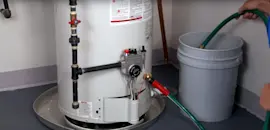
- Flush sediment from the tank on a schedule that matches your water hardness.
- Inspect and replace the anode rod when it is heavily worn (this protects the tank lining).
- Keep both thermostats set to a practical temperature (many homes use about 120°F).
- Replace a failing heating element promptly to prevent overheating and nuisance trips.
- Check access panels and insulation are properly in place after any service.
If you are planning maintenance, the parts list for model ES640DOCT includes items commonly replaced during service, such as the 2-way 100109624 (anode rod), thermostat 100108421 (lower thermostat), and element 100108283 (heating element).
Signs it is near end of life
Plan for replacement or major repair when you see any of these:
- Rust-colored hot water or metallic odor that returns after flushing
- Water around the base of the tank (not from fittings above)
- Popping or rumbling that persists after sediment flushing
- Repeated loss of hot water even after element and thermostat checks
Why it matters
Once the tank itself corrodes through, it is not a “part replacement” repair. Replacing wear items early (especially the anode rod and thermostats) is the most reliable way to get the full life out of an electric water heater.
Last updated: February 2026