



Can you replace a built-in microwave with a countertop?
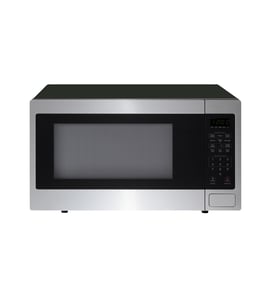
Yes, you can replace a built-in microwave with a countertop model, but we only recommend doing it if the cabinet opening, ventilation clearances, and power supply match what the countertop microwave requires. A countertop unit like Panasonic NN-T888S is designed to sit in open air, not be enclosed like a built-in.
What to check before you swap
- Ventilation space: Countertop microwaves need open airflow around the sides, top, and rear.
- Cabinet opening size: The cutout must be larger than the microwave and allow airflow.
- Power outlet location: You need a properly grounded outlet that the cord can reach without extension cords.
- Mounting and support: Built-in units often use brackets or a trim kit; countertop units do not.
- Door swing and access: Make sure the door opens fully without hitting cabinet faces.
- Heat and steam exposure: Avoid placing the unit where it vents into tight wood cabinetry.
Safe installation options (most common)
| Option | When it works | What you typically need |
|---|---|---|
| Place on countertop | You have counter space and an outlet | No cabinet modifications |
| Use a microwave shelf in an open cabinet | You have an open, ventilated cubby | Sturdy shelf, correct clearances |
| Replace with a true built-in model | You want a built-in look and fit | Built-in unit and matching trim kit |
Why it matters
A built-in cavity can trap heat. Poor airflow can cause overheating, nuisance shutoffs, or premature failure of components such as door interlocks and thermal cutouts.
Parts that commonly relate to fit and door closing
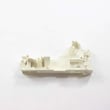
If the door does not close or latch correctly after moving or repositioning the microwave, inspect the latch and interlock-related pieces. For this model, a commonly referenced fit-related part is the Panasonic door key A30186660QP.
For general safety and placement guidance, we also recommend reviewing never do these things with a microwave.
Last updated: February 2026
What is code NN-T888S on Panasonic microwave?
NN-T888S is the model number for your Panasonic countertop microwave, not an error code. If your display is showing “8888” or unusual symbols, that points to a power reset condition or a control/door-safety circuit issue rather than a “NN-T888S code.” For door-related faults, the switch 6600W1K001Q is a common part involved.
What “8888” on the display usually means
On countertop microwaves like the Panasonic NN-T888S, an “8888” display most often shows up after a power interruption, a reset, or when the control is not getting the correct “door closed” signal.
Common causes include:
- Brief power outage or unplugging the microwave
- Control panel reset after a surge
- Door not fully latching (misaligned door hooks)
- Door interlock switch not closing consistently
- Loose wiring connection at the door switch bracket
Quick checks we recommend (safe, no disassembly)
- Unplug the microwave (or turn off the breaker) for 2 minutes, then restore power.
- Open and close the door firmly; confirm it latches smoothly.
- Try a simple cook cycle with a cup of water for 30 seconds.
- If the display changes when you wiggle the door, focus on the door latch and interlock area.
- If the unit is dead or keeps resetting, stop using it until it’s checked.
Parts that commonly relate to door and “no start” symptoms
If the microwave will not start, stops when the door moves, or acts like the door is open, these parts are often involved.
| Symptom | Common area | Example part on this model page |
|---|---|---|
| Won’t start, acts like door is open | Door interlock circuit | Switch 6600W1K001Q |
| Door won’t latch smoothly | Door latch parts | Panasonic door key A30186660QP |
| Shuts down from overheating | Thermal protection | Panasonic cutout therm A61454650AP |
Why it matters
The door interlock system is a key safety circuit. If the control does not see the correct door-switch sequence, the microwave may refuse to run, reset, or behave erratically. Fixing the latch or switch issue restores normal operation and prevents repeat failures.
Last updated: February 2026
What are common issues with Panasonic microwaves?
Common issues we see with Panasonic countertop microwaves like model NN-T888S include not heating, stopping a few seconds after start, no power or a dead display, loud buzzing or rattling, and turntable or fan problems. Many symptoms trace back to door-interlock parts, overheating protection, or high-voltage components.
Most common symptoms and what they usually point to
- Runs but does not heat: high-voltage circuit problem (often the HV capacitor, diode, or related components)
- Starts then stops quickly: door-interlock switch/door latch alignment, or an overheating cutout opening
- No power or display: blown internal fuse, loose power connection, or a failed door switch preventing operation
- Sparking or arcing: damaged waveguide cover, metal in the cavity, or food splatter/carbon tracking
- Turntable not rotating: drive motor issue or mechanical obstruction
Parts that commonly fail on this model
These are common repair paths for NN-T888S symptoms, using parts available for this model:
| Symptom | Common part area | Example part on this page |
|---|---|---|
| Stops when door is moved, won’t start, intermittent running | Door-interlock switch/latch | Switch 6600W1K001Q, Panasonic door key A30186660QP |
| No heat or weak heat | High-voltage circuit | Panasonic hv capacitor A60905500AP, diode 502790 |
| Shuts down after heating, overheats | Thermal protection / temperature sensing | Panasonic thermistor A605A9790AP, Panasonic cutout therm A61454650AP |
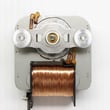
| Turntable issues or unusual mechanical noise | Motor/drive | Panasonic motor A41799190AP |
Quick checks we recommend before replacing parts
- Reset power: unplug for 2 minutes, then plug back in and test with a cup of water.
- Inspect the door: make sure it closes firmly and the latch area is not cracked or loose.
- Check for arcing causes: remove any metal racks/foil, clean splatter, and inspect the cavity for burn marks.
- Listen for changes: a new loud hum with no heat often points to the high-voltage side.
- Confirm ventilation: blocked vents can trigger thermal cutouts and short run times.
Why it matters
Microwaves use high voltage and multiple safety interlocks. When a door switch, thermistor, or high-voltage part starts failing, symptoms can look random (intermittent heat, stopping early, dead display). Matching the symptom to the most likely circuit helps you replace the right part the first time.
Related help: why is my microwave not heating
Last updated: February 2026
Is it worth repairing a Panasonic microwave?
Yes, repairing a Panasonic NN-T888S microwave is worth it when the problem is a common, replaceable part and the oven is otherwise in good condition. It is usually not worth it when the repair involves high-voltage heating components or repeated electrical failures.
Quick decision checklist
- Repair is a good choice when the microwave:
- Powers on but has an intermittent door or start issue (often a switch or door-latch related problem)
- Has a simple mechanical issue (rattles, loose hardware, worn feet)
- Has a single, clearly identified failed part and no burning smell or arcing
- Replacement is a better choice when the microwave:
- Does not heat and you suspect high-voltage parts are involved
- Trips the breaker, blows fuses repeatedly, or shows signs of overheating
- Has multiple symptoms at once (heat + display + door issues)
Cost and safety: what typically drives the decision
Microwaves can be economical to repair for door-interlock and control-related problems, but high-voltage heating repairs (capacitor, diode, magnetron circuit) can be more expensive and carry higher safety risk. For NN-T888S, common “no start” or “stops when door moves” complaints often trace back to the door switch circuit.
Parts on this model that often make repair worthwhile
| Symptom | Common area | Example part on NN-T888S |
|---|---|---|
| Won’t start, starts then stops, door has to be “just right” | Door interlock circuit | Switch 6600W1K001Q |
| Runs but shuts down from heat, acts erratic after cooling | Temperature sensing / protection | Panasonic thermistor A605A9790AP |
| Loud hum, no heat, or weak heating (advanced diagnosis) | High-voltage circuit | Panasonic hv capacitor A60905500AP |
Why it matters
A targeted repair restores safe operation and avoids replacing the whole countertop microwave. The key is matching the symptom to the right subsystem (door interlock, thermal protection, or heating circuit) before buying parts.
Helpful troubleshooting guidance
- If it runs but does not heat, use our guide: why is my microwave not heating
- If it is completely dead or keeps blowing a fuse, follow: how to replace a microwave fuse
- If you see sparks or burn marks, stop using it and review: how to repair arc or burn marks in a microwave video
Last updated: February 2026
What are the dimensions of a 1.2 cu ft microwave?
A 1.2 cu ft countertop microwave typically measures about 20 to 22 inches wide, 12 to 13 inches high, and 15 to 18 inches deep. For your Panasonic NN-T888S, use those ranges for planning, then measure your actual unit and allow extra clearance for airflow.
Typical exterior size ranges (1.2 cu ft)
- Width: 20 to 22 in.
- Height: 12 to 13 in.
- Depth: 15 to 18 in.
- Weight: 25 to 35 lb.
- Power: 900 to 1200 watts
What to measure on your Panasonic NN-T888S
Because exterior dimensions vary by design, we recommend measuring these points on the microwave itself:
- Overall width at the widest point
- Overall height from counter to top
- Overall depth including the door and handle
- Clearance above to the bottom of the cabinet
- Rear and side clearance so vents are not blocked
Quick sizing table
| Measurement | Typical range for 1.2 cu ft | Why it matters |
|---|---|---|
| Width | 20 to 22 in. | Countertop footprint |
| Height | 12 to 13 in. | Under-cabinet clearance |
| Depth | 15 to 18 in. | Overhang and door swing |
| Vent space | Leave extra room | Prevents overheating |
Why it matters
The 1.2 cu ft rating describes interior capacity, not the outside footprint. Confirming exterior dimensions and ventilation clearance helps prevent blocked vents, nuisance shutoffs, and heat damage to nearby cabinets.
If you are moving the unit to measure it and notice door or interlock issues, parts commonly involved include the switch 6600W1K001Q and Panasonic door key A30186660QP.
Last updated: February 2026


