Owner’s manual
 View engine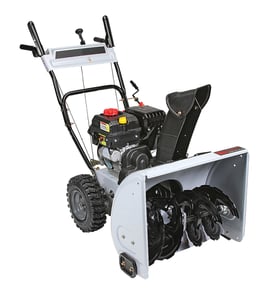




How to find snowblower model number?
Your Craftsman snowblower’s model number is typically on the model and serial tag attached to the machine’s frame. For model 536884790, the tag identifies it as a 5 HP, 22-inch dual stage snow thrower; use that full model number when looking up parts and diagrams in the owner's manual.
Where to look on a snowblower
Check these common tag locations first (wipe off snow, salt, and grime so the numbers are readable):
- Rear frame between the wheels
- Near the engine mounting area on the frame
- On the auger housing (side or rear area)
- Near the handlebars or control panel area
- Under or near the belt cover area
What number you need (and what it’s used for)
Snowblowers often have multiple IDs. For parts lookup on Sears PartsDirect, the model number on the snowblower frame tag is the key.
| ID you find | What it identifies | When it matters |
|---|---|---|
| Model number (example: 536884790) | The snowblower assembly | Ordering the correct parts and using the right diagrams |
| Serial number | Your specific unit | Warranty records and production tracking |
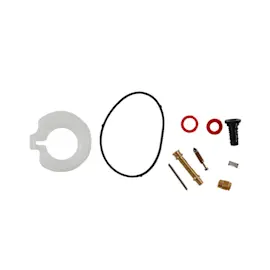
| Engine model/type/code | The engine itself | Engine-specific parts like carburetor or ignition components |
Tips to avoid ordering the wrong part
- Write the model number exactly as shown on the tag (include all digits).
- If the tag is damaged, look for a stamped plate or a second label on the frame.
- Match the model number to the parts list before ordering wear items like belts, cables, or pulleys.
- If you’re doing seasonal maintenance, use a complete kit so you do not miss common tune-up items.
Why it matters
Craftsman snowblowers can look similar across years, but parts like the auger cable, chute hardware, and drive components can vary by model. Using the correct model number helps ensure the parts diagrams and replacement parts match your exact machine.
Last updated: February 2026
How to tell year of Craftsman snowblower by serial number?
For Craftsman snowblower model 536884790, the most reliable way to confirm the year is to use the date printed in the documentation and the model/engine ID labels. The owner's manual for this unit shows a document date of 09/16/1997, which aligns with the model’s era; your serial number tag can further narrow the exact build date.
Where to look for the serial number and date clues
Check these common locations on a 5-hp Craftsman snow thrower:
- Model and serial label on the frame near the engine or handle support
- Label near the auger housing (front bucket area)
- Engine identification label (this model commonly uses engine model 143.985003)
- Any secondary sticker with a printed date code
How to use the serial number (practical decoding steps)
Serial number formats vary by production run, but this process works well:
- Write the full serial number exactly as shown, including any letters.
- Look for a date-like pattern in the first 4 to 6 characters (often month and day, sometimes year).
- If the serial number is not clearly date-coded, use the engine label as a second confirmation point.
- Compare what you find to the manual’s document date (09/16/1997) to sanity-check the timeframe.
Quick reference: what you might see
| What you see on the tag | What it usually means | What to do next |
|---|---|---|
| All numbers, looks like a date | Often month/day/year or year/month/day | Match the pattern to a calendar date |
| Letters mixed with numbers | Plant/line code plus date info | Focus on any 2-digit year or obvious MMDD block |
| No clear date pattern | Serial is a tracking code | Use the engine model/date code instead |
Why it matters
Knowing the year helps us match the correct parts list and avoid ordering the wrong items, especially for wear parts like belts, seals, and auger-drive components.
Parts tip while you’re identifying the unit
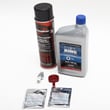
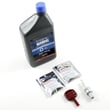
If you are doing seasonal maintenance while you confirm the year, a tune-up kit is a common starting point for hard-starting or rough-running engines. For this model, we list options like the snowblower engine tune-up kit 730280.
Last updated: February 2026
Is sae 30 the same as 5W30 for snowblower?
No. For the Craftsman 536884790 5-hp snow thrower, SAE 30 and 5W-30 are not the same for cold-weather use; SAE 30 is thicker at low temperatures, while 5W-30 is designed to flow better for easier starting and faster lubrication. Our owner's manual specifies 5W-30.
What the oil ratings mean
Both oils are “30 weight” when the engine is hot, but they behave very differently during a cold start.
- SAE 30: single-viscosity oil; thickens quickly as temperatures drop
- 5W-30: multi-viscosity oil; the 5W rating helps it flow in winter conditions
- Cold-flow matters most on snowblowers because starts often happen below freezing
What we recommend for model 536884790
Use the oil type and fill amount called out for this model.
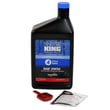
- Use 5W-30 detergent oil (the manual lists 20 oz capacity)
- Check the oil level before starting and about every 5 hours of use
- For very cold conditions, the manual allows 0W-30 to make starting easier
- Avoid overfilling; fill to the “Full” line on the dipstick
Quick comparison
| Oil type | Cold starting | Best use case | Notes |
|---|---|---|---|
| SAE 30 | Poor in cold | Warm-weather engines | Can crank slowly and delay lubrication in freezing temps |
| 5W-30 | Good | Typical snowblower temps | Manual-specified for this model |
| 0W-30 (partial synthetic) | Best | Extreme cold | Manual notes easier starting in very low temps |
Why it matters
Using oil that is too thick in the cold can make the engine harder to pull-start, reduce oil flow right after startup, and increase wear during the first minutes of operation.
Helpful parts for seasonal maintenance
If you are doing an oil change and tune-up at the same time, a kit can help you cover common maintenance items.
Last updated: February 2026
Should I spray my snowblower with WD-40?
Yes; on a Craftsman 536884790 snow thrower, a light spray protectant can help reduce rust and snow sticking when applied to clean, dry metal surfaces like the chute and auger housing. Keep any spray off belts, friction-drive parts, and hot engine or muffler surfaces.
What the manual for this model recommends
For off-season storage, the owner's manual directs you to cover bare metal parts of the blower housing, auger, and impeller with a rust preventative such as a spray lubricant.
Where spraying helps most
Apply a light, even coat to metal surfaces that contact snow (engine off).
- Inside the discharge chute and around the chute opening
- Auger housing interior (after removing packed snow and ice)
- Impeller surfaces (only when the machine is fully shut down)
- Exposed fasteners and linkages that tend to rust
Where not to spray
Avoid areas where lubricant causes slipping, smoke, or attracts heavy dirt.
- Friction disc and drive plate area
- Belts and belt contact surfaces
- Muffler, engine cooling fins, and other hot exhaust areas
- Rubber tires, grips, and plastic controls
Quick routine after use
The manual’s best practice is to clean and dry the snow thrower after each job.
| Step | What to do | Why it matters |
|---|---|---|
| 1 | Let the engine idle a few minutes | Helps melt snow and ice off the engine |
| 2 | Remove snow and debris; flush off salt if possible; dry | Reduces corrosion and freeze-up |
| 3 | Apply rust preventative to bare metal | Protects auger housing and impeller surfaces |
Why it matters
Moisture and salt drive corrosion, and rough or rusty surfaces make snow cling inside the chute, which increases clogging and reduces throwing distance. A thin protective film plus regular cleaning keeps performance consistent.
Last updated: February 2026
Is it cheaper to repair or replace a snowblower?
Repairing your Craftsman 536884790 5-hp snow thrower costs less when the issue is routine wear or maintenance (tune-up parts, belt or cable adjustment). Replacing the snowblower makes more sense when the engine or drivetrain has major failures and the repair total reaches about half the price of a comparable new unit.
A practical cost rule we use
- Repair first when the fix is a single wear item or adjustment.
- Replace when you are stacking multiple major repairs (engine plus auger/drive components).
- Repair first when the frame, auger housing, and controls are solid and the machine has been dependable.
Common repair-first situations on model 536884790
The owner's manual covers service checks like inspecting belts and adjusting cables when snow discharge drops.
- Snow not discharging well: adjust the auger control cable, then inspect the auger drive belt for looseness or damage.
- Slipping or intermittent auger: belt stretch or misadjusted belt guides.
- Hard starting or rough running: seasonal tune-up items often restore reliable operation.
Parts to price before deciding
| Symptom or goal | Typical repair approach | Example part on this model page |
|---|---|---|
| Seasonal maintenance | Replace common wear items | Snowblower engine tune-up kit 730280 |
| More complete tune-up | Expanded maintenance kit | Snowblower engine extreme tune-up kit 730285 |
| Chute performance | Restore chute sealing/deflection | Chute flap 760268MA |
Why it matters
A snowblower that starts easily and throws snow consistently saves time and reduces the chance of getting stuck mid-storm. Low-cost maintenance repairs usually restore reliability; high-cost major repairs often leave you with an older machine and more wear items close behind.
Last updated: February 2026