Owner’s manual
 Error Codes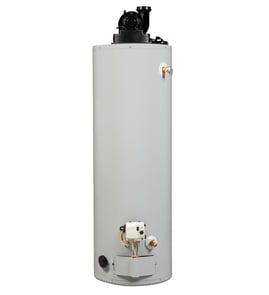



How do I read my water heater model number?
For Kenmore gas water heater model 153331350, the model number is printed on the rating plate (sticker) on the tank. Match that full model number exactly when looking up parts or the manual; the serial number and gas type (natural or propane) on the same label also matter for correct service.
Where to find the model number on the heater
Look for a label on the outside of the tank, typically on the front or side. On this Kenmore series, you will also see the lighting instructions and gas control information nearby.
- Check the rating plate on the tank jacket (outer shell)
- Write down the model number and serial number exactly as shown
- Note the gas type listed (natural gas or propane/L.P.)
- If the label is hard to read, use a flashlight and take a close-up photo
- Keep the information with your paperwork for future repairs
What the numbers and letters mean (what to focus on)
For parts lookup and troubleshooting, the key items are the identifiers, not the performance specs.
| Label item | What it’s used for | Why it matters |
|---|---|---|
| Model number (example: 153331350) | Finding the correct parts list and diagrams | Ensures parts match your exact heater design |
| Serial number | Dating and production details | Helps confirm the correct revision/version |
| Gas type (natural or propane/L.P.) | Safe operation and correct components | Prevents using the wrong fuel setup |
| Capacity (example: 40 or 50 U.S. gal on some models) | General sizing reference | Not usually needed to order most parts |
Why it matters
Using the exact model number prevents ordering the wrong gas control, igniter, or venting-related parts. It also helps you follow the correct lighting and safety instructions for your specific heater.
Helpful next step
Use the model number and serial number from the tank label while referencing the owner's manual for your Kenmore 153331350.
Last updated: February 2026
What is the average lifespan of a 50 gallon hot water heater?
A 50-gallon gas water heater typically lasts 8 to 12 years. For your Kenmore 153331350, actual life depends most on water quality, water pressure, and the installation environment; those factors can shorten or extend service life (maintenance helps you reach the upper end).
What affects lifespan the most
- Water quality (hard water and sediment increase wear)
- Water pressure (high pressure stresses the tank and valves)
- Installation location (corrosive or damp environments speed rust)
- Maintenance habits (periodic draining and inspections)
- Leak risk management (a drain pan and shut-off devices reduce damage if a leak occurs)
Maintenance that helps you get the full service life
We recommend following the maintenance schedule in the owner's manual. Key items commonly called out for this style of Kenmore gas water heater include:
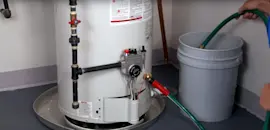
- Drain and flush the tank periodically to reduce sediment
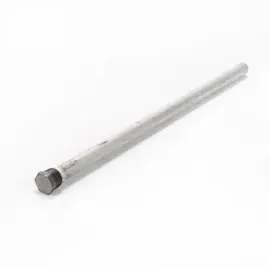
- Inspect the anode rod on schedule (it protects the tank from corrosion)
- Test the temperature-pressure relief valve as directed
- Keep the burner area clean and clear of dust and lint
Quick reference: lifespan expectations
| Water heater type | Typical lifespan | What usually ends it |
|---|---|---|
| Standard tank (gas), 50-gallon | 8 to 12 years | Tank corrosion, sediment damage |
| Standard tank (electric), 50-gallon | 8 to 12 years | Element/thermostat wear, tank corrosion |
Why it matters
Once a tank starts leaking, replacement is usually the practical fix. Planning around the 8 to 12 year window helps you avoid surprise downtime and reduces the chance of water damage, especially if the heater is installed where leakage could affect floors or walls.
Last updated: February 2026
What is the most common problem with gas water heaters?
The most common gas water heater problem is loss of heat because the burner cannot stay lit or cannot fire correctly. On Kenmore model 153331350, the most frequent root causes are air or venting issues, low gas pressure, or a failing gas control system; our owner's manual troubleshooting chart covers these symptoms.
Most common symptoms we see
- No hot water or not enough hot water
- Burner will not light
- Pilot or burner will not stay on
- Rumbling or sizzling noises (sediment or lime in the tank)
- Dripping at the temperature-pressure relief valve (often pressure or thermal expansion related)
- Condensation or water at the blower/vent area (venting or humidity related)
Quick checks that solve many “no hot water” calls
Before replacing parts, we recommend these practical checks (and stop if you smell gas):
- Confirm the tank is completely full of water before turning gas on.
- Make sure air inlets are not blocked and the heater has adequate ventilation.
- Check for flue or exhaust blockage and verify venting is attached and secured.
- Verify the thermostat setting is not turned too low.
- Look for signs of sediment or lime; flushing often improves recovery.
Common causes and what they point to
| Symptom | Common cause | What to do next |
|---|---|---|
| Insufficient hot water | Thermostat set too low, sediment, low gas pressure | Adjust setting; flush tank; check gas supply |
| Burner will not light | Air in gas line, blocked exhaust, wiring issue | Check venting and connections; follow manual steps |
| Water is too hot | Thermostat too high, defective control | Lower setting; consider water heater gas control valve 100112652 |
| Drip from relief valve | Pressure build-up, closed system, valve not seated | Address pressure/expansion; inspect valve seating |
Why it matters
Gas water heater heating and venting problems can quickly turn into no-hot-water situations and can also create unsafe operating conditions. Using the model-specific troubleshooting steps helps you identify whether the issue is airflow, venting, gas supply, sediment, or a control component.
Helpful model-specific resources
- For diagnostic steps and symptom charts: owner's manual
- For control-related heating issues on this model: water heater gas control valve 100112652
- For code-based troubleshooting: Kenmore gas water heater error codes
Last updated: February 2026
Are water heater parts interchangeable?
Some water heater parts are interchangeable, but only when the replacement matches your exact Kenmore model 153331350 and the same fuel type. This model’s manual specifically warns to use only the gas type listed on the heater’s label; natural gas and LP parts are not interchangeable.
What is usually interchangeable (and what is not)
Parts interchangeability depends on exact fit, gas type, venting design, and safety controls.
- Sometimes interchangeable: basic plumbing fittings (when thread size and rating match)
- Often model-specific: gas control valve/thermostat, igniter, flame sensor, pressure switch
- Not interchangeable across fuel types: natural gas vs LP burner orifices and related gas components
- Not interchangeable across venting designs: power-vent parts (blower, pressure switch, coupling)
- Not interchangeable across safety systems: flammable vapor sensors and related controls
Quick compatibility checklist for model 153331350
Use this checklist before ordering any replacement part.
- Match the model number: 153331350
- Match the gas type shown on the heater’s label (do not convert by swapping random parts)
- Match the venting style (this unit uses a power-vent blower system)
- Match the control system (this unit uses a Honeywell gas control/thermostat with hot-surface ignition)
- Compare the part name and ID to the parts list for this model
Common parts on this model (examples)
These examples are model-specific parts that should be matched exactly when replacing.
| Part type | Example for this model | Why exact match matters |
|---|---|---|
| Gas control | Water heater gas control valve 100112652 | Controls gas flow, temperature, and ignition logic |
| Ignition | Water heater burner igniter 100112679 | Hot-surface igniter must match the control and burner |
| Flame proving | Flame sensor 100112678 | Incorrect sensor can cause ignition failure or shutdown |
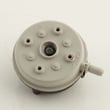
| Power vent safety | Water heater exhaust vent blower pressure switch 100112659 | Must match blower and venting setup |
Why it matters
Using a “close enough” part on a gas water heater can cause ignition problems, nuisance shutdowns, improper combustion, or venting safety faults. Matching the model and gas type keeps the heater operating safely and reliably.
Where to confirm the correct part
We recommend confirming part compatibility using the parts diagram and the safety notes in the owner's manual.
Last updated: February 2026
What is the average labor cost to install a 50 gallon gas water heater?
Labor to install a 50-gallon gas water heater typically runs $500 to $1,500 for a straightforward replacement; installations that require venting changes, gas-line modifications, or permit work commonly run $1,500 to $3,000+. For Kenmore model 153331350, follow the venting and installer requirements in the owner's manual.
What labor usually includes
Most professional installs cover more than setting the tank; the installer must verify safe gas operation and proper venting.
- Remove and dispose of the old water heater
- Set and level the new tank, connect water lines
- Connect gas supply, perform leak testing
- Verify venting and combustion air requirements
- Start up, confirm burner operation, check for proper draft or blower operation
- Basic temperature setting and safety checks
Cost drivers that change the quote
These items are the most common reasons labor moves from a basic replacement to a higher-cost job.
- Venting work (rerouting, new termination, condensate handling, powered-vent connections)
- Gas piping updates (new shutoff, sediment trap, resizing, pressure testing)
- Water piping repairs (corroded shutoffs, new connectors, expansion tank)
- Permits and inspections required by local code
- Access and haul-away (tight closet, attic, stairs, long carry)
Typical labor ranges by scenario
| Scenario | Typical labor range | Common reasons |
|---|---|---|
| Like-for-like replacement | $500 to $1,500 | Same location and venting type; minimal piping changes |
| Moderate modifications | $1,500 to $3,000 | Some vent or gas-line changes; added code items |
| Major rework | $3,000+ | Significant vent reroute, gas re-pipe, or difficult access |
Why it matters for Kenmore 153331350
This model uses venting components that must be installed correctly to prevent flue-gas leakage and nuisance shutdowns. The owner's manual also defines a qualified installer as someone experienced with plumbing, air supply, venting, and gas supply.
Last updated: February 2026